Humidity Proof Hairstyles: Looks That Survive Summer Frizz
Humidity makes hair swell, frizz, and lose shape fast, but the right cut, parting, and tension can keep a style looking intentional all day. This guide shares humidity proof hairstyles, quick rules by hair type and porosity, plus product-free tweaks you can test with a virtual hairstyle try on.
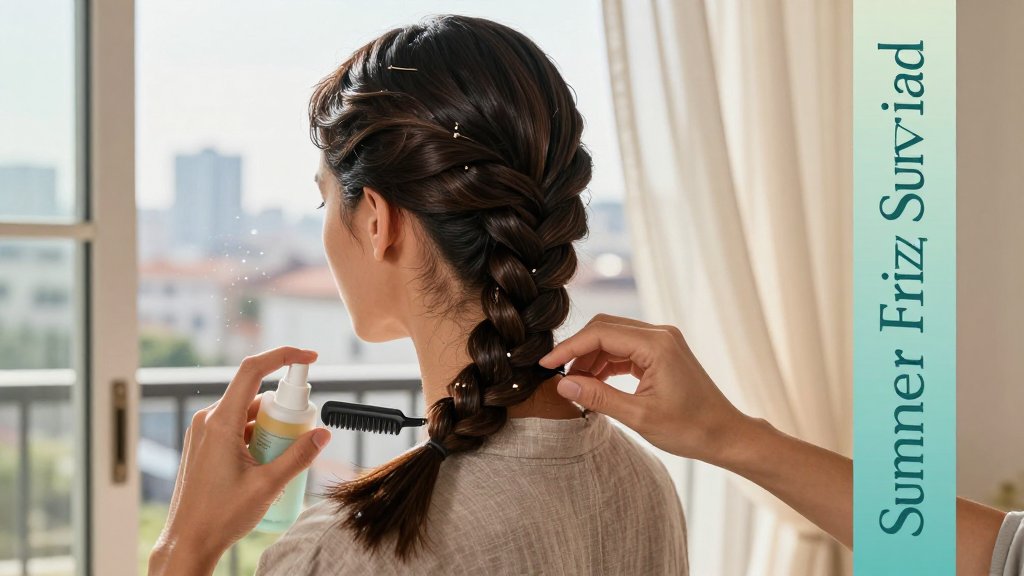
You know the moment: you step outside, the air feels like a warm towel, and your hair doubles in size before you reach the car. Humidity can undo a polished blowout, frizz up curls, and turn “sleek” into “puffy” in minutes. This guide breaks down humidity proof hairstyles that actually hold, plus quick rules for choosing by texture and porosity. You will also get face-shape friendly options, along with simple tips to prep and lock in your look.
What makes hairstyles humidity proof in real life
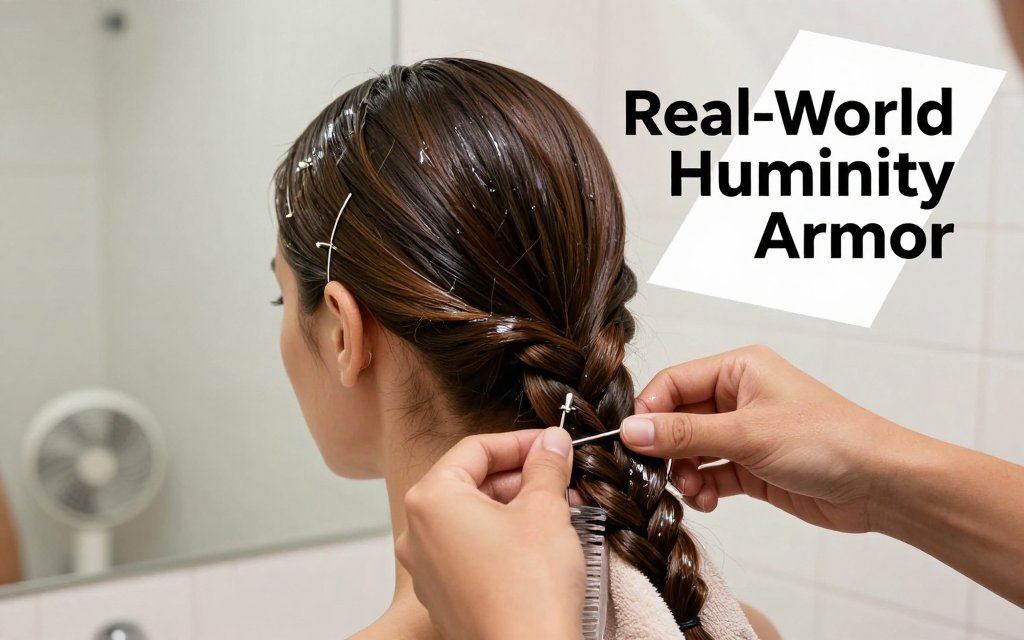
Humidity frizz is not a mystery, it is physics plus hair structure. Your hair is naturally hygroscopic, meaning it pulls water from the air. When the air is damp, water molecules slip into the hair fiber and temporarily change the bonds that help hair hold a set shape, so waves start to bend in new directions, curls lose clumps, and straight styles get that fuzzy halo. That water uptake also makes the strand swell slightly, which can lift the cuticle and increase friction between hairs. If you have ever styled in strong air conditioning and then stepped outside to instant puff, you have felt this in real time. humidity changes hair bonds, which is why definition disappears fastest at the hairline and crown where strands are most exposed. (smithsonianmag.com)
In real life, a humidity proof style is less about fighting expansion and more about designing for it. Styles last when they use tension (so strands cannot wander), controlled surface area (fewer loose pieces to swell), smart parting (so the crown stays intentional), and a silhouette that still looks good when it gets a little bigger. That is why a braided low ponytail usually outlasts a bouncy blowout, and why a twisted chignon can look elegant even if the texture turns softer by hour three. Think “contained shape” over “perfect finish.” This works for every hair type, from pin straight to coily, because humidity mainly attacks the same weak spot for everyone: separation and smoothness.
The rule: reduce puff, reduce touch, reduce friction
“The most humidity proof hairstyles minimize loose strands and repeated brushing.” Once you accept that, the winners are obvious: braids, buns, twists, and clipped styles. They do two key things at the same time. First, they add structure so the cuticle is pressed down by neighboring strands, which reduces the fuzzy look even if the hair absorbs moisture. Second, they shrink the surface area exposed to humid air, especially at the canopy (the top layer you see most). A three strand braid, a rope twist ponytail, a braided crown, a low bun with tucked ends, or a claw clip French twist all keep your style looking “on purpose” longer than leaving hair fully down and free to expand.
The easiest way to lose the battle is to create a style that needs constant re-separating. Common mistakes include over-brushing once frizz starts (it turns a few flyaways into a full cloud), flat ironing and then sweating (heat sets hair smooth, then moisture immediately disrupts that set), and wearing hair completely down on a high-humidity day when you will be outside. A product-free rescue takes under five minutes: swap to a deeper side part to “hide” crown puff, twist each temple section back and pin it above the ear, or braid just the top layer along your part line and clip the braid into a half-up shape. If you are planning an event look, it also helps to preview silhouettes that suit your face shape before you commit. You can test a sleek low bun versus a textured twist using Fravyn, then choose the one that still looks great if it softens later.
If your style relies on perfectly separated strands, humidity will break it. Pick a shape that still looks intentional when it expands, then stop touching it. Your hands add moisture, friction, and frizz.
Fast decision rules by hair type and porosity
Porosity is your “how fast will this frizz?” shortcut. High-porosity hair (often bleached, highlighted, frequently heat-styled, or naturally more open in texture) tends to absorb and release water quickly, so it reacts fast when humidity spikes. That is where contained styles shine: a braided pony, a bun with tucked ends, two strand twists pinned up, or a half-up secured with a claw clip. Low-porosity hair has a tighter cuticle that resists water penetration longer, so it can hold smoother looks, especially if you keep the roots controlled with tension. Sleek ponytails, twisted chignons, and compact updos often last well on low-porosity strands, as long as you avoid fussing with the hairline once it is set. (marieclaire.co.uk)
Texture matters too, because it changes what looks “good” as the style expands. Wavy hair usually does best with deliberate grouping, like a loose braid-out look that can get bigger without turning messy. Curly and coily hair often stays more flattering when you keep curl families together, so try a pineapple puff, a high bun with a scarf, or a chunky twist-out pinned at the sides to control the face frame. Straight and fine hair can look limp or stringy once moisture hits, so focus on root control and clean lines: a middle-part low pony, a tight half-up, or a sleek bun. Color can also change how you perceive frizz because contrast highlights texture. If you want a shade that stays rich even when your hair gets a little airy, use cherry mocha hair shade match ideas to pick tones that flatter your skin and still look polished in summer light.
One last set of product-free tweaks can make any of these styles more humidity proof in under five minutes. First, build “invisible tension” at the roots: lightly stretch the crown section as you secure it, then pin across the part line like a tiny bridge so it cannot split and puff. Second, reduce friction where it starts, usually at the collar and shoulders. Tuck ends into a bun, braid, or twist so your shirt is not roughing them up all day. Third, stop checking it. Every time you rake fingers through your hair, you separate strands, add warmth and moisture from your hands, and invite frizz. If you need a reset, do it with two deliberate moves only: smooth the hairline with your palms, then re-pin one anchor point (bun base, braid end, or clip). That approach keeps the shape intact even when the air does what it wants.
Best anti frizz hairstyles for humid weather days
Humidity-proof styling gets easier when you pick shapes that can “move” without looking messy. The goal is not perfectly flat hair, it is a controlled silhouette: smooth at the roots where puff shows first, secure through the mid-lengths where hair expands, and intentionally soft at the ends so any wave looks planned. That is why buns, twists, and structured braids beat loose blowouts on sticky days. If your hair tends to swell, it helps to understand why humidity causes frizz, then choose styles that keep the cuticle protected and the hair anchored. Keep a small styling kit on hand: a boar-bristle brush, two hair elastics, and a few U-pins.
Updos for humidity that still look soft and modern
Low braided bun (easy, romantic, very stable): start with a low ponytail at the nape, keep it tighter at the roots and slightly looser at the ends. Braid the ponytail, then wrap it into a bun and pin with U-pins, pushing pins inward toward the center for grip. Let two small face-framing pieces fall near the cheekbones, they will look pretty even if they wave. Twisted chignon (sleek but not severe): split a low ponytail into two, twist each section, cross them like a figure eight, then tuck ends under and pin. This works beautifully on straight, wavy, and blow-dried curly hair because twists disguise flyaways.
Claw-clip French twist (fastest polished option): smooth your sides back with a light gel or cream, twist the length upward, then fold the ends down inside the twist before clipping. In humidity, use a medium-size clip with strong teeth, and set the twist by pinning one bobby pin horizontally at the base before clipping. Bubble ponytail (cute, sporty, heatless): secure a ponytail (mid or high), then add small elastics every two to three inches. Gently tug each “bubble” to loosen the ends while keeping the base tight, that tension pattern stops the crown from puffing. For thick or coily hair, bubbles look best with a little leave-in so the sections stay plush, not fuzzy.
High bun with a wrapped base (the bridal backup plan): brush hair into a high ponytail, twist the ponytail, then wrap into a bun and pin. Take a small section from the ponytail first and save it to wrap around the elastic, this keeps the base looking intentional when the air gets damp. For fine hair, backcomb the ponytail lightly before wrapping so the bun stays full. If you are booking an event style, ask your stylist for “root control with soft ends,” and specify that you want face-framing pieces placed on purpose (not pulled out randomly later). Also ask for pins, not only spray, because humidity makes spray feel sticky without adding real structure.
Braids for humid weather that do not unravel
Two Dutch braids are the “won’t budge” classic because the braid sits on top of the hair, hugging the scalp and locking in the root area where frizz starts. For extra hold, braid with slightly smaller sections at the hairline, then relax your grip only after you pass the ears so the ends stay soft. Boxer-braid into bun combo is perfect for very long or very thick hair: Dutch braid each side to the nape, then combine into one low bun. A single French braid with tucked ends is underrated for humid travel days, braid down the back, then fold the tail under and pin so the ends cannot fuzz out. For fine hair, try a rope twist braid, it holds with less tugging.
Your “frizz-friendly” finish is what keeps braids looking intentional for hours. Set the part cleanly with the tail of a comb, then smooth the part line with a tiny amount of gel on your fingertips. Secure ends twice: first with a small elastic, then wrap a second elastic over it or add one bobby pin through the elastic to stop slippage. Once the braid is done, keep hands out of it, touching is what turns soft frizz into full fuzz. If you want to test which braid or updo flatters your face shape before the big day, Fravyn makes it easy to preview different silhouettes and even try warmer or cooler hair colors so your style looks cohesive in humid-weather photos.
Match summer frizz styles to face shape and routines
Picking a humidity-proof style gets easier when you sort it by three things: your face shape (so the look flatters), your routine (so it fits your day), and your curl pattern (so it behaves). Start with the day type: a commute needs a style you can do in five minutes and trust on the train; a beach day needs secure sections that survive salt and sunscreen; a wedding needs strong pinning that still looks touchable in photos. Humidity matters because hair grabs moisture from the air and swells, which is why frizz shows up fast in summer, a point also noted in summer hair care tips. If you like to preview options first, Fravyn-style try-ons can help you pick a shape-friendly updo before you ever touch a bobby pin.
Face-shape friendly picks that stay put
Use face shape as your shortcut, then lock the style with smart placement instead of more product. Height at the crown visually lengthens and holds better because the elastic sits on a sturdier base. Low styles work best when you build an anchor first, like a tiny braid or twist at the nape, then pin into it. If you sweat at the hairline, pick a part that hides puffing, like an off-center part or a soft zigzag part, and leave two small face-framing pieces that can curl on purpose. For short hair, think structure: a tight taper or fade with a textured top stays cleaner in humidity than a long, brushed-forward fringe.
Now match the same face-friendly idea to your routine and curl pattern. For a daily commute, try a mid-height pony with a wrapped base, or a low bun that is braided first (braid the ponytail, then coil it) so the outer layer cannot expand as much. For a beach day, boxer braids, a crown braid, or a slicked-back bun with a middle part keeps hair off sunscreen-covered shoulders and reduces tangles. For curls, adapt the structure: waves (type 2A to 2C) do well with a half-up twist plus two mini clips; curls (type 3A to 3C) love a pineapple pony plus a loose braid in the tail; coils (type 4A to 4C) stay defined longer in flat twists, a braided crown, or a tucked low bun.
FAQ: humidity proof hair questions people actually ask
Before the FAQs, here are three product-free tweaks that make almost any style behave: swap a regular towel for a cotton T-shirt to blot (rubbing roughs up the cuticle), pin in an X shape at the base of buns (two pins crossing locks better than four random pins), and set your part while hair is damp (a part that dries in place resists puffing). For curls, do your detangling only when wet and conditioned, then keep your hands off while drying. Touching is the fastest way to create a fuzzy halo, even if the style started sleek.
What are the best humidity proof hairstyles for high-porosity hair?
High-porosity hair frizzes fastest when it is left loose, so choose styles with tucked ends and built-in structure. Try a braided low bun, a rope-twist pony, or two to four flat twists pinned into a low chignon. Step-by-step: part hair, make one small anchor braid at the nape, gather into a low pony, braid the ponytail, then coil and pin into the anchor. Use six to ten U-pins, inserted along the bun edge and flipped back toward the center. Finish by pressing the hairline with your palms for ten seconds to smooth without adding shine or crunch.
What is a simple curly hair humidity routine that actually works?
Keep it simple and repeatable: (1) Shampoo two times per week max, and focus on the scalp. (2) Condition, then detangle with fingers or a wide-tooth comb only while wet. (3) Style on soaking-wet hair, then scrunch for thirty seconds to encourage clumps. (4) Plop with a cotton T-shirt for ten minutes, then air-dry or diffuse on low heat until about ninety percent dry. (5) Do not touch until fully dry, then gently shake at the roots. Refresh days later with water mist only, then re-scrunch.
What wedding updos for humidity hold up in summer heat?
The most reliable summer wedding picks are low and anchored: a classic low chignon, a braided chignon, or a twisted French roll with soft side pieces. Ask for (or DIY) a hidden foundation ponytail first, then build the updo on top so the style has a grip point. Pinning rule: plan on twelve to twenty U-pins for medium to long hair, and insert each pin through the bun edge, into the base, then flip it back to lock. To avoid crunch, use light, flexible hairspray in two quick passes, then press with a clean palm for five seconds.
Ready to see how a new hairstyle looks on you before you commit? Try Fravyn and preview 50+ humidity friendly styles on your own photo in seconds, so you can pick what flatters your face shape and works with your texture. Download the app here: iOS. Test a few looks today and walk into summer with confidence.
Try a New Hairstyle Today
Preview 50+ hairstyles and 29+ colors on your own photo with Fravyn.