Heatless Curls by Hair Type, Choose Your Method
Heatless curls are not one size fits all. This guide helps you choose the best no heat curling method for your hair type and length, avoid the most common overnight curl mistakes, and preview the curl shape, volume, and bang compatibility before you commit to a cut or color.
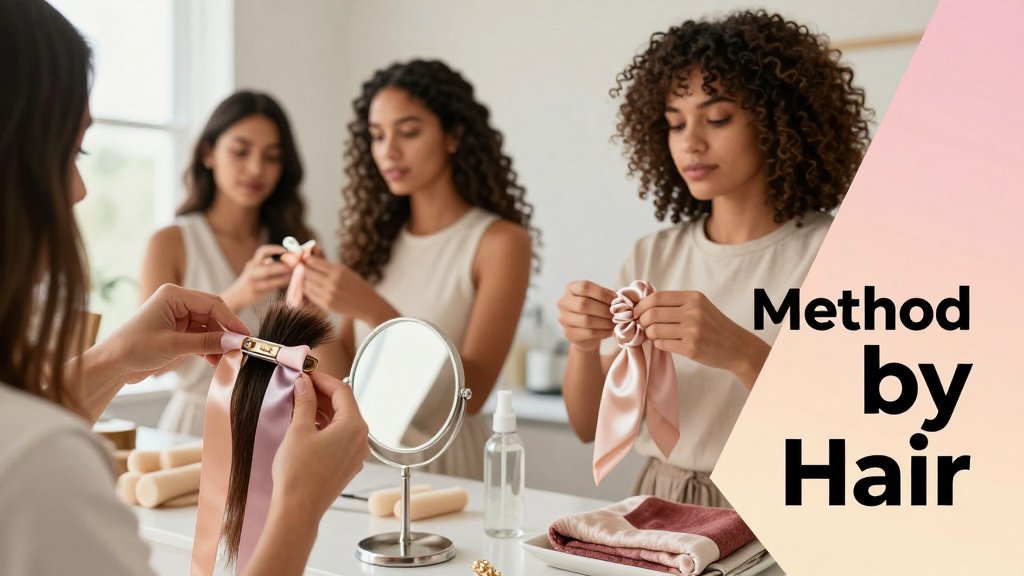
Heatless curls can look effortless, but the results depend on choosing a method that fits your hair type, not whatever is trending. The right technique can boost definition and shine, while the wrong one can leave you with limp waves, dents, or frizz. In this guide, you will match curl methods to thickness, texture, and length, then learn quick fixes for common mistakes. You will also learn how to preview curl shape and volume so your next cut or color supports your goal.
How to choose heatless curls by hair type
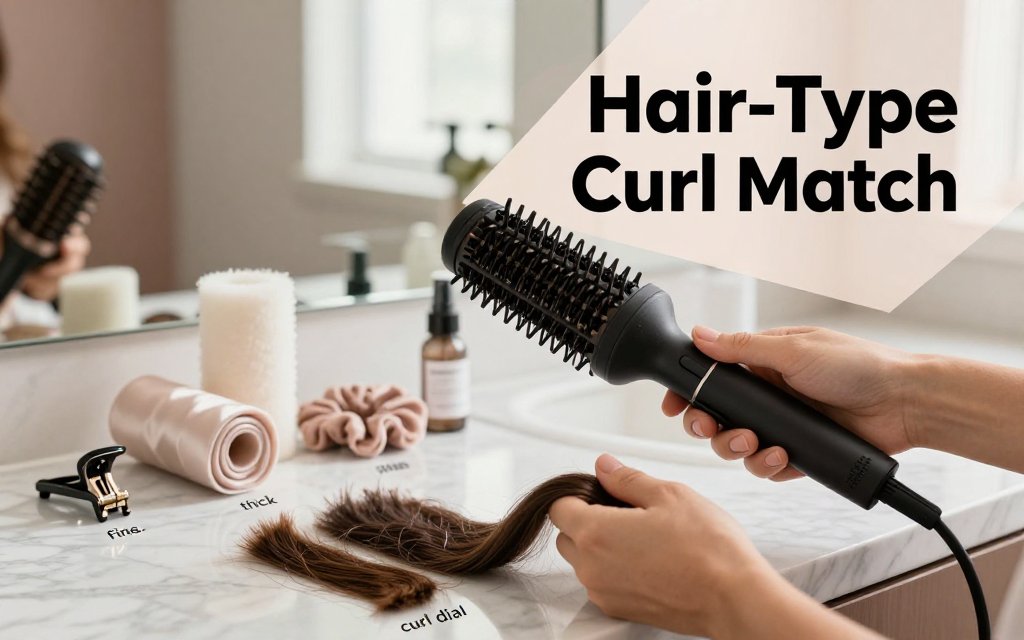
If you have ever tried a heatless curl hack that looked amazing on someone else and fell flat on you, the mismatch is usually not the tool, it is the hair type and length combo. Your best pick comes from four quick checkpoints: strand thickness (fine vs coarse), density (how much hair you have), porosity (how fast it dries), and length (short bob vs long layers). Then decide the finish you want: tight ringlets, soft waves, or a blowout curl. If you are also planning a color refresh to make the curls pop in photos, pair your curl method with tone choices like cherry mocha hair shade match, because dimension can make heatless texture look twice as defined.
Your fastest decision rule for curl hold
Fine hair needs gentler tension and faster drying; thick hair needs smaller sections and longer set time; naturally curly hair needs definition-first prep; very straight hair often needs a light-hold product plus extra dry time. Start with section size and treat it like your “curl dial”: use about 0.5 to 1.5 inch sections, smaller for thick hair or stubbornly straight hair, larger for fine hair that dents easily. Aim for 2 to 6 wrap passes around your rod, ribbon, or sock segment (more wraps equals tighter curls). Typical overnight set time is 6 to 10 hours, and if your hair is low porosity or very dense, plan closer to 8 to 10 so the inside of each section is fully dry.
Match your prep to your texture so the curl has something to “grab.” For fine hair, think weightless and smooth: a pea-size leave-in, then a light mousse, and keep tension moderate so you do not get a crease at the ends. For thick hair, your superpower is structure: smaller sections, more wraps, and a secure tie at the ends so the curl does not unwind while you sleep. For naturally curly or coily hair, prioritize definition first, then set: detangle with slip, apply curl cream or gel evenly, and smooth each section before wrapping so you get glossy spirals instead of frizz. For very straight hair, add a light-hold setting product (mousse or setting lotion), then give it extra dry time so the shape “locks” before you unwrap.
Now choose the method that matches your hair’s “behavior.” Fine hair often loves soft foam rollers, pin curls, or a satin ribbon set because they hold shape without heavy tension. Thick hair usually does best with flexi rods, multiple sock segments, or a heatless curling rod with firm anchoring, since the extra grip helps the curl survive your hair’s weight. Naturally curly hair tends to get the most polished result from twists, braid-outs, or rod sets after definition products, since those methods keep the natural pattern organized. Very straight hair often needs the smallest sections and the longest dry window; beauty editors and stylists commonly recommend an overnight set, and note that smaller sections create more curl and that hair must be fully dry before removal in heatless curler timing.
If your curls drop fast, change the drying, not the method. Use smaller sections, wrap with steady (not painful) tension, and do not take anything out until the thickest part feels fully dry to the touch.
Pick by length: short hair vs long hair results
Short hair can curl beautifully, but it dents easier because there is less length to “hide” a bend. That is why bulky robe belts can leave a clear ridge in a bob, and why you will usually get better results from smaller tools and smarter placement. Try mini flexi rods (especially for chin-length layers), sock segments cut into short tubes, or classic pin curls secured flat to the head. Place your curling piece closer to the crown, not down near your ears, so the curve sits where your hair has room to arc. For short hair, a good target is 0.5 to 0.75 inch sections, and do not overload product, because extra dampness can keep the set from drying overnight.
Long hair has the opposite challenge: weight stretches curls out, and long sections can slip off the curling piece while you sleep. Add more anchor points so the curl holds its shape from root to end. That can mean splitting each side into two ribbons instead of one, securing ends with soft scrunchies, and using clips at the root so the wrap does not slide down. For a loose, bridal blowout look on long hair, use 1 to 1.5 inch sections and fewer wraps, then brush out gently in the morning. For tighter curls that last through a full day, go closer to 0.75 to 1 inch sections, increase wrap count, and plan the full 8 to 10 hours if your hair takes a long time to dry.
Bangs are the detail that makes a heatless style look intentional. Curtain bangs usually blend best with loose waves, so you can either leave them out and quick-style them in the morning, or wrap them once around a small foam roller for a soft swoop. Blunt bangs can look disconnected from curls behind them unless you style them separately, since a tight curl pattern next to a straight fringe can feel like two different haircuts. A simple fix is to set bangs in one smooth, forward roll, then blend with a light mist of flexible hairspray. If you want to preview how waves or curls change your face shape balance (especially with bangs), Fravyn’s hairstyle try-on can help you decide before you commit to the method and the night of sleeping in it.
Robe belt, flexi rods, or sock curls: which wins
If you want the quick verdict, robe belt curls win for “I want to look softly styled and a little glam” volume, flexi rods win for “my hair drops curls by lunch” staying power, and sock curls win for “I need something comfy and cheap that still gives a real curl.” The best method depends on what you want to see in the mirror the next morning: big waves that make your layers look expensive, tighter curls that hold through a long day, or a lived-in bend you can brush out into a blowout vibe. Comfort matters too. Some methods feel like sleeping in a helmet, and some feel like basically nothing, but they can be picky about hair length and sectioning.
Robe belt curls for soft waves and volume
Best for medium to long hair that wants big, airy waves with root lift, especially if you love that “bouncy blowout” shape but hate heat styling. The placement is the whole trick: tie or pin the belt higher on your head (closer to the crown) if you want more volume at the roots, and place it lower (closer to the back of your head) if you want looser waves that concentrate more on the ends. Keep the tension snug but not tight. If you feel a pulling headache, you are already risking a weird kink at the hairline and a rough night of sleep.
Hair should be damp, not wet. Damp hair sets a smoother wave and dries by morning, while wet hair often stays swampy under the wrap, then frizzes when you unwrap and your hair expands. A very common mistake is wrapping huge sections because it feels faster. That usually makes the top look flat (not enough wraps near the root) and the ends look stringy (too much hair fighting for space on the belt). If your hair is fine, try two smaller side sections per side. If it is thick, split each side into a front and back section so the belt is actually shaping the hair, not just holding a giant rope.
Flexi rod set for tighter, longer-lasting curls
Flexi rods are the hold champion for thick hair, coarse hair, and anyone whose curls fall out the second they step outside. They create a more uniform curl than robe belt curls, and you can choose your curl size on purpose. Smaller rods tend to be more practical for shoulder-length and shorter hair because you can wrap the ends neatly without them flaring out. Most people land around 8 to 14 rods depending on density, with fewer rods giving a looser, chunkier set and more rods giving a tighter, curlier finish. Keep sections consistent, because one fat section will dry slower and drop sooner.
The dealbreaker is dryness. If you take rods out before your hair is fully dry, the curl can look cute for 10 minutes, then relax into frizz and uneven bends. Even beauty editors point out that rods can take a while to air dry, so plan ahead and let them set completely before you unravel them (see these flexi rod expert tips). The tradeoff is comfort: rods can feel bulky, especially if you sleep on your side. If you are a sensitive sleeper, do your set earlier in the evening, then sit up for a while to let your roots dry before you lie down.
Sock curls for comfy, brushable curls on a budget
Sock curls are the cozy pick, and they are surprisingly good at giving a “brushed out curls” look that does not feel too done. Use a clean, soft sock (crew socks are easier than ankle socks), and consider two socks if you have medium to thick hair so you are not trying to cram everything onto one side. The nicest results usually come from wrapping smaller sections and keeping your ends smooth as you roll, almost like you are laying ribbon neatly. If you want more volume around the face, start the wrap higher and keep the first few turns light, then add a bit more tension mid-length.
What usually goes wrong with sock curls is dents and creases. Tying the sock too tightly, using a harsh elastic, or folding the sock into a hard knot can stamp a line into your hair. Try a satin scrunchie or a soft spiral tie, and secure it just enough to hold. Also, skip this method if your hair is very short or heavily layered, because the ends pop out and dry in odd directions. Super thick, long hair can do it, but only if you commit to more sections and more socks. If you wake up with stiff ringlets, brush them gently, then scrunch a pea-sized amount of lightweight cream into the ends.
Overnight curls that last: prep, mistakes, and FAQs
If your heatless curls look dreamy at 7:10 a.m. and limp by 7:30, it is usually not your technique, it is your prep. Overnight sets need the right balance of dampness, slip, and hold so the hair dries into a bend, not out of it. The goal is a curl that feels touchable, survives coffee runs, and still looks good after you shake it out. The fixes are surprisingly simple: start with the right dryness level, layer products in the correct order, and protect the set from friction and flattening while you sleep. Once those three pieces click, most hair types get longer wear with noticeably less frizz.
The curly hair routine that makes no heat curls last
Start this routine when your hair is about 70 to 90 percent dry. That one detail solves the biggest complaint, because soaking-wet hair is the number one reason overnight curls collapse: the set never fully dries, the hair stays heavy, and your curl pattern relaxes the moment you remove the tool. After towel or T shirt blotting, smooth in a pea-sized leave-in conditioner for slip (think of how easily your hair detangles). Then add a light mousse or foam for hold, focusing on mid lengths to ends. If you are frizz-prone, finish with a tiny amount of oil only on the ends (one to two drops of argan or jojoba warmed in your palms).
Protection while sleeping matters as much as product. Your curls can be perfectly set, then get crushed by friction, rolling, and tension from tight elastics. A satin bonnet or scarf keeps the hair from rubbing against cotton and helps prevent tangles, and even switching to a slick pillowcase can help. The satin pillowcase benefits come down to lower friction, which can mean less frizz and fewer flattened sections in the morning. Whatever you use, tie hair with a loose scrunchie (not a tight rubber band) and avoid pulling the wrap too snug at the hairline, which is where dents love to form.
FAQ: heatless curls by hair type and length
Troubleshooting is easier if you match the fix to your hair’s texture and density. Fine hair usually needs less oil and more strategic hold at the roots. Coarse, curly, or color-treated hair often needs more slip so it wraps smoothly without snagging, plus stronger protection from friction. Length changes everything too: long hair can handle bigger sections, while short layers need smaller wraps and extra pins to keep ends from flipping out. Use the questions below like a quick diagnostic, then adjust one variable at a time so you know what actually worked.
Why do my overnight curls look good for 20 minutes, then fall flat?
Your set probably did not dry enough, or it dried without real hold. Aim for damp, not wet, then use mousse or foam before you wrap. Fine hair often needs smaller sections and a quick root clip while getting ready so the crown does not collapse. If your hair feels silky from heavy conditioner, clarify and go lighter next wash. Finally, let curls cool and settle after you take the wrap out, wait 5 to 10 minutes before brushing, then separate with fingertips instead of a brush.
How do I get heatless curls for short hair without weird bends?
Short hair bends when the ends get folded instead of wrapped, so treat the last two inches like delicate fabric. Use smaller sections, and keep the ends flat and smooth as you roll, then pin them in place with two bobby pins crossed in an X. Choose a thinner tool (skinny flexi rods, mini foam rollers, or a slim robe belt) so the curl has room to form without a sharp kink. If your layers are very short, try two to four pin curls at the front and a looser set in back for a cleaner shape.
Do heatless curls work with bangs, or should I style bangs separately?
Bangs usually look best styled separately, because they dry faster and can flip if they get wrapped into the larger curl set. For curtain bangs, roll them away from your face on a small roller, or make two pin curls and clip them flat at the base. For blunt bangs, use one gentle bend with a small roller so they sit smooth, not spiraled. Before you cut new bangs or commit to a new shade, preview how your curl volume and fringe pairing will read on your face shape using a virtual hairstyle try on like Fravyn, so the final look feels intentional.
Ready to see how a new hairstyle looks on you before you commit? Try Fravyn to preview 50+ styles on your own photo in seconds, including curl-friendly looks that match your vibe. Download the app, test a few options, and save your favorites for your next appointment. Get it here on iOS and start exploring today.
Try a New Hairstyle Today
Preview 50+ hairstyles and 29+ colors on your own photo with Fravyn.