Cherry Mocha Hair: Shade Match for Skin Tone
Cherry mocha hair sits right between brunette depth and cherry warmth. This guide helps you pick the most flattering red-brown shade for your skin undertone and contrast level, decide how much upkeep you can handle, and walk into your color appointment with clear, specific requests.
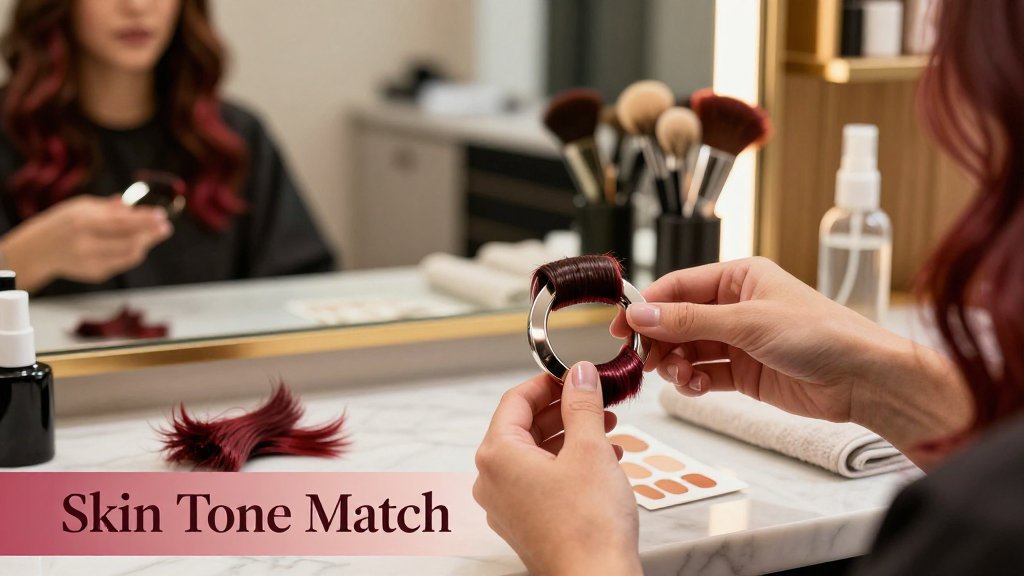
Cherry mocha hair can read as rich, glossy, and naturally expensive, or it can swing oddly wiggy if the undertone or contrast is off. The difference is not the trend, it is the shade match. In this guide, you will learn how to pick the right cherry-toned brunette for your skin tone, how to adjust warmth and depth for a believable finish, and how to sanity-check your choice before you commit. You will also get clear phrases to use with your colorist.
What cherry mocha hair actually looks like
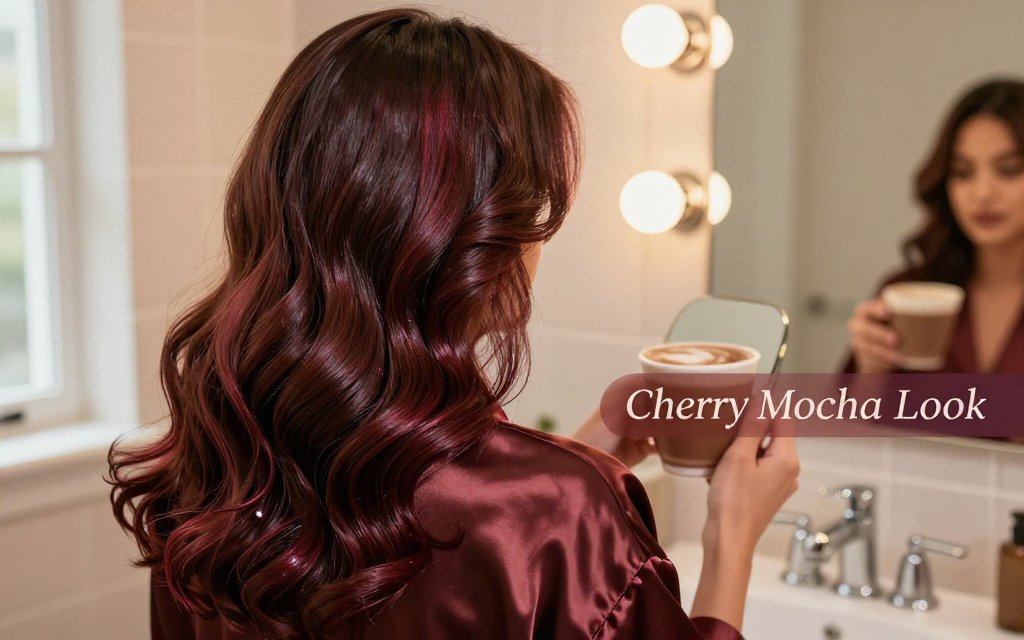
“Cherry mocha hair is a rich brunette that looks like chocolate in the shade, then catches the light with a soft cherry-red sheen.” If you can repeat that to your stylist, you are already 80 percent of the way to getting the right vibe. The key is that cherry mocha is not a bright, fire-engine red. It stays grounded in brown, with a red-brown glaze that shows up as a reflective tint, kind of like cherry syrup swirled into a mocha. In indoor lighting, it often reads as a pretty, expensive brunette. In sunlight or warm bathroom lighting, the cherry pops as a subtle glow rather than a full costume-color moment.
In real life, cherry mocha usually sits in the medium brown to deep brunette range (think levels 4 to 6 if your colorist uses level language). That depth is why it can feel wearable on many people, including anyone who wants a change that still looks professional. On straight hair, you notice it as a high-shine veil that makes the brown look richer and glossier. On waves and curls, the bends and spirals act like little mirrors, so you get more visible “cherry glints” on the surface. On coils and tight curls, cherry mocha can look especially dimensional when the reflect is placed strategically, so your texture looks even more defined instead of flat.
Cherry mocha vs cherry cola brunette vs coppery espresso
Here is the easiest way to picture the three, without a swatch book. Cherry mocha is balanced red-brown: it keeps a cocoa base and adds a clear cherry tint that feels neutral-warm, not orange. Cherry cola brunette goes deeper and cooler: think dark soda with a berry-wine reflect, often leaning burgundy or plum. Coppery espresso is the darkest of the group: it is more “coffee bean brown” overall, with a warm copper glow that can read golden in sunlight. The most common mistake is choosing based on the cute beverage name instead of the undertone, then feeling like the shade fights your skin. If you pull peachy in foundation, a wine-leaning cherry cola can look heavy. If you pull rosy, copper can suddenly read brassy.
A quick practical check is to hold up two lip colors near your face in daylight: a berry-wine and a warm terracotta. If berry makes your eyes look brighter, cherry cola undertones usually behave. If terracotta makes your skin look clearer, coppery espresso is often the easier win. Cherry mocha sits in the middle, which is why it is the “safe but still spicy” choice for a lot of people. If you want to see what cherry cola typically means in pro color language, skim the Wella cherry cola formulas and notice how often the result is described as deep brunette plus a red-violet reflect, not orange-copper.
The three dials that control the shade
Think of cherry mocha as three dials your colorist can turn, instead of a single boxed shade. Dial one is depth: medium brown cherry mocha looks softer and more “milk chocolate,” while deep espresso cherry mocha looks dramatic and can read almost black until the light hits. Dial two is reflect direction: true cherry-red looks like a classic cherry syrup sheen, berry-wine reflect looks more merlot, and copper reflect looks more cinnamon glow. Dial three is dimension: an all-over gloss gives a smooth, uniform red-brown, while ribbons and micro-lights give movement and keep the tone from looking like one solid helmet of color. If you are unsure, Fravyn can help you preview cherry-toned brunettes on your own photo before you commit.
Placement is the part most people skip, then they wonder why their cherry mocha looks “too red” or “not red at all.” All-over color plus gloss looks sleek and expensive, but it can read darker than you expect, especially on thick hair or hair that already absorbs pigment easily. Ribbon highlights (balayage ribbons painted through the mids and ends) let you keep a brunette base while still seeing cherry sparkle when you move. Micro-lights are tiny, close-together accents that give a soft shimmer without obvious stripes, which is great if you wear your hair straight often. For brides and anyone doing professional photos, dimension almost always photographs better than a flat, all-over red-brown under flash because it creates separation and shine instead of a single dark block of tone.
If cherry mocha looks “off” on you, it is usually not the idea, it is the dial settings. Keep the base brunette, choose cherry-red or red-violet over copper, and add ribbons so light can do the work.
Best red-brown shade for your undertone
Cherry mocha is one of those red-browns that can look like glossy cocoa in one bathroom mirror, then suddenly read “too burgundy” or “too copper” once you step into daylight. That is not you picking wrong, it is undertone plus contrast doing what they do. Your undertone (cool, warm, neutral) decides which direction the red reflect should lean. Your contrast level (low, medium, high) decides how deep and how bold that reflect can be before it looks harsh, or before it disappears into “just brown.” The easiest way to choose is to start with undertone, then fine-tune depth and brightness using contrast so the shade looks intentional on day 1 and still flattering as it fades.
Cool vs warm vs neutral undertones, quick checks
Skip the “veins only” method if it confuses you, and do the jewelry test in indirect daylight instead. Hold a true silver piece and a true yellow gold piece near your face (not your hand), and look at your under-eye area and jawline. If silver makes your skin look clearer and more even, that is a strong hint you lean cool. If gold makes you look brighter and healthier, you likely lean warm. If both look equally good, or you love mixed metals and they all look natural, you are probably neutral. Decision support: if silver wins, plan a cherry, berry, or wine-leaning mocha; if gold wins, plan a copper-leaning mocha; if it is a tie, keep reading and let contrast decide the intensity.
Next, do a color reaction test with fabrics or makeup that are clearly different reds. Tomato-red (blue-based, “true red”) versus rust (orange-based, earthy) is a fast way to see which family harmonizes with your skin. If tomato-red makes your eyes pop and your skin look smooth, you will usually wear cooler cherry mocha beautifully, think cherry cola, black cherry, or deep mahogany brown. If tomato-red makes you look a little pink, blotchy, or tired, but rust makes you look warm and glowy, aim for warm cherry mocha variations like cinnamon mocha, copper cherry, or auburn mocha. If both reds look fine, you are neutral, and you get to pick based on contrast and your wardrobe (do you live in cool black and jewel tones, or warm camel and olive?).
A third check that surprises people is your brow “ash tolerance.” Brush your brows up, then imagine them tinted one shade cooler (ash-brown or taupe) versus one shade warmer (soft chestnut). If ash-brown brows look natural and expensive on you, that usually matches cool undertones, so choose cherry mocha with berry or wine reflect, not orange copper. If warmer brows look instantly more believable, go copper-leaning mocha. If both work, neutral undertones can wear either, but make the decision this way: if your closet is mostly cool colors (black, navy, true white), go cooler cherry; if it is mostly warm (cream, tan, warm denim, olive), go warmer mocha. That simple “if you see X, pick Y” keeps the shade from fighting your everyday style.
Use contrast level to decide depth and brightness
Contrast is the difference between your skin depth and your natural hair and brow depth. High contrast examples: fair skin with dark brows, deep skin with very light or highlighted hair, or anyone whose brows are clearly 2 or more “steps” darker than their skin. Medium contrast: medium skin with medium brows, or fair to medium skin with soft brown brows. Low contrast: your hair, brows, and skin sit in a similar depth range, and nothing looks dramatically lighter or darker. Decision support: if you are high contrast, you can handle a deeper espresso cherry cola (darker base, richer red reflect) without it wearing you. If you are low contrast, an all-over deep cherry can feel heavy, so choose cherry mocha ribbons, balayage, or a softer medium brown base with cherry pieces around the face.
Once you know your contrast level, pick your “volume knob” for brightness. High contrast cool undertone: think deep brown base with a black-cherry reflect, or a level 3 to 4 brunette with subtle wine shine. High contrast warm undertone: a deeper chocolate base with copper-cherry dimension looks bold but still grounded. Medium contrast usually looks best in the classic cherry mocha middle zone, a brown base that reads brunette from across the room, with visible cherry warmth when light hits it. Low contrast can still do cherry mocha, just keep it softer and more dimensional: try a medium mocha base with cherry babylights, a face-framing money piece in a cherry-cocoa tone, or a root-smudge plus gloss so the grow-out stays gentle.
Red-browns fade in a very specific way, which is why gloss is your insurance policy. If you notice your cherry mocha drifting brassy (too orange) or going flat (too brown), do a 10 to 20 minute red-brown gloss every 4 to 8 weeks to re-center the tone and bring back shine. Brands and salons vary, but a common refresh rhythm is every 4 to 6 weeks, which matches guidance like Redken’s gloss timing rule for maintaining vibrancy. Keep your gloss plan simple: cool undertone, choose a berry or wine-toned gloss; warm undertone, choose a copper mocha gloss; neutral, choose based on whether your fade goes too orange or too dull.
Maintenance, virtual try-on, and what to ask
Low, medium, high maintenance: pick your lane
Cherry mocha is a red-brown, which means it can fade faster than you expect, especially if you wash daily, use hot tools, or spend lots of time in the sun. So before you pick a photo, pick your upkeep lane. Low maintenance usually means a deeper brunette base with cherry mocha balayage ribbons, plus a root-smudge or shadow root, so regrowth looks intentional for 10 to 14 weeks. Medium maintenance is a richer all-over cherry mocha with softened roots, usually a gloss every 6 to 8 weeks and a root refresh every 8 to 10 weeks. High maintenance is a brighter cherry reflect or all-over warm tone with crisp roots, often needing a root touch-up every 4 to 6 weeks plus regular glosses.
Upkeep is mostly about protecting the cuticle so that red pigment does not rinse out so quickly. If you can, wash 2 to 3 times per week, use cool water for your final rinse, and switch to a sulfate-free, color-safe shampoo. On non-wash days, a dry shampoo can buy you time without stripping tone. Heat is the other big fade trigger, so use a heat protectant every time and keep your iron settings in the 300 to 350 F range when possible. Dimension also helps you cheat time: balayage ribbons and a soft money piece can stay pretty as roots grow in, while solid all-over color shows a harder line. Many pro guides also emphasize that the simplest way to slow fading is to wash hair less often so you are not rinsing pigment out day after day.
If your schedule is packed, choose a darker base with cherry mocha ribbons and a root-smudge. You will still get that cherry glow in sunlight, but you will not be stressed by obvious regrowth at week four.
What to say to your colorist for cherry mocha
Cherry mocha can mean everything from a soft red-brown brunette to a bold cherry red, so your job is to be specific about depth, reflect, and placement. Bring 2 to 3 reference photos shot in similar lighting (one indoor, one outdoor is perfect) and point to exactly what you like: the darkness at the roots, the warmth through the mids, or the brightness around the face. A super common mistake is saying “cherry” without naming the depth you want, then leaving with a brighter, more vivid red than you pictured. If you want “brunette first, cherry second,” say that. If you want “cherry glow in the sun, brown in the shade,” say that too, because it signals a more subtle reflect and better wearability.
If you are a first-timer, or you are bridal and do not want surprises, do a virtual try-on before you book. In Fravyn (iOS), upload a clear, front-facing photo in natural window light, then test a few versions: espresso cherry mocha, medium brown cherry mocha, and a ribboned balayage option. Since Fravyn includes 29+ hair colors and 50+ hairstyles, you can also check whether your shade choice changes the vibe of your cut, like a long layered blowout, a textured lob, or a sleek bob. Use the face shape analysis and personalized style recommendations to pressure test the whole look, not just the color. For weddings, try it with your actual makeup and a white top, then view it in both indoor warm lighting and outdoor shade so you can avoid a tone that suddenly reads too copper in photos.
FAQ: Will cherry mocha hair work on olive skin?
Yes, it can look incredible on olive skin, but undertone decides the best version. Olive skin that pulls golden usually looks best with a deeper brown base (think espresso or deep chocolate) and a cooler cherry or neutral red-brown reflect, not a bright orange-copper. If you are nervous, start with cherry mocha ribbons plus a demi-permanent gloss first. That gives you the cherry glow in motion and sunlight while keeping your overall brunette depth. It is also a smart move if you tan easily, because the deeper base helps your hair stay balanced against your skin tone across seasons.
FAQ: Is cherry cola brunette cooler than cherry mocha?
Usually, yes. Cherry cola brunette tends to read deeper and slightly cooler, with a cola-burgundy reflect that leans more wine-toned than copper. Cherry mocha typically feels softer and a bit warmer, like a mocha brunette with a red-brown glaze. If copper pulls too orange on you (or makes your skin look ruddy), you will probably prefer cherry cola tones. If your skin loves warmth and your eyes pop with caramel and bronze makeup, cherry mocha can feel more natural and “lit from within.” If you are unsure, ask your colorist for a neutral cherry mocha gloss over a deep base as a test run.
FAQ: How do I keep red-brown from fading fast?
Treat it like a color-protection routine, not a one-time appointment. Reduce wash frequency (aim for 2 to 3 times per week), keep water lukewarm and finish cool, and stick to sulfate-free, color-safe shampoo and conditioner. Use a heat protectant every time you blow-dry or iron, and consider lowering your tool temperature because high heat can fade tone and rough up the cuticle. Book a gloss refresh about every 4 to 8 weeks to put shine and tone back without doing a full permanent recolor. If you are outside often, UV can shift red-browns, so a hat or UV-protective hair spray is worth it for beach days and outdoor workouts.
Ready to see how a cherry mocha shade, and a whole new cut, will look on you before you book the appointment? Try Fravyn to preview 50+ styles on your own photo in seconds, so you can choose a tone that feels right and avoid "too red" or "not red enough." Download the app here: iOS. Then save your favorites and show them to your colorist.
Try a New Hairstyle Today
Preview 50+ hairstyles and 29+ colors on your own photo with Fravyn.