Face Shape Bangs Finder: Choose Fringe Without Regret
Find the best bangs for your face shape, forehead, and hair texture with a simple decision path. Learn how curtain bangs compare to Birkin bangs, what to ask your stylist, and how to test fringe styles first using a virtual hairstyle try on.

Bangs can feel like a quick refresh, but they change your routine fast. One trim can shift how your face reads, how your hair sits, and how confident you feel styling it on busy mornings. This guide helps you choose fringe with less guesswork by matching bang types to face shape, proportions, and your hair’s natural behavior. You will learn a simple decision path, the most flattering options for each shape, and practical styling tips. You will also get a virtual try-on step to test before you commit.
What face shape says about your best bangs
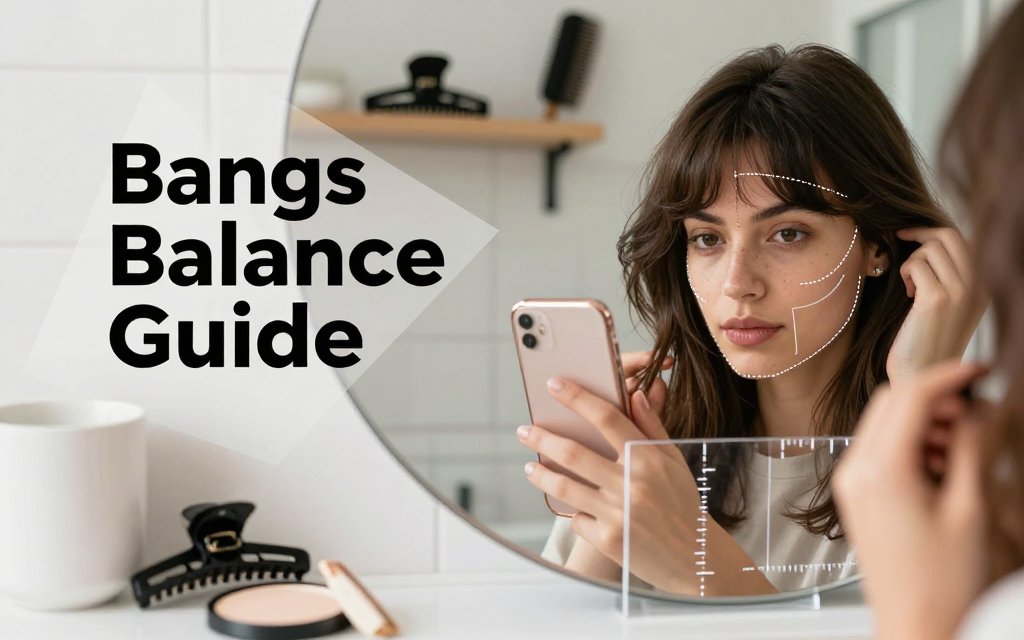
Here is the rule of thumb worth taping to your mirror: bangs should balance length and width, not copy your face outline. If your face reads a little longer than it is wide, your fringe can add width or “lower” the face. If your face reads wider or more angular, bangs can soften corners and create movement where you want it. The goal is never to hide your face shape, it is to nudge proportions so your features (eyes, cheekbones, lips) get the spotlight. Think in simple bang goals: shorten, soften, widen, or elongate, then pick the fringe style that does that job.
AI face shape analysis makes this way less personal-guessy. In plain language, Fravyn looks at your photo, finds key facial landmarks (like where your cheekbones peak and where your jaw turns), then compares a few proportions to identify what your face is doing most: length, width, or angles. Instead of just labeling you “round” or “square,” it can point you toward a practical styling aim, like “add vertical lines” or “soften the jaw area.” Visual example concept: picture a simple rectangle over your face in the mirror, then draw one line across the cheekbones and one across the jaw. Your bangs are basically the third line that can visually lift, lower, narrow, or widen the overall frame.
AI face shape analysis, the quick way to stop guessing
What the app is “measuring” is pretty relatable: cheekbone width (usually your widest point), jaw width (how broad your lower face reads), and face length (hairline to chin). Some methods also compare forehead width, because a broad forehead can change how a fringe sits and how heavy it looks. If you like seeing the logic behind it, this overview of face shape measurements mirrors what most stylists do with a tape measure or a straight-on photo. The useful part is the output: it turns those numbers into a bang goal, like “elongate” for round, or “soften corners” for square.
You can sanity-check the AI read in under a minute. Pull your hair back, stand in good light, and look straight on (no chin up, no camera tilted). Compare three widths: forehead, cheekbones, jaw. If cheekbones are clearly widest and the jaw looks curved, you are probably closer to round than oval. If forehead, cheekbones, and jaw are similar but the face is noticeably longer, you are probably rectangle rather than square. The most common mistake is choosing bangs based on a celebrity photo. Two people can share a face shape but have totally different hair density and forehead height, which changes how blunt, wispy, or “curtain-y” the exact same fringe will look.
If you are stuck between two shapes, choose bangs for the feature you notice first in photos. Width at cheeks often wants vertical, airy pieces. Strong jaw corners often want softness and bend. Your mirror is your best tie-breaker.
Match the bang goal to the shape, not the trend
Round faces usually win with airy, lengthening fringes. Think wispy curtain bangs that split softly at the center, bottleneck bangs that taper longer at the sides, or a side-swept fringe that starts deep and skims the cheekbones. The quotable line is: “Keep the center light, keep the sides longer.” Long faces (often called oblong) often need the opposite, more width and a slightly lower line. A fuller curtain bang that starts closer to the brow, a textured blunt fringe, or a soft straight-across bang can visually shorten face length, especially if the ends of the bangs connect into cheekbone-length layers.
Square faces usually benefit from softness and movement at the corners, because the jaw is the loudest shape cue. A choppy fringe, a longer side fringe, or curtain bangs with a slight bend can blur hard angles without hiding them. Rectangular faces can look similar at first glance, which is why people misread square vs rectangle all the time. The difference is length: rectangles typically read longer, so they often need a lower, slightly wider fringe than a square face does. Heart faces often need balance at the forehead and cheekbones, so a parted fringe (curtain or grown-out wispy bangs) that breaks up forehead width and lands around the cheekbone tends to feel easy and flattering.
One more practical note before you lock anything in: your forehead height and hair texture can override the “perfect” face shape rule. A micro fringe can be amazing on an oval face, but if your hairline sits low, it can feel crowded fast. Super curly or coily hair will shrink up, so a “brow-grazing” bang in the salon might become a baby bang at home unless it is cut dry and longer than you think. Fravyn helps by letting you preview different densities and lengths, then you can also test a color idea in the same session (a fringe plus a richer brunette can read ultra polished), including cherry mocha hair shade match. Next up, we will turn these goals into a decision guide that also considers forehead, cowlicks, and texture so your fringe is wearable, not just photogenic.
Best bangs for face shape, forehead, and texture
If you want bangs you will actually like two weeks from now, pick them like a problem-solver, not like a trend chaser. Start with what you want to change visually: make a round face look a bit longer, soften a strong jaw, balance a tall forehead, or add interest to straight hair that falls flat. Then match that goal to your real-life hair behavior. The same fringe can look airy and effortless on one person, and feel like a sweaty helmet on another, simply because of density, curl pattern, and hairline quirks.
Before you decide, check three bang deal-breakers in the mirror: a cowlick right at the front hairline, an oily hairline that gets shiny by noon, and how much hair you have in your fringe zone (some people have lots of density at the temples, others do not). Add texture to that list too. Loose waves can handle more shaping, tight curls shrink and spring, and very straight hair shows every tiny snip line. This is why a quick try-on is helpful, you can test length and width without committing to scissors first.
A simple bangs decision flow you can screenshot
Use this like a text-only flowchart. Make one decision, then move to the next step. If you are between two options, choose the one that needs less daily heat styling, because bangs are a daily relationship, not a one-time haircut. Screenshot it, then plug your answers into a specific request for your stylist (for example: “cheekbone-length curtain fringe, light density, textured ends”).
Step 1 and 2 usually narrow it fast. For bangs for round face, the goal is often “add length and angles,” so a heavy blunt fringe can backfire by making the face look wider across the cheeks. A safer move is longer curtain bangs that start around the cheekbone and taper into face-framing layers, especially if your forehead is medium height. For bangs for long face, the goal is usually “add width and shorten length,” so brow-skimming, airy fringe works well, and a very tall forehead can handle a slightly fuller center without looking top-heavy.
Step 3 and 4 are where reality checks happen. Fine hair with low density often looks best with a lighter, piecey fringe (think tapered curtain bangs or a soft side-swept shape), because thick straight-across bangs can separate and show scalp. Thick, dense hair can support a stronger line, but cowlicks may force you toward longer lengths that can be redirected with a blow-dry. If your hairline gets oily fast, plan on quick bang-only rinses or using dry shampoo between washes, and remember that dry shampoo mainly absorbs oil and does not truly clean hair, as explained in the dermatologists' dry shampoo tips.
Now step 5, choose the bang that solves your combo. Round face plus medium forehead plus fine hair often does best with cheekbone-length curtain bangs, cut with internal texture so they do not collapse into strings. Long face plus tall forehead plus straight hair can look fantastic with an airy, center-focused fringe that grazes the brows (not too thick, or it can feel heavy). For a strong jaw or angular cheeks, wispy bangs for square face work best when the edges are longer, the ends are point-cut, and the center is light enough to bend, so the jaw corners look softened instead of emphasized.
Curtain bangs vs Birkin bangs, who they flatter
Curtain bangs are parted and blend into layers, sweeping to each side with longer corners that connect to the rest of the cut. Birkin bangs are soft, shorter, and more centered, with a slightly grown-in vibe that looks charming rather than sharp. In the curtain bangs vs Birkin bangs decision, curtains tend to be more forgiving for round and heart faces because the open center and cheekbone length create a slimming frame. Birkin bangs can be great for long faces when kept airy and not too thick, since they visually shorten the forehead without forming a heavy block.
Square faces deserve a special note: if you love the French fringe vibe but worry about looking boxy, ask for wispy bangs for square face with longer, textured edges that hit around the cheekbones. That length helps blur the widest points of the jaw, especially if you wear your hair tucked behind one ear sometimes. For curls, request curl-by-curl shaping in the bang area and aim a bit longer than your target, because shrinkage is real. Whatever you choose, bring two references, one with your hair texture and one with your dream vibe, then preview a few options in Fravyn so your stylist can match the cut to your actual features.
How to style bangs, and avoid regret later
Day-one bangs are all vibes: they sit perfectly, your forehead suddenly looks “styled,” and you keep catching yourself in mirrors. Day-ten is where reality shows up. Your fringe starts separating at noon, a tiny cowlick you never noticed suddenly has opinions, and you realize your skincare leaves your hairline a little dewy. None of that means bangs were a mistake, it just means bangs are a micro-hairstyle that needs micro-habits. Most regret comes from three preventable things: bangs cut too thick (they feel heavy and grow out awkwardly), drying them in the wrong direction (they set into a split or a flip), and ignoring growth patterns at the hairline. The goal is simple: style them like you mean it, even on casual days.
Before you even touch scissors, do a quick virtual check so you do not “panic-cut” later. Use a try-on app like Fravyn to test a few fringe shapes on your actual photo, then screenshot your top two options and bring them to the salon. Keep it practical: try one low-commitment option (curtain or bottleneck bangs) and one higher-commitment option (blunt brow-grazing fringe). Also test hair color at the same time, because contrast changes how bangs read, a deep espresso can make a wispy fringe look sharper, while warm copper can make it look softer. For 2026, the overall mood is wearable fringe with good grow-out, not constant micro-trims, and you can see that reflected in 2026 fringe trend reports that highlight softer shapes like curtain and Birkin-inspired fringe alongside bolder looks.
The 5 minute styling routine that makes bangs behave
Here is the counterintuitive truth: styling bangs from fully dry is harder than re-wetting just the fringe. If your bangs look weird after sleep or a workout, do not rewash your whole head. Wet only the bang area (sink spritz or a damp hand works), then rough-dry the roots side to side with your dryer. That side-to-side motion breaks the “memory” that makes bangs split, kink, or lean into a cowlick. Once the roots are about 80 percent dry, choose your finisher: a small round brush if your bangs are thicker or you want a soft bend, or a flat brush if your bangs are fine and you want them airy and straight. Aim the airflow down the hair shaft, not up into the hairline, because upward airflow is how you accidentally create puff or a flip.
Product is where most bang regret gets amplified. Start with almost nothing, then add a touch more only if you need it. For coarse hair or a strong bend, emulsify a pea-sized smoothing cream between your palms, then tap it onto the last inch of the bangs, not the roots (roots get greasy-looking fast). For fine hair, use a half-pea amount or skip cream entirely and rely on heat plus brush tension. If your bangs separate by noon, spray dry shampoo at the roots from about 6 inches away, wait 20 seconds, then lightly press it in with fingertips so it does not look chalky. The cowlick rule: if your hairline has a swirl, dry against it first for 20 to 30 seconds, then dry into your desired shape so it stays put instead of springing back.
What are the best bangs for a round face that won’t look too short?
Ask for long curtain bangs or bottleneck bangs that start around the cheekbone and taper longer toward the jaw, because that creates vertical lines and avoids the “helmet” effect. A concrete salon request: “Keep the center piece no shorter than my brow, and blend the sides into face-framing layers.” Style them with a middle or soft off-center part and a slight outward bend at the ends. The mistake to avoid is cutting the fringe too thick and too straight across, especially if your hair is dense, since heavy blunt bangs can make the face look wider and are harder to grow out gracefully.
Which bangs work best for a long face and a high forehead?
Go for brow-grazing wispy bangs, Birkin-style fringe, or a soft straight-across shape with textured ends, since these visually shorten face length and reduce the “extra height” a high forehead can create. A practical recommendation: keep the densest part of the fringe centered, then taper lighter toward the temples so it does not look like a curtain. If you have waves or curls, ask for longer, piecey bangs that can shrink without turning into baby bangs. The common mistake is ignoring your cowlick or widow’s peak at the hairline, which can force a gap in the middle unless your stylist adjusts the parting and weight distribution.
How do I tell my stylist exactly what bang style I want?
Bring two photos: one “ideal” and one “realistic for my texture,” plus a selfie of your hair air-dried so they can see cowlicks and natural bend. Then give measurable details: where the shortest point sits (lash line, mid-brow, or brow top), how wide the fringe should be (outer eyebrow to outer eyebrow is a common starting point), and whether you want it to split in the center (curtain) or sit forward (classic fringe). Ask them to show you the sectioning before cutting, because that is where thickness gets decided. The mistake to avoid is saying “thin bangs” without clarifying length and parting, which often leads to bangs that look wispy in the salon but disappear at home.
Ready to see how a new hairstyle looks on you? Try Fravyn and preview 50+ styles on your own photo in seconds, including multiple bang lengths and textures. Upload a selfie, compare looks side-by-side, then save your favorites to show your stylist. Download Fravyn on iOS and start experimenting today so your next cut feels like a sure thing, not a surprise.
Try a New Hairstyle Today
Preview 50+ hairstyles and 29+ colors on your own photo with Fravyn.