Gloss Bob Checklist: Get Shine Without Flatness
A gloss bob is the shortcut to glassy shine on a bob or lob, but the wrong cut, toner, or styling routine can leave hair looking flat. Use this salon-to-at-home checklist to choose the most flattering length for your face shape, keep volume at the roots, and lock in shine between appointments.
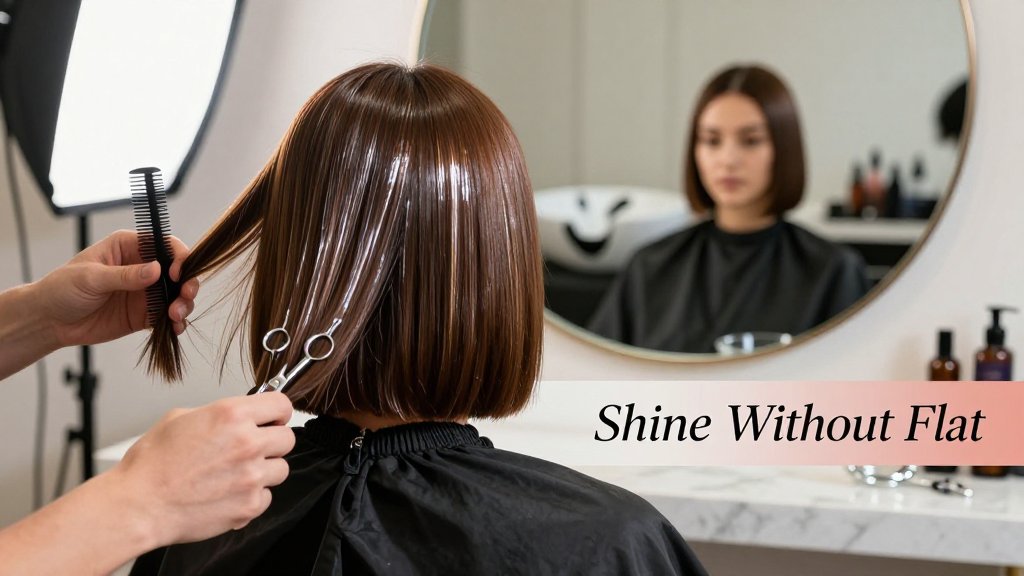
A glossy bob can look modern, expensive, and effortless, but only if the shine does not collapse the shape. In 2026, the best gloss bobs balance glassy finish with lift at the crown and clean, face-framing lines. This checklist shows you exactly what to request at the salon, which lengths and edges suit different face shapes and hair densities, and how to style for smoothness without going flat. You will also learn how to test parts and bangs with a virtual try-on first.
What is a gloss bob, and who suits it
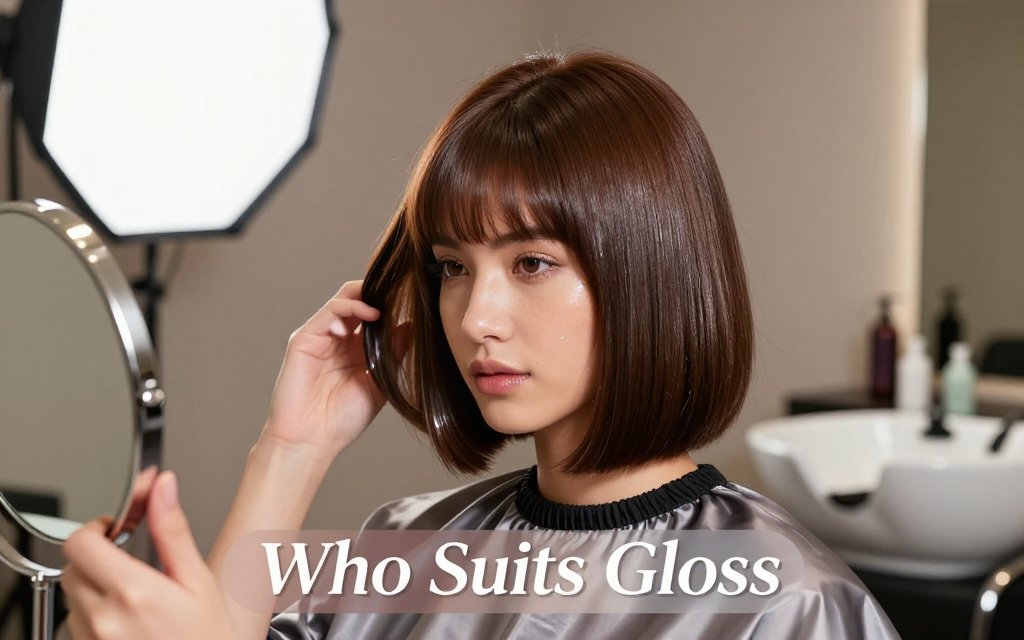
Picture a bob that looks like it was polished, the ends feel crisp (not fuzzy), and your color looks intentional even if it is your natural shade. That is the vibe people mean when they say “gloss bob.” It is not one single haircut blueprint, it is the combo of a clean bob shape plus a high-shine finish that makes light bounce off your hair in photos. The important expectation to set is this: shine is a finish, while volume is a cut choice and a styling strategy. If you want a reflective, expensive-looking bob that still has movement and lift, you will plan both parts, the shape at the salon chair and the shine service at the sink.
A lot of people book “a gloss” hoping it will magically fix flat roots or a triangular bob shape. Gloss can make hair look healthier and more light-reflective, but it does not create structure. Structure comes from where your stylist sets the perimeter (chin, jaw, collarbone), how they remove weight (internal layers, hidden debulking), and how you build lift (blow-dry direction, mousse, rollers, or a root-lifting spray). Think of a gloss bob like tailoring and fabric finish: the haircut is the tailored silhouette, and the gloss is the final press that makes everything look sleek and deliberate.
Gloss bob meaning: cut shape plus a shine finish
In plain language, a gloss bob is usually a crisp bob or lob (long bob) paired with a demi-permanent gloss or toner that boosts shine and refines your tone. You can do this on a blunt chin-length bob, an Italian bob (a little fuller and bouncy), a French bob (shorter, often with a fringe), a box bob (clean and squared-off), or a collarbone lob that still tucks behind your ears. The gloss part can be clear for pure shine, or slightly tinted to nudge the color where you want it, like making a blonde look less brassy, a brunette look more espresso, or a copper look more even. That is why a hair gloss treatment is often described as a shine booster that also helps refine tone. (healthline.com)
Here is the practical takeaway that keeps you from getting “shiny but flat” hair: gloss adds reflectivity and tone-correction, but it will not replace a smart cut. If your ends flip out, feel bulky, or puff into a triangle, you will still need the right strategy, like subtle graduation at the nape, tiny internal layers to keep movement, or weight removal that is hidden so the surface stays glossy. If your roots collapse, ask your stylist to show you how to create lift with a round brush and directional blow-drying (up and away from the scalp), or try Velcro rollers at the crown for 10 minutes while you do makeup. Shine reads best when the silhouette has gentle lift, not when everything is pressed to the head.
Ask for a blunt or softly beveled perimeter first, then choose a clear or tinted gloss for tone. If your hair goes flat, fix it with root lift, not with more gloss.
Best gloss bob for face shape and hair density
The fastest way to pick your best version is to decide two things separately: your most flattering length for your face shape, then the best density strategy so it does not look thin or bulky. If you are unsure, use a try-on step first (Fravyn can help you preview bob lengths and parts on your own photo, plus give face shape analysis), then take two or three screenshots to your stylist. Also consider your daily styling reality. A sharp jaw-length bob can look unbelievably glossy, but it usually needs more frequent trims and a bit more heat styling to keep the line crisp. A collarbone lob is more forgiving if you air-dry, wave, or clip it back often.
Density matters because gloss tends to emphasize whatever your shape is already doing. Fine hair usually looks fuller with blunter ends and minimal internal layering, because too many layers can turn glossy hair into wispy see-through ends. If you want movement, ask for micro-texturizing that stays inside the haircut so the surface still looks like glass. Thick hair can absolutely wear a gloss bob, but it often needs hidden debulking (sometimes called internal weight removal) so the ends do not flare out into that classic triangle. A good thick-hair gloss bob keeps the outer layer smooth and reflective while quietly reducing bulk underneath, especially around the occipital bone and behind the ears.
Texture is the final piece. Straight hair shows gloss the most dramatically, but it can also show flatness, so prioritize crown lift and a slightly beveled end. Wavy hair looks amazing with a gloss bob because shine highlights the S-shape, just avoid over-thinning the ends or the wave can look stringy. Curly and coily hair can still do a gloss bob, but the “gloss” look is usually a mix of a toner service plus a curl-definition routine that keeps the cuticle smooth, like a leave-in, a curl cream, and a gel cast you scrunch out with a lightweight oil. For textured hair, ask for a curl-by-curl or dry shaping approach so the bob sits balanced on your face, then use gloss as the tone and shine enhancer, not as the tool that creates the shape.
Salon checklist: what to ask your stylist
Walk into the appointment planning to spend the first 10 minutes on shared vocabulary, not scissors. Start with: “I want a glossy bob that has shine, but still has swing and lift at the roots.” Then hand over 2 to 4 reference photos that match your hair density and texture as closely as possible (or bring a try-on preview from an app like Fravyn so your stylist sees the exact length, part, and tone you like). Confirm timing before you begin: a cut plus gloss often runs 60 to 105 minutes, longer if you need a corrective tone. Most flatness and dullness happens because the stylist hears “sleek” and you meant “shiny,” or they hear “gloss” and book something stronger than you wanted.
Cut choices that keep shine and prevent flatness
Ask your stylist to decide the perimeter first, because the perimeter is your “shine line.” A blunt bob can look like glass on fine to medium hair because the ends hit as one clean plane, which reflects light. If blunt tends to look severe on you, request “softly beveled ends” (you still keep fullness, but the very edge is refined). Next, talk about weight placement: do you want weight at the jaw (French bob feel), at the chin (classic), or grazing the collarbone (lob with bounce)? Flatness often comes from cutting too much weight away around the crown on fine hair, which makes ends wispy and less reflective.
If your hair is thick, the mistake flips: leaving everything “one length” can create a bulky triangle that sits heavy and reads dull, even if the hair is healthy. Use the phrase “invisible internal layers” or “interior debulking,” and specify what you do not want: “Please do not shred the ends.” Good internal work removes bulk inside, while keeping a crisp, shiny outline. Confirm your part placement before the first section is cut, because a deep side part versus a middle part changes the whole balance. Same with bangs: curtain bangs can add lift and face framing, while a full fringe can increase shine up front, but needs a clean blowout plan.
“If I say ‘ashy,’ I mean neutral-cool, not gray. If I say ‘gloss,’ I mean a low-lift, shine-boosting demi. Please tell me if my words do not match what you would book.”
Gloss or toner plan: shade, strength, and schedule
Now get specific about chemistry and goals, in plain language. A toner is usually chosen to correct an unwanted tone, like too-gold highlights that need a beige or pearl shift. A gloss can be clear (pure shine) or tinted (adds a whisper of tone, refreshes faded color, blends early grays more softly). Ask: “Is this a demi-permanent gloss with a low developer, or a toner step that is stronger because we are correcting warmth?” That question prevents the common problem where hair looks darker and flatter than expected. Also ask about strength and timing: a well-matched gloss might process 10 to 20 minutes, but over-processing or choosing too cool of a formula can mute dimension.
For shade, request a name and a visual target, not just “cool” or “warm.” Examples that translate well: “neutral espresso,” “beige blonde,” “pearl champagne,” “soft copper,” or “smoky brunette.” If your bob looks flat after glossing, it is often because the formula was too opaque, too dark, or too matte for your base level. Ask for a “sheer, high-shine deposit” and confirm where it goes: roots, mids, ends, or all over. Maintenance is where realism helps: many people re-gloss every 4 to 8 weeks depending on wash frequency and how much tone shift they want, and editors commonly note that gloss lasts seven weeks in typical routine conditions.
Add-ons can help, but only if your stylist uses them strategically. If your hair is lightened, porous, or prone to frizz, ask whether a bond-builder makes sense in your color step (Olaplex-style add-ins are common) or if a repair mask like K18 is better after rinsing. For pure shine without heaviness, some salons finish with an acidic shine seal or a glaze step, plus a smooth blowdry and a cool shot to lay the cuticle down. If your hair gets weighed down easily, say so, and request lighter styling: a mousse at the roots, a small amount of serum on ends only, and no heavy oils before heat tools.
Close the consult by booking your “keep it glossy” calendar on the spot. A practical plan sounds like: trim every 6 to 10 weeks to keep the perimeter reflective, re-gloss every 4 to 8 weeks, and clarify once every 2 to 4 weeks if you have hard water or use lots of dry shampoo (product haze is a sneaky dullness culprit). If you are planning a wedding or big event, schedule the gloss 7 to 10 days before so it looks natural, not freshly processed. Finally, ask your stylist to write down the formula and the tone words you agreed on, then take a quick window-light photo at checkout so you can show the exact shine level next time.
At-home glass hair routine for a glossy bob
Style for shine and volume: the non-obvious tricks
Start your wash routine like you are protecting a fresh blowout, not “getting super clean.” A lightweight shampoo is the move because heavy, buttery formulas can leave a film that makes a bob fall flat fast. If your scalp gets oily, focus shampoo on the scalp only, then let the suds rinse through the ends. Follow with a rinse-out conditioner only from mid-lengths to ends, and keep it off the crown so your roots stay airy. For a glossy bob, this matters a lot because the shape sits right at jaw and collarbone, so any weight at the root reads as flatness. Try a volumizing shampoo, then a light conditioner like Pureology Hydrate Sheer or Redken Volume Injection on the ends.
Next, lock in shine before heat, not after. Use a heat protectant that feels like a mist or light lotion, not a thick oil, especially if you are wearing a blunt bob, a French bob, or any cut with a clean outline. A few reliable, non-greasy options people like are GHD Bodyguard, Living Proof Perfect Hair Day Heat Styling Spray, or Tresemmé Thermal Creations spray if you want a budget pick. Blow-dry strategy is the secret sauce: rough-dry your roots first for lift (fingers, high airflow), then switch to a brush to smooth mids and ends. Aim the dryer nozzle down the hair shaft so the cuticle lies flat and reflective. Finish with a cool shot to set the bend and boost shine.
Fine hair and thick hair need different “glass hair” finishing moves. For fine or low-density hair, add a golf ball sized mousse only at the roots (Color Wow Xtra Large, Kenra Volume Mousse 12, or any light foam), then avoid oils on the crown entirely. If you want shine, put a half-drop of serum on your palms and touch only the last inch of your ends. For thick, coarse, or very dense hair, use a smoothing cream in pea-size amounts, emulsify it in your hands, then apply from mid-lengths down so it does not collapse your silhouette. After you dry, polish with a boar-bristle brush to blend and reflect light. Keep hot tools on low to medium when possible, and skip heavy serums that make the bob look “helmety” by lunchtime.
How long does a hair gloss treatment last on a bob?
Most salon gloss results on a bob stay noticeably shiny for about 4 to 6 weeks, then fade gradually with washing and heat styling, which lines up with what many dermatology and beauty references describe as the typical window for professional gloss longevity. See this overview on what to expect from a gloss treatment, including the common duration: how long gloss lasts. To stretch it, keep water lukewarm, shampoo less often if you can, and use a color-safe, lightweight conditioner only on the ends so the finish stays reflective without getting limp.
Why does my shiny bob look flat, and how do I fix it fast?
A shiny bob usually looks flat for one of three reasons: product placed too close to the scalp, roots dried in the wrong direction, or buildup making hair stick together. The fast fix is targeted lift, not more shine spray. Hit the roots with a blow-dryer for 20 to 30 seconds while lifting with your fingers, then set the root area with the cool shot. If you have dry shampoo, mist it only at the root line and brush through after one minute. If your ends look puffy, smooth only the mid-lengths and ends with a paddle brush and low heat. Keep any oils strictly on the last inch so the crown stays buoyant.
How do I use a virtual hairstyle try-on to choose my gloss bob?
Use a virtual try-on to decide shape details that matter more than people expect, especially with a glossy finish that highlights every line. Upload a clear, front-facing photo in good daylight, hair pulled back, and test a few lengths (chin bob, jaw bob, collarbone bob) plus part options (center, deep side, soft off-center). Then try fringe choices: bottleneck bangs, curtain bangs, or no bangs, and look at how your cheekbones and jawline balance. In Fravyn, you can preview 50-plus hairstyles and 29-plus hair colors on your own photo, plus use face shape analysis to narrow down what will look intentional, not accidental, before you ever book.
Bring your try-on winners to your appointment as a mini menu, not a single “final answer.” Save two to four screenshots that show the length, part, and bangs you liked most, and note what you are chasing (more volume at the crown, sharper ends, softer curve under). This helps your stylist tweak for your density and hairline, which is where bobs can go from perfect to awkward. If you have waves or curls, also try a version that is styled naturally, plus one that is smooth, because a gloss bob can be worn both ways. The goal at home is simple: clean, weightless roots and polished ends, so you get shine without sacrificing that lifted bob shape.
Ready to see how a new hairstyle looks on you? Try Fravyn and preview 50+ styles on your own photo in seconds, including glossy bobs with different lengths, parts, and bangs. It is a fast way to compare options before your next appointment and feel confident about the cut you choose. Download Fravyn now on iOS and start trying styles today.
Try a New Hairstyle Today
Preview 50+ hairstyles and 29+ colors on your own photo with Fravyn.