Haircut Plus Beard Combo for Your Face Shape Chart
A practical, face-shape-first guide to pairing haircut silhouettes with beard shapes. Includes the most-requested 2026 combos like fade with beard, beardstache, and clean taper looks, plus what to tell your barber and how to preview styles on your own photo.
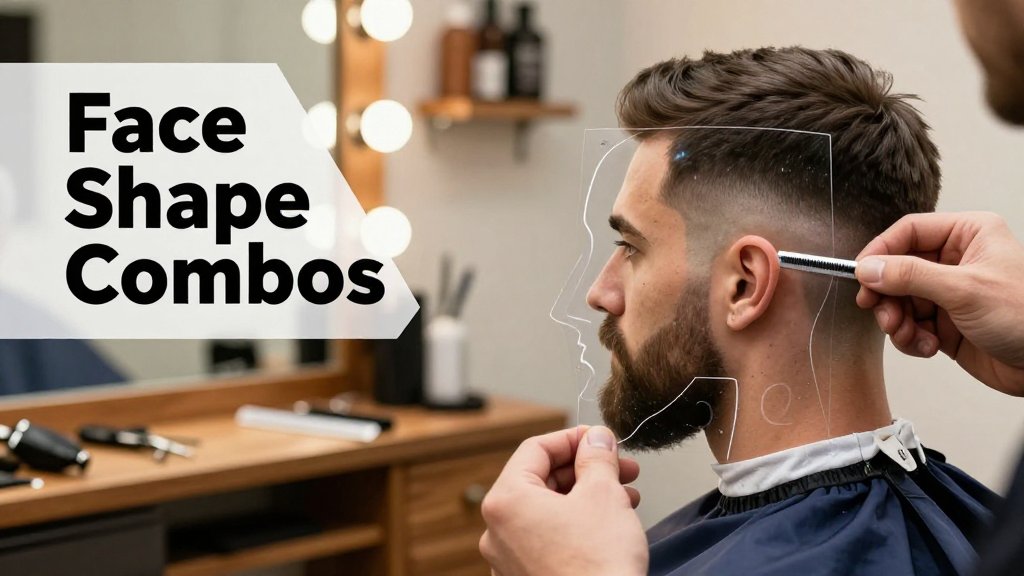
A great haircut and beard can sharpen your best features, but the wrong pairing can throw your whole face off balance. Most misses are not about what is trendy, they are about geometry. If your cut and your beard both add width in the same place, your face can look wider or shorter than it really is. In this guide, you will use a simple face-shape chart mindset to match structure and softness, choose where to add length or width, and keep transitions clean and intentional.
Face shape first, then haircut plus beard
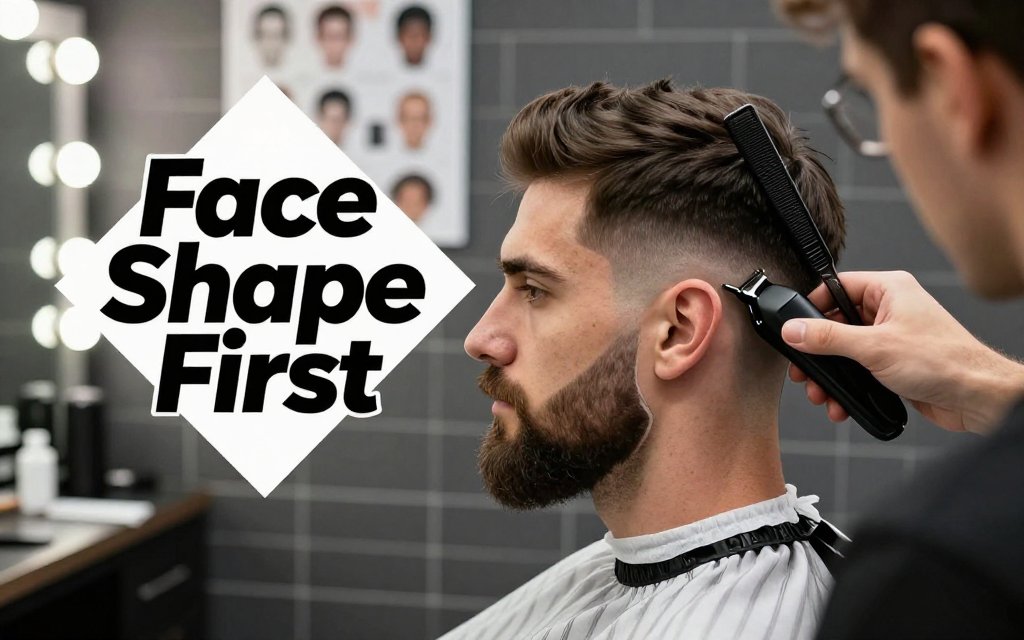
Rule of thumb you can repeat in the mirror: pick one place to add width and one place to sharpen, then keep everything else quiet. That is the fastest way to make a haircut plus beard combo look intentional instead of accidental. For men, the “style” is not just what is on top of your head, it is the full outline from temple to cheek to chin. A great fade with a mismatched beard can still read “off” in photos, especially in wedding portraits where side angles and strong lighting exaggerate shadows along the jaw and neck.
Think of hair and beard as one continuous silhouette that frames the face. The haircut controls width at the temples and parietal ridge (that curve above the ears). The beard controls width at the cheek line and jaw. If the pairing is wrong, it can amplify what you do not want: a rounder face can look even rounder with bulky sides plus a wide, rounded beard; an oblong face can look longer with extra height on top plus a long beard that drops below the chin. If you want extra visual examples, this face shape beard pairing overview is a helpful reference point before you decide where to add or remove weight.
The two silhouette rule that fixes most combos
Use a simple “two silhouette” decision: (1) choose where you are adding width (temples, cheek line, or jaw), and (2) choose where you are removing it (tight sides, a tapered beard, or a higher cheek line). This keeps you from stacking bulk everywhere. Example: a mid fade plus a boxed beard adds jaw width and looks especially strong for guys with softer jawlines or a narrow chin, because the beard corners create structure. In contrast, a textured crop with short stubble keeps the outline compact, which is a win if your face already reads round or if you want your cheekbones and eyes to lead.
A few real world pairings to picture: if you wear a high fade with a slicked back top, a shorter, slightly tapered beard usually looks cleaner than a full, bell shaped beard, because the top already adds vertical energy. If you have dense curls or coils and love a low taper with a rounded shape on top, ask your barber to keep the beard cheek line a bit higher and the bottom more squared off so your face does not become a full circle. Also remember color and shine affect “visual size.” A very dark, brassy beard can read heavier, so if you notice odd warmth from minerals in your water, a hard water brassiness fix can help your overall look feel more polished.
Treat the haircut and beard like one frame around your face. If you add bulk at the temples, keep the beard tapered. If you grow a fuller beard, keep the sides tighter so your jaw looks intentional.
Quick face shape analysis for men in 60 seconds
You can get a solid face shape read in about a minute with a mirror and your phone camera. Stand straight, look forward, and pull your hair back so your hairline is visible (or imagine the natural hairline if you are shaved). With clean, even lighting, compare four points: forehead width (temple to temple), cheekbone width (widest point under the eyes), jawline width (corner to corner), and total face length (hairline to chin). You do not need perfect numbers, you need proportions. If one area is clearly widest, that usually tells you where you are carrying visual weight.
The most common mix-ups are about “length versus angles.” Oval versus oblong: both can be balanced, but oblong looks noticeably longer than it is wide, while oval feels only slightly longer with softer transitions. Square versus rectangle: both have strong corners, but rectangle is longer, and the jaw to forehead widths feel more equal. Round versus diamond: round has gentle curves with similar width and length, while diamond has a narrow forehead and jaw with cheekbones that pop wider. Keep in mind, a wide angle selfie lens and overhead lighting can distort your reading, which is why a photo-based analyzer can be more consistent across shots.
Once you know your shape, you can “design” the outline on purpose: shorten the face by reducing height and keeping the beard tighter under the chin, or add structure by squaring the beard corners while tapering the haircut at the temples. If you want a low pressure way to experiment, Fravyn on iOS lets you test 50 plus hairstyles and 29 plus hair colors on your own photo, with face shape analysis and personalized recommendations, so you can lock in a flattering hair silhouette before you commit in the chair. Then tell your barber your plan in plain language: where you want width, where you want taper, and what you want the profile to look like.
Haircut and beard combos by face shape
The fastest way to get a haircut plus beard combo that looks intentional is to pick one clear goal for your face shape, then build a “silhouette stack”: what your hair does above the cheekbones, what your fade does at the sides, and what your beard does from cheek line to chin. In 2026, the two most requested pairings I keep hearing are a fade with beard (a clean transition from sideburn into facial hair) and the beardstache (a heavier mustache with short beard or stubble). Both can look incredible, but only if they are tuned to your proportions instead of copied from a random photo.
If you want a quick cross-check on your shape before you commit, compare your forehead, cheekbones, jaw width, and face length, then match the haircut and beard to what you want to visually add or subtract. Resources like Apothecary 87’s beard and haircut picks line up with what many barbers do in practice: keep rounder faces tighter at the sides with more height, keep longer faces from getting taller, and use beard shape to either sharpen or soften the jaw. (apothecary87.co.uk)
The best combo is the one that shifts your outline toward balance. Tight sides and a softer beard can slim cheeks. Less height and a fuller beard can shorten a long face. Small tweaks matter.
How fades and beards connect
A fade with beard looks modern because the sideburn does not abruptly “stop” and then restart as beard. Ask for a beard fade or a blended transition, and be specific about where you want the fade to start: a high fade adds height and sharpness, a low fade keeps more side weight (often more flattering for longer faces). For beardstache lovers, the trick is contrast: the mustache is the hero, the beard stays short enough to read as shadow, not as a full beard. That is why many barbers recommend keeping cheek and neck lines clean, especially when you are blending a fade into stubble. (pallmallbarbers.com)
Your face shape, your best pairing blueprint
Use this like a chart, but read it as logic: each pairing tells you the goal (what you are visually correcting), the haircut silhouette (where you add height or width), and the beard shape (where you add length, control bulk, or soften angles). If your hair is curly, coily, or wavy, keep the same silhouette idea, just swap in texture-friendly versions like a curly crop, twist sponge top, or a layered scissor cut with a taper. If your hair is fine, use matte clay and a light blow-dry to build height without looking “poofy.”
Oval faces can wear almost anything, so your “blueprint” is really about not overdoing any one zone. A mid fade plus short boxed beard is a safe, sharp baseline for work or weddings, and it photographs cleanly. Round faces usually look best when you create vertical lines: try a high fade with a textured quiff or crop on top, then keep beard bulk off the cheeks. A beardstache can work great here if you keep the beard portion tight and slightly longer at the chin than at the jaw, which hints at a more oval outline. Square faces already have a strong jaw, so avoid making the beard too blocky. Keep corners rounded, keep the beard fade controlled at the sideburn, and let a textured fringe soften the forehead and temples. (apothecary87.co.uk)
Rectangle or oblong faces need the opposite of the “tall hair plus long beard” combo. Skip extra height and choose a low fade or taper that leaves some side presence. For the beard, build fullness on the cheeks and keep the chin from getting too pointy or too long, a fuller corporate beard shape (squared, not extended) helps widen the lower third. Diamond faces are widest at the cheekbones, so you want gentle structure at the forehead and jaw. A side-swept crop or a low-volume pompadour with a little temple fill balances the top, then a boxed beard that stays fuller at the jawline (not the cheeks) gives the chin more “platform” without making the face look wider in the middle. (apothecary87.co.uk)
Triangle or pear shapes usually read wider and heavier at the jaw, so your job is to pull attention upward. Keep some volume at the temples (think a low taper fade with a slightly wider top, not a super tight skin fade), and keep the beard lighter on the chin. Many people do better with short stubble plus a precise mustache, instead of a dense, chin-heavy beard that repeats the jaw width. Heart shapes (wider forehead, narrower chin) benefit from the opposite. Keep the top from getting too tall or too slick, then add jaw fullness with a short boxed beard or a beardstache where the beard portion is a touch denser at the jaw than at the cheeks. That lower weight makes the chin look less pointy in photos.
Barber notes: cheek line and neckline
Bring two instructions to your appointment, because they change everything: cheek line height and neckline placement. A higher cheek line (leaving more beard on the cheeks) adds width, which can help oblong faces and sometimes diamond shapes. A lower, cleaner cheek line removes cheek volume, which often flatters round faces and keeps square faces from looking too “helmeted.” For the neckline, ask your barber to set it deliberately instead of letting it drift. A common at-home guide is the two-finger method above the Adam’s apple, then curve it softly toward the back of the jaw rather than carving a harsh straight line. After that, plan maintenance: fades and beard blends usually look their best with quick cleanups every 2-4 weeks, or sooner if you like crisp edges. (readysleek.com)
What to ask your barber, plus 2026 FAQ
Walk into the shop like you are building a look, not ordering two separate things. Tell your barber you want the haircut and beard to read as one intentional shape from temple to jaw, and mention your face shape goal (longer, sharper, softer, wider). If you are unsure, bring 2 photos: one for hair silhouette and one for beard outline, plus a quick note on your growth pattern (patchy cheeks, dense chin, lighter mustache). For face-shape direction, skim beard styles by face shape and pick the vibe that matches how you want your proportions to look in photos.
Barber script: lengths, lines, and the blend
Your barber can only hit the target you describe, so use numbers and landmarks. Start with the sides, then the top, then the beard, then the connection points. Ask where the fade will sit (low, mid, high), because that decision controls how tall your head looks and how strong your cheekbones read. Next, describe your top as a length range, not a single number, because texture changes the final look (straight hair lies flatter, curls shrink up). Finally, define beard density expectations. A high skin fade with a thin beard can make your jaw look underpowered, while a low taper plus a fuller beard can balance a rounder face.
“Let’s do a low to mid fade, 0.5 into 1.5 on the sides, keep 3 to 4 inches on top with texture, and blend the sideburns into a 6 mm beard. Set my neckline 1 to 2 fingers above my Adam’s apple.”
If you want specifics, ask for sides at 0 to 1.5 guards (0 or 0.5 for very clean, 1 to 1.5 for softer and more office friendly). For the top, request 2 to 3 inches for tighter control and easy styling, or 4 to 5 inches if you want height, a quiff, or a side part with movement. For beard length, choose 3 to 5 mm for crisp stubble definition, 6 to 8 mm for a short boxed beard feel, and 10 to 12 mm when you want extra jaw weight. Request a beard fade into the sideburns, set the neckline about 1 to 2 finger widths above the Adam’s apple, and remember cheek lines: higher cheek lines visually widen the face, lower cheek lines slim it.
Watch for the classic mismatch mistakes that make a combo look accidental. A high fade plus a long beard can feel top-heavy unless the beard is also tapered near the sideburns and kept tighter on the cheeks. Another common miss is asking for sharp hairline edges while keeping a fuzzy beard outline, or the opposite, which makes the face look split into two styles. Density matters too: if your beard is sparse on the cheeks, pushing a high cheek line can look see-through and wider. A better move is a slightly lower cheek line with a clean curve, then keep the chin a touch fuller to build structure where you actually grow hair.
Which beard style is best for my face shape in 2026?
In 2026, the “best” beard is usually the one that looks intentional at shorter lengths, because tighter shapes photograph cleanly and pair easily with modern fades and tapers. Round faces tend to look sharper with a short boxed beard at 6 to 10 mm and slightly fuller chin. Square faces often suit shorter sides with a softly rounded bottom edge to avoid looking too blocky. Long or rectangular faces usually look more balanced with tighter chin length (3 to 8 mm) and a bit more fullness on the sides. Next step: try a few haircut silhouettes first in a virtual hairstyle try on, then pick the beard outline that supports that head shape.
How do I match a fade with beard without looking top-heavy?
Match the fade height to your beard density and your face length. If you have a strong, dense beard, a mid or even higher fade can work, but ask for a gradual beard fade through the sideburns so the transition is not abrupt. If your beard is lighter or patchier, keep the haircut fade lower and softer (0.5 into 1.5 works well), then keep beard length in the 3 to 6 mm range so the jaw does not disappear under a sharp temple. Practical next step: in a hairstyle try on, test the same top length with low fade versus mid fade, then choose the one that keeps your cheekbones and jaw in balance.
Does a beardstache work for my face shape, and what haircut goes with it?
A beardstache (bold mustache with short beard or stubble) can work on most face shapes, but the proportions matter. Round and heart shapes often benefit from slightly heavier mustache volume and tighter cheeks, which keeps the upper lip as the feature and slims the sides. Long faces should avoid pairing a beardstache with a tall pompadour, since that adds length twice; choose a textured crop or short quiff with 2 to 3 inches on top. Square faces can look great with a low taper and a groomed mustache edge. Next step: in Fravyn, try a low taper plus textured crop first, then adjust hair color to see whether a darker shade makes the mustache and brows feel more cohesive.
Ready to see how a new hairstyle looks on you before you commit to the chair? Try Fravyn and preview 50+ haircut and beard-friendly styles on your own photo in seconds. You can quickly compare shapes, lengths, and fades to find the combo that suits your face shape best. Download Fravyn on iOS and start testing looks today.
Try a New Hairstyle Today
Preview 50+ hairstyles and 29+ colors on your own photo with Fravyn.