Hard Water Hair Fix: Stop Brassiness Fast
Hard water minerals can make blonde go yellow, brunette go orange, and highlights look dull fast. This guide helps you spot mineral buildup, remove it safely with the right chelating routine, and prevent brassiness with simple shower and styling upgrades, then preview your corrected shade with a virtual try-on.
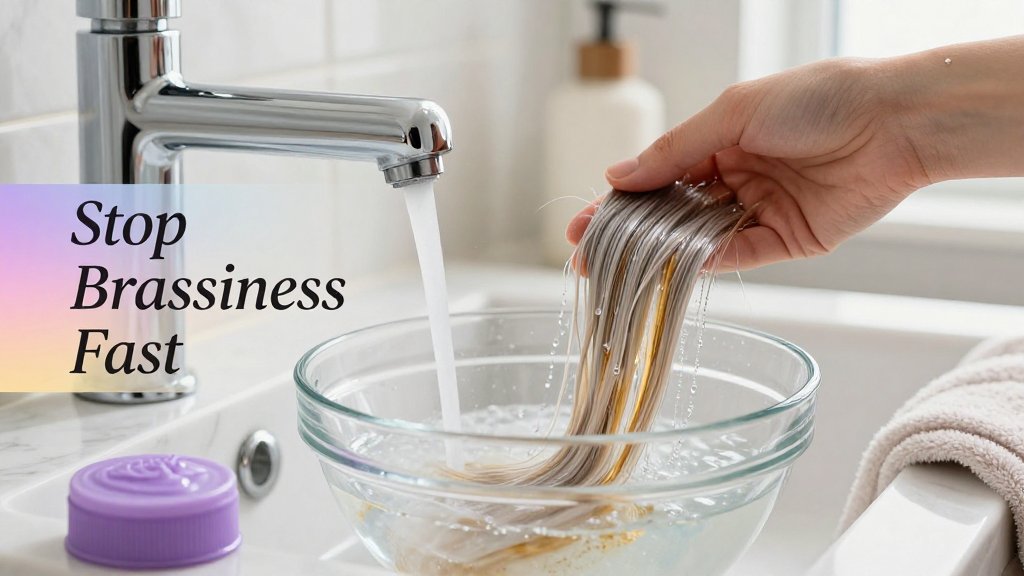
If your blonde keeps going yellow, your brunette turns orange, or your shine disappears no matter how much purple shampoo you use, hard water could be the reason. Minerals like calcium, magnesium, copper, and iron can latch onto strands, shifting tone and leaving hair rough, dull, and stubborn to style. In this guide, you will learn how to spot mineral buildup fast, remove it safely without wrecking your ends, and prevent brassiness from coming back with a smarter shower routine.
Is hard water making your hair turn brassy
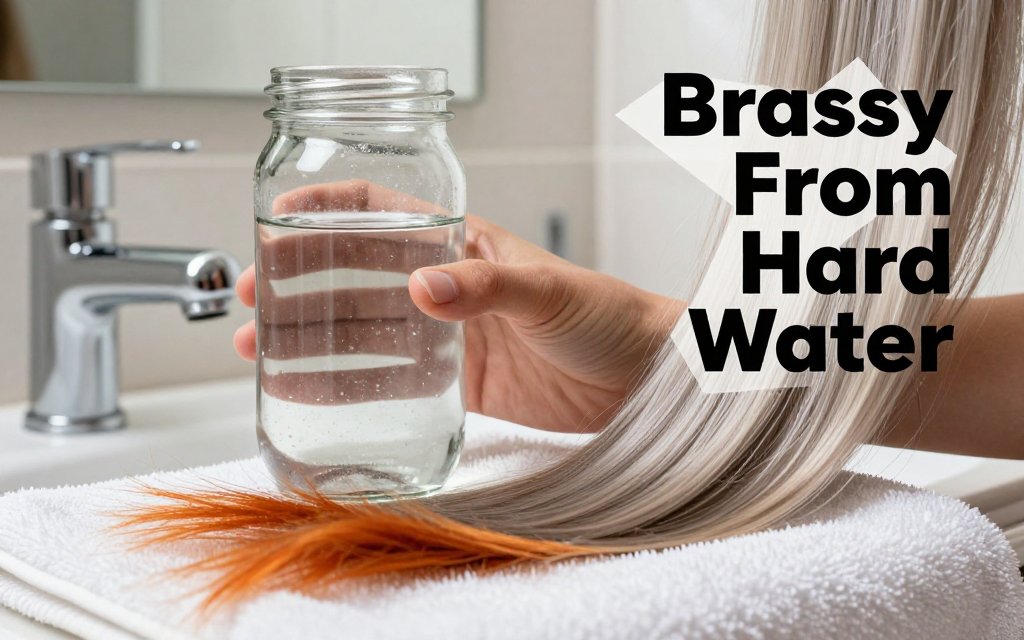
If your hair looks perfect leaving the salon, then starts turning warmer and duller after a few washes, your water might be the hidden culprit. “Hard water” simply means your tap water has a higher level of dissolved minerals, especially calcium and magnesium, and that mineral load can leave residue on hair over time. The U.S. Geological Survey explains that hardness is mainly about dissolved calcium and magnesium in water, which is why hard water often makes it tougher to get a good lather and easier to get buildup on surfaces. See the hardness of water overview for the science definition.
On color-treated hair, that mineral load acts like a clingy filter you never asked for. Deposits can settle onto porous areas (often the mid-lengths and ends, plus highlights), making your color look less “glossy fresh” and more “flat and faded.” The sneaky part is that hard water brassiness is rarely just one issue. It is usually a combo of mineral deposits coating the cuticle, everyday oxidation from air and UV, and normal tone fade from shampooing. Put together, cool shades like ash blonde, mushroom brown, icy beige, and smoky balayage can drift warm faster, even if your colorist nailed the formula.
Why hard water makes colored hair go brassy
Think of mineral buildup as a “coating problem” first, not a “pigment problem.” Minerals and trace metals can settle on hair, especially where bleach or permanent color has opened the cuticle. That coating changes how light reflects, so blonde can look less sparkly and more muddy, and brunette can look deeper but oddly orange at the same time. It can also make your toner, gloss, or demi-permanent color grab unevenly. One section looks perfect, another looks warmer, and your money piece somehow looks dull even right after you tone it. If you have balayage, mineral coating can make the mids look “dirty,” like the blend line is stronger than it really is.
Then oxidation and tone fade pile on. UV, hot tools, and plain oxygen exposure slowly break down dye molecules and reveal underlying warmth, especially in lightened hair where yellow and orange undertones are always waiting underneath. If your water has copper or iron, those metals can exaggerate warm shifts and make brassiness feel like it comes back overnight. This is where a super common mistake happens: reaching for purple shampoo every wash. Purple shampoo can help neutralize yellow tones, but it does not remove mineral coating. Overusing it can leave hair feeling dry, rough, and still brassy, just with a faint lavender cast on the ends.
If purple shampoo keeps turning your blonde slightly lavender but the yellow comes back fast, treat minerals first. One chelating wash can reset your canvas, so glosses and toners actually deposit evenly and look cooler.
Hair mineral buildup symptoms you can spot fast
You do not need a lab test to get a strong clue that minerals are sitting on your hair. The easiest self-check is to pay attention to how your hair feels right after washing and conditioning. Mineral buildup often creates that weird “squeaky” drag in the shower, then a stiff, dull finish once dry, even if you used your usual mask. It also makes hair harder to detangle because strands catch on each other instead of sliding. If your highlights have lost their sparkle, or your toner seems to fade in a couple of washes no matter what you do, that is another big hint that your color is fighting a coated surface.
Try a simple “one-side test” before you buy a whole new routine. On your next wash day, use a chelating shampoo (one designed to bind minerals, not just remove oil) on only the left half of your hair. Use your normal shampoo on the right half. Condition as usual, then dry your hair the same way you always do. If the chelated side looks brighter, feels smoother, or reads cooler in tone under bathroom lighting and near a window, minerals were a big part of the brassiness. For many people, one chelating wash weekly or every other week is plenty, then you switch back to gentler color-safe shampoo.
Hard water blonde hair vs hard water brunette hair
Blondes usually notice hard water issues first because light hair shows every tone shift. Instead of clean buttery beige or crisp ash, blonde can skew yellow, yellow-green, or just oddly “shadowy.” If you are platinum, minerals can make it look a little gray and heavy, not in a trendy silver way, more like a film that blocks shine. If you have lived-in highlights, the money piece can lose that bright pop and start looking dusty. Purple shampoo is helpful for true yellow, but if your blonde looks muddy or slightly green, you typically need mineral removal first, then a toner or gloss that restores the right beige, pearl, or icy reflect.
Brunettes often describe hard water brassiness as “my brown is turning copper” or “my ends look reddish in the sun.” That orange-copper cast can show up along the mid-lengths and ends, especially on previously lightened brunette balayage. Mineral coating also makes hair reflect light poorly, so color looks flatter and sometimes darker, even though it is also warmer. If you are planning a richer brunette refresh, it helps to pick a shade where warmth is intentional and flattering, not accidental. You can explore tone options like espresso, chestnut, or red-brown with cherry mocha shade matching, then use a chelating reset so your chosen gloss lands evenly and stays truer.
How to remove mineral buildup from hair safely
If your blonde, brunette, or vivid color keeps pulling orange or dull no matter how carefully you tone, you usually need to remove the mineral film first. Hard water minerals can sit on the cuticle like a thin coating, which makes shine disappear and makes toners grab unevenly, especially on porous ends or highlights. The safest fast plan is: chelate to lift minerals, condition deeply to rehydrate, then tone only if the color still looks warm in natural daylight. This order feels backward to a lot of people, but it is the difference between an even, expensive-looking “champagne blonde” and patchy, muddy brass.
Chelated shampoo for hard water, what to buy and how to use it
“Chelating” is just a chemistry word that means the shampoo has ingredients that grab onto metal and mineral ions (think calcium, magnesium, copper, iron), then help them rinse away instead of sticking to your hair. The easiest way to shop is to scan the ingredient list for chelators like disodium EDTA or tetrasodium EDTA, plus helpers like sodium gluconate, phytic acid, or citric acid. If you are curious what EDTA is doing in a formula, this quick overview of chelating agents explained makes it very clear. Product-wise, look for labels that literally say “hard water,” “swimmers,” “metal,” or “mineral buildup,” not just “clarifying.”
Use protocol matters as much as the bottle. Start with fully soaking your hair for at least 30 seconds; minerals and product buildup make hair repel water, so give it time. Do two shampoos: the first is a quick cleanse to remove oils and styling residue (scrunch gently if you have waves or curls, do not rough it up). The second cleanse is the chelation pass, and it should focus on mids to ends where highlights and brassiness show most. Let the lather sit for about 2 to 3 minutes, then rinse longer than normal, ideally an extra 60 to 90 seconds. If your hair feels squeaky, that is your cue to condition immediately.
Right after chelation, think “seal and cushion.” Mineral removal can leave the cuticle more open, which is great for getting tone back, but it can also make hair feel dry if you skip recovery steps. Follow with a rich conditioner or mask for 5 to 10 minutes, concentrating on the ends and any lightened pieces. If your hair is fine, choose a lighter mask and comb through with fingers so you do not weigh down the root. Keep the water lukewarm, then finish with a quick cool rinse to smooth the cuticle. Skip hot tools that day if you can, because clarifying plus chelating plus high heat is a fast track to extra porosity and faster fade.
The 48-hour rescue routine to stop brassiness fast
Day 1 is your reset day. Chelate first, then deep condition, then treat your hair like it is silk. If you want concrete examples of what “chelating shampoo” looks like in the real world, options many color clients recognize include Malibu C Hard Water Wellness Shampoo and Ion Hard Water Shampoo (both are marketed for mineral buildup, and many formulas in this category use EDTA-type chelators). After your mask, apply a leave-in conditioner and a small amount of hair oil just on the ends, then air dry or diffuse on low. A sleek low bun, loose braid, or protective twist set keeps hair polished without heat, which is ideal if you are trying to keep an icy beige, ash brown, or pearl blonde finish.
Day 2 is for tone decisions, not panic toning. Check your hair in indirect daylight near a window, not under warm bathroom bulbs. If it still reads yellow, reach for purple. If it looks orange, coppery, or “rusty,” a blue shampoo or blue toning mask usually corrects better. Use toners lightly, especially on porous ends: start with 30 to 60 seconds, then rinse and reassess before you go longer. Examples people know include Fanola No Yellow (strong purple), Redken Color Extend Blondage (purple), and Matrix Brass Off (blue). The counterintuitive trick is the real one: minerals first, then tone, because toners can deposit blotchy on coated hair.
To maintain results without extra dryness or color loss, space your “strong days” apart. For very hard water, chelating every 1 to 2 weeks can be reasonable, but most color-treated hair does best with chelation about once every 3 to 4 weeks, and a gentle, color-safe shampoo on other wash days. Avoid the common mistake of stacking a clarifying shampoo, a purple shampoo, and a flat iron session all in one day. That combo can strip, over-deposit pigment, and lock in roughness with heat. If you are planning photos or a wedding look, chelate 2 days before, tone 1 day before, then style on event day. Your color will look cleaner, more even, and more expensive.
Prevent hard water brassiness and color fading long term
If your color keeps drifting warm, prevention is the difference between “my beige blonde stays creamy for weeks” and “why am I gold again by next Tuesday?” Hard water minerals can cling to the cuticle like invisible grit, which makes toners fade faster and can nudge blondes yellow, brunettes orangey, and reds dull. The long game is reducing what lands on the hair in the first place, then periodically lifting what still sneaks through. Think of it like keeping a white shirt bright, you do not wait until it is gray to care about your water and your wash routine. If you are aiming for ash brown, mushroom brunette, or neutral chocolate, prevention also helps keep your tone looking intentional, not “oxidized.”
Shower filter for hair color, when it is worth it
A shower filter can be a smart move, but it helps to buy it for the right reason. Many shower filters are best at reducing chlorine, which can leave hair feeling dry and can speed up color fade, and they may catch some sediment. In fact, NSF shower filter standards note that NSF/ANSI 177 certification is for reducing free available chlorine, not “turning hard water into soft water.” Translation: a shower filter can improve feel and fade resistance, but it might not fully stop mineral-related brassiness if your water is extremely hard. You likely need one if soap never lathers, your shower glass films quickly, and you get recurring buildup even after clarifying.
A filter is most worth it if you color every 4 to 8 weeks, get blonding services (highlights, balayage, platinum, gray blending), or heat style often. Those are the situations where a slightly roughened cuticle plus mineral residue can make toner grab unevenly, then fade patchy. Consistency matters more than brand hype, so pick a filter you will actually maintain, set a phone reminder for cartridge changes, and keep your water temperature warm, not scorching. Pair it with routine tweaks that reduce redeposit: shampoo twice when you use styling products, rinse longer than you think you need (especially at the nape), and apply conditioner from mid-lengths to ends so you do not “seal” minerals onto the root area.
FAQ: Hard water hair fixes people ask in the chair
If you are choosing between a shower filter, an at-home chelating routine, and a salon chelation reset, focus on your goal and your calendar. Brides and anyone with a big photo moment usually benefit from a “clean canvas” chelation about 7 to 14 days before the event, then a gentle gloss or toner if needed. If your goal is steady, everyday tone (beige blonde that stays beige, ash brown that stays cool, chocolate that stays neutral), prevention is usually a combo: filter for day-to-day exposure, occasional chelation to lift what accumulates, and small habit changes that keep minerals from reattaching. If you want help visualizing whether you prefer a cooler or warmer version of your shade, Fravyn can help you preview the tone before you commit to a fresh gloss.
Why does hair color turn brassy even with purple shampoo
Purple shampoo only neutralizes yellow tones on the surface, it does not reliably remove mineral buildup. If calcium, magnesium, copper, or iron residue is sitting on the cuticle, your blonde can look warm even if the underlying pigment is not actually “too yellow.” Another common issue is overuse: frequent purple shampoo can make ends look dull or slightly gray, while the roots still read brassy because minerals keep redepositing there. Next step: do one chelating wash or treatment, then use purple shampoo just 1 time per week to maintain, not to rescue.
How often should I use a chelated shampoo for hard water
Most people do best with a chelating shampoo every 1 to 2 weeks, then adjust based on how your hair feels and how fast brassiness returns. If you are very blonde, swim often, or notice that your hair feels “squeaky,” tangles easily, or your toner fades in under 2 weeks, try once weekly for a month, then back off. Always follow with a rich conditioner and, if you heat style, a lightweight leave-in. Quick next step: chelate on a day you are not also doing a strong protein mask or a heavy purple shampoo.
Should I get a salon chelation treatment or buy a shower filter
Choose salon chelation if you need a fast reset, for example your highlights went brassy overnight, your brunette looks orange on the mids, or you are about to tone and want even results. It is also ideal before a gloss, because mineral buildup can make toner grab blotchy. Choose a shower filter if the problem keeps coming back every few washes, since it reduces ongoing exposure and supports longer-lasting tone. Many people do both: install a filter for prevention, then book chelation every 6 to 12 weeks or whenever your color starts feeling “off.”
Ready to see how a new hairstyle looks on you before you commit? Download Fravyn to try on 50+ styles using your own photo in seconds, so you can explore cuts, colors, and vibes with confidence. Get started now on iOS, test a few looks, and save your favorites to show your stylist at your next appointment.
Try a New Hairstyle Today
Preview 50+ hairstyles and 29+ colors on your own photo with Fravyn.