Hair Porosity Quiz: Pick Products That Actually Work
Take a simple hair porosity quiz you can do at home, then match your result to a routine that finally makes sense. Learn the signs of low, medium, and high porosity hair, how to balance protein and moisture, and which product textures actually perform.
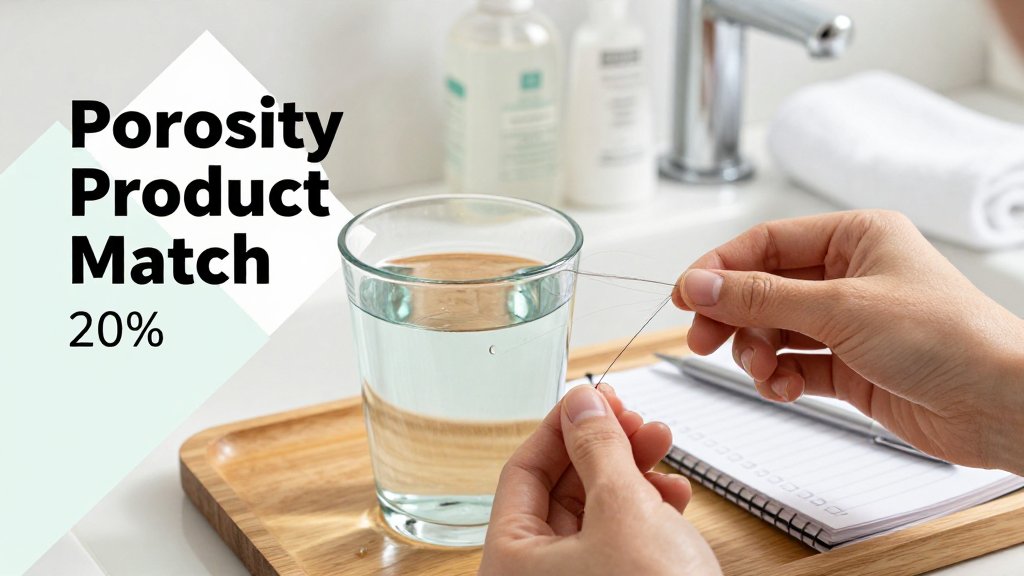
If your hair feels like it “should” be moisturized but still looks puffy, dry, or oddly sticky, the issue is often not your effort, it is your hair porosity. When your products do not match how your strands absorb and hold water, even the best routine can backfire. In this quick hair porosity quiz, you will learn how to test your porosity at home, what your results mean, and how to choose the right product textures. You will also avoid common mistakes, like too much oil or protein.
Hair porosity test at home that is accurate
Hair porosity is how easily water (and products) can get into your hair strand, and how quickly that moisture escapes. That one trait explains the most confusing hair moment: you copy a friend’s “holy grail” leave-in and your hair feels coated, frizzy, or weirdly dry. Porosity is mainly about the cuticle, the tiny outer “shingles” that either lie flat or lift up, changing how your hair absorbs and holds on to hydration. Even mainstream hair health guides describe low porosity as hair that does not readily absorb water because the cuticle is more tightly packed, which can make moisture and treatments sit on the surface longer. See WebMD on low porosity.
Porosity also changes how hair color and styling behave. If your hair is more porous, it can grab dye quickly, fade faster, and feel drier after a gloss or toner. If your hair is low porosity, you might need more patience for treatments to sink in, plus careful product layering so you do not end up with buildup at the roots and dryness at the ends. That is why two people can choose the same “cherry mocha” brunette and get totally different shine and depth. If you are planning a color refresh, pairing porosity with skin tone and undertone can help you pick better. Start with cherry mocha shade match, then come back and use the quiz below to fine tune your product choices.
What porosity actually means for your routine - Explain porosity as how easily water enters and leaves the hair cuticle. Include practical cause-and-effect: low porosity equals slow to wet and slow to absorb; high porosity equals soaks fast but dries fast. Mention how color, bleach, heat, and sun can increase porosity over time, so results can change seasonally.
Think of porosity like a rain jacket versus a sponge. Low porosity hair is slow to get fully wet and slow to absorb masks or oils because the cuticle is compact and smoother. You can stand in the shower and it still feels like water is “sitting on top,” especially on the back of the head and crown. High porosity hair soaks up water fast, but it also dries fast because the cuticle has more gaps, so moisture escapes easily. Many people land in the middle (often called medium porosity), where hair wets in a reasonable time, dries normally, and responds predictably to conditioner.
Your porosity is not a permanent personality test. It can shift with what you do to your hair and what your hair lives through. Bleach for platinum highlights, frequent heat styling (flat iron, hot brush, high heat blowouts), and UV exposure from summer sun can all increase porosity over time. Even “good changes” like a new balayage or a few months of swimming can tip hair from medium toward higher porosity. Seasonal changes matter too: dry winter air plus indoor heat can make already porous ends feel straw-like, while humid months can make high porosity hair frizz faster because it swaps moisture with the air more easily.
Practical cause and effect helps you shop smarter. Low porosity usually does better with lighter, water-based leave-ins, smaller amounts of heavier creams, and a little warmth to help products spread (think warm water rinse, a shower cap for 10 minutes, or low heat on a hooded dryer). High porosity often loves richer conditioners, a rinse-out mask, and sealing steps like a silicone serum or a few drops of oil on the ends to slow moisture loss. Brides doing trial styles notice this too: higher porosity hair can lose smoothness faster, so a humidity shield spray can matter as much as the updo itself.
At-home porosity quiz using real-life clues - Give a step-by-step quiz readers can do in one wash day: how long hair takes to get fully wet (under 60 seconds vs 2+ minutes), how long it takes to air-dry (under 1 hour vs 3+ hours), whether product sits on top, and whether hair frizzes right after leave-in. Include a quick note on the float test limitations (water quality, product residue) so readers do not misclassify themselves.
You can do this quiz on your next wash day with zero special tools. Start with freshly shampooed hair (so you are not judging a layer of dry shampoo or styling cream). In the shower, time how long it takes to get your hair fully wet, not just damp on the surface. If you are wet in under 60 seconds, you are likely medium to high porosity. If it takes 2+ minutes of soaking and smoothing water through, that points to low porosity. After your shower, skip the blow dryer and time your air-dry. Under 1 hour can suggest higher porosity, while 3+ hours often suggests lower porosity, especially with dense hair.
Next, pay attention to “product behavior” in real life. Rub a pea-sized amount of leave-in between your palms and apply to soaking wet hair on one side, then apply the same amount to towel-damp hair on the other side. If it sits on top, turns white, or feels slippery without softening, you may be low porosity or you may simply be using too much. If your hair drinks it up but feels dry again 30 minutes later, that leans high porosity. Also watch your frizz timing: frizz that pops up immediately after leave-in can point to higher porosity, or to a mismatch in protein versus moisture for your strands.
If your hair takes forever to get wet and products bead up, stop forcing heavy creams. Use warm water, a gentle clarifier monthly, and apply leave-in on soaking hair so moisture actually gets inside.
Myth-busting: why the float test can mislead you
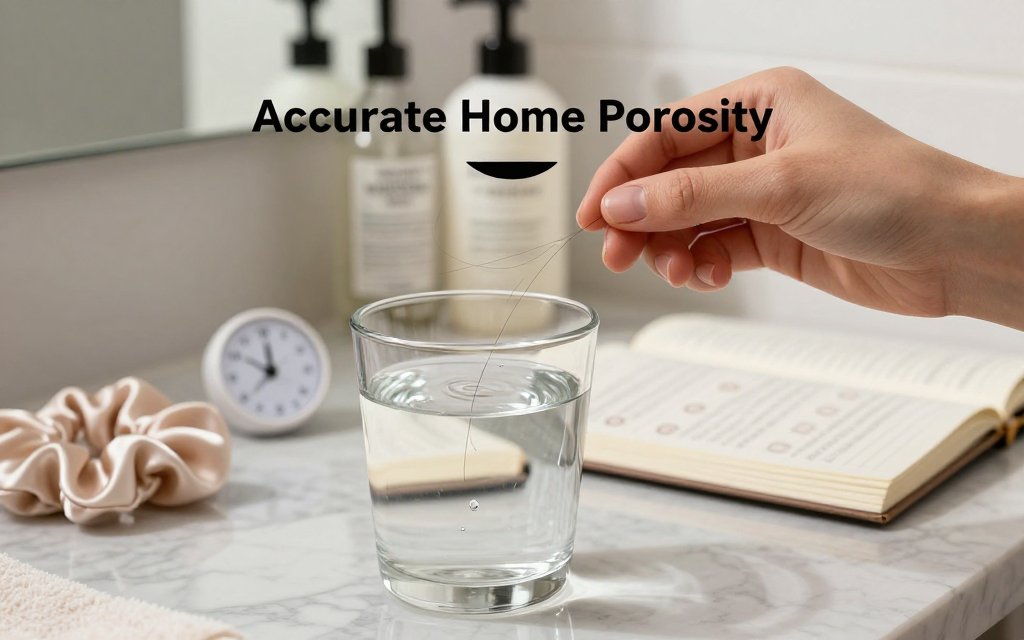
Myth: “Just drop a strand in a glass of water. If it floats, you have low porosity.” Reality: the float test is easy to do, but it is not always accurate. Clean hair can still float because of surface tension, especially if the strand is fine, short, or naturally buoyant. On the flip side, hair can sink faster because of product residue, hard water minerals, or tiny air bubbles trapped along the strand, not because the cuticle is truly more open. If you love a science-y moment, use the float test only as a tiny supporting clue. Your wetting time, drying time, buildup pattern, and frizz timing will usually classify you more reliably.
Low vs medium vs high porosity signs
Quick self-check, then you can fine-tune. If your hair takes a few minutes just to feel fully soaked in the shower, and conditioner seems to sit on top, you are probably low porosity, so reach for watery, lightweight products and use gentle warmth to help them sink in. If your hair gets wet and dries in a “normal” amount of time, styles hold without much drama, and most products seem to work as long as you do not overdo it, you are likely medium porosity, so a balanced mix of hydration plus light hold usually nails it. If your hair gets wet instantly, dries fast, tangles easily, and still feels dry later even after a rich leave-in, you are likely high porosity, so plan on layering water plus a sealant and using a technique that locks things down before you step outside on a humid day.
Low porosity hair: buildup, stiffness, and slow drying
Low porosity hair often gives you that “nothing is absorbing” feeling. In a gym shower, you might notice you are standing under the water longer than everyone else before your hair feels truly wet, and once you get out, your hair can take forever to air-dry, even if it is not especially thick. Then you put on a mask and your strands feel coated, almost waxy, instead of soft. That is your cue to switch texture, not just brands: pick lightweight, water-based leave-ins (think milky sprays, essences, or light lotions), and go easy on heavy butters and thick oils that can build up and make hair feel stiff. Technique matters just as much, so apply products on very wet hair, then use a microfiber towel only to gently squeeze out excess water.
Another classic low porosity pattern is an oily scalp with dry ends. You can look shiny at the roots by day two, but the mid-lengths still feel like they never got the memo about moisture. That usually means product is collecting near the scalp and on the outside of the strand, while the inside stays under-conditioned. Two simple fixes: clarify occasionally (especially if you use silicones, dry shampoo, or heavy stylers), and use gentle heat with conditioning. A warm towel, a shower cap, or even a few minutes of warm air from a diffuser can help your conditioner work better, because warmth encourages the strand to accept water and conditioning agents. Keep the heat gentle and time-limited, you are aiming for “warm and cozy,” not hot.
Use this very specific low porosity move on wash day: apply conditioner on soaking-wet hair, then “squish” it in for 30 to 60 seconds before you even think about detangling. You are basically pressing water and conditioner into the hair so it has a chance to slip past that tight cuticle. If your hair is straight or wavy, this can also help a blowout or sleek bob look less puffy at the ends. If your hair is curly or coily, you will often see more definition as it air-dries because the strands are actually hydrated instead of just coated. Follow with a lightweight gel or mousse if you want hold, since low porosity hair can get weighed down fast by heavy creams.
Medium and high porosity hair: the moisture escape problem
Medium porosity hair is the “generally cooperative” category. It gets wet without a fight, it usually detangles without a full negotiation, and it dries in a moderate time, not all day, not instantly. You might notice your curls hold a twist-out pretty well, or your waves keep that soft S-shape when you air-dry with a mousse. Product texture choices here are about balance: a lotion-like leave-in, a cream if you are doing braids or a slick-back, and a gel or foam for style memory. Technique choice: apply your leave-in on wet hair, then rake or scrunch, and finish with a light hold product so the moisture stays put. If you color your hair or heat style often, add an occasional protein-containing treatment so strands keep their structure.
High porosity hair is where you see the moisture escape problem clearly. In the shower, it can feel saturated instantly, and then an hour later it is already drying, frizzing, or tangling as you try to part it. The hair may look dull because rougher, more lifted cuticles scatter light instead of reflecting it. You can also get the sneaky “absorbs everything” moment: you put in a leave-in and it disappears, but by mid-afternoon your ends feel crunchy-dry again. This is where thicker textures can help, but only if you layer them correctly. Start with water or a watery leave-in for slip, then seal with a light oil, silicone serum, or a cream that has some film-forming ingredients, and finish with gel if you want humidity resistance for a bridal updo, curls, or a smooth ponytail.
That weird, counterintuitive issue, frizz after moisturizing, shows up most in medium to high porosity hair, especially on a humid day. Three common reasons: you used a leave-in loaded with strong humectants and the air is very damp, you layered water-based products but did not seal them, or you used a heavy butter that sits unevenly on porous areas and makes hair puff up instead of clump. A simple correction is to adjust your leave-in plus sealant based on weather: on humid days, use a lighter leave-in and top it with a gel or serum that forms a light film; on dry days, a humectant-rich leave-in can help, but still seal it. If you want a deeper explanation of why humectants can misbehave, this guide on humectants and hair breaks down the humidity effect in plain language. Try it once and you will feel the difference in your air-dry results.
Product and routine checklist by porosity result
Your routine should do one job: control water in and water out. Porosity tells you how easily water enters the hair, and how quickly it escapes again. Low porosity needs help letting water and conditioner in (then keeping buildup off). High porosity needs help holding water in (plus enough strength so strands do not feel mushy or break easily). Medium porosity is the sweet spot, but it can swing low or high depending on coloring, heat, and weather. Use the checklist below as your starting point, then refine it based on how your hair dries, tangles, and responds on day 2 and day 4.
High porosity hair routine: moisture plus structure
High porosity hair usually loves water at first, then loses it quickly, so think “moisture plus structure.” Cleanse 1-2 times weekly (gentle shampoo, or a clarifying wash every 3-4 weeks if you use lots of stylers). Deep condition weekly for 10-20 minutes. Apply leave-in after every wash, in sections on dripping-wet hair, then seal within 60 seconds so the water stays put. Seal choice depends on density: fine hair often likes a lightweight serum or a few drops of jojoba or grapeseed oil, thicker hair often prefers a cream, butter, or curl custard layered over leave-in. For a “best leave in conditioner for high porosity hair” guideline, look for conditioning agents and film-formers (often listed as polyquaterniums) like those described in polyquaternium film former references, and add some protein if your hair feels mushy or overly stretchy. Protein every 1-2 weeks is a practical baseline, and if you bleach or relax, you may need it weekly until breakage calms down.
Protein moisture balance hair: how to adjust without guessing
Two signals save you from random product hopping. If hair feels stretchy and gummy when wet, it often needs protein, or at least fewer heavy “butter masks” that can leave strands weak and over-soft. If hair feels stiff, rough, and snaps, it usually needs moisture and fewer protein products for a while. A practical cadence range looks like this: low porosity protein every 3-6 weeks, medium every 2-4 weeks, high every 1-2 weeks, then adjust by feel. Planning a wedding, photo shoot, or big event? Keep it bridal-friendly by not introducing a new protein treatment the week of your event. Patch test and do a full wash-day trial 3-4 weeks before, so your hair has time to settle and you can tweak without panic.
Moisture gives slip and softness, protein gives strength and shape memory. If your hair feels gummy and over-stretches, scale back buttery masks. If it feels crunchy and snaps, pause protein and add water-based conditioning.
How do I tell hair porosity without the float test?
Skip the float test and watch real-life behavior across two wash cycles. Low porosity often takes longer to get fully wet in the shower, struggles to absorb masks, and can feel coated or product-heavy by day 2. High porosity usually gets soaked fast, dries quickly, and frizzes even when it looks “moisturized.” Medium porosity tends to wet, condition, and dry at a moderate pace. Try a spray test instead: mist water on clean hair. If droplets sit on top for a while, think lower porosity. If it disappears immediately and hair still feels dry soon after, think higher porosity.
Why does my hair get frizzy right after moisturizing?
Frizz right after moisturizing usually means the water got in, but nothing helped it stay there, or the cuticle is raised and needs smoothing. High porosity hair can puff up if you apply a humectant-heavy leave-in (glycerin, honey, aloe) and then skip sealing. Another common cause is applying leave-in on damp, not wet, hair, so you are spreading product over too little water. Fix it by applying leave-in on dripping-wet hair in sections, then sealing quickly with a light oil or cream. If frizz happens mainly in very humid or very dry weather, swap to a more film-forming, smoothing leave-in and use less pure humectant product.
What is a simple high porosity hair routine for beginners?
Keep it simple and repeatable for 4 weeks. Wash 1-2 times weekly with a gentle shampoo, then deep condition once weekly for 10-15 minutes (use a plastic cap if your bathroom is cold). After every wash, apply a leave-in on dripping-wet hair, working in 4-6 sections so every strand is coated. Seal within 60 seconds with either 3-5 drops of a light oil (fine hair) or a cream (dense hair). Add a protein treatment every 1-2 weeks, especially if you color or heat style. Your “watch-out” is over-layering: too many oils and butters can make hair feel dry because water cannot get in next wash.
Porosity also helps you choose styles and color services that feel good, not just look good. High porosity hair often stays happier with low-stress styling: twist-outs, braid-outs, heatless curls, a sleek low bun with minimal brushing, or protective looks like knotless braids or a faux loc ponytail, especially during travel or wedding weeks. Low porosity hair usually handles shine-forward styles beautifully, like a blunt bob, smooth blowout, or a high ponytail, as long as you clarify regularly so it does not look coated. If you are considering highlights, platinum, or vivid shades, plan extra conditioning and protein support ahead of time. For styling confidence, try protective or low-stress looks virtually in Fravyn, then use face shape analysis to pick details that flatter, like curtain bangs for longer faces, a side part for rounder faces, or soft layers to balance a strong jawline.
Ready to see how a new hairstyle looks on you before you commit? Try Fravyn to preview 50+ styles on your own photo in seconds, so you can explore cuts, colors, and protective looks with confidence. Download the app and start testing options today on iOS. Find your next look fast, then bring the screenshot to your stylist.
Try a New Hairstyle Today
Preview 50+ hairstyles and 29+ colors on your own photo with Fravyn.