Going Gray Gracefully: Test Silver Shades Before Commitment
Thinking about going gray but not ready for the awkward grow-out phase? Here’s how to test silver shades on your own photo, pick a blending strategy that looks intentional, and keep your tone bright with the right products, before you commit in the salon.
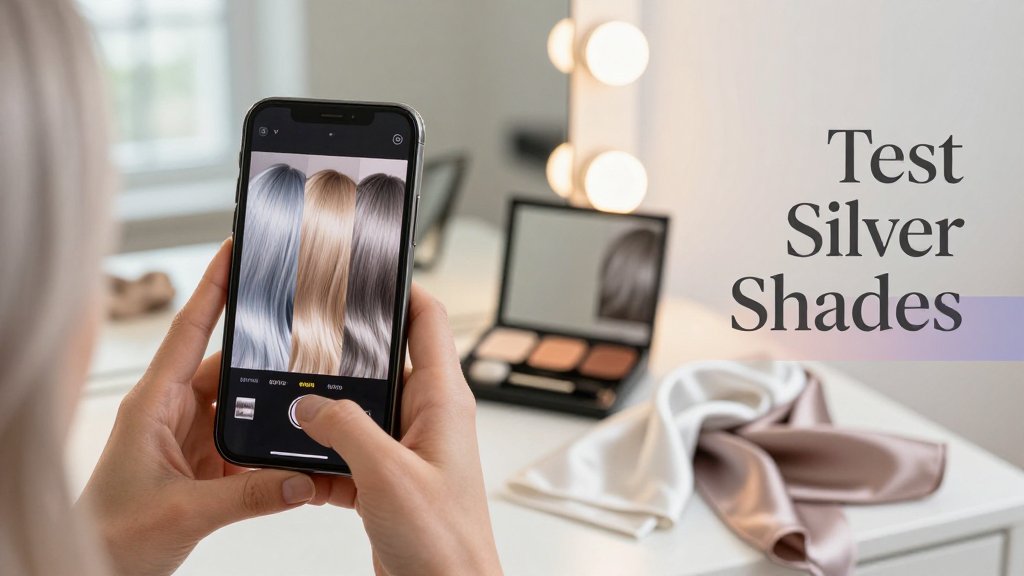
Going gray can read as polished and high-end, or it can feel accidental if the tone is off or the grow-out line is too harsh. The difference is planning. In this guide, you will learn how to preview silver shades before you commit, choose a silver tone that complements your starting color and undertone, and transition without a stark demarcation line. You will also get low-maintenance blending ideas that flatter your face shape and fit your lifestyle.
Which silver shade will flatter your skin tone
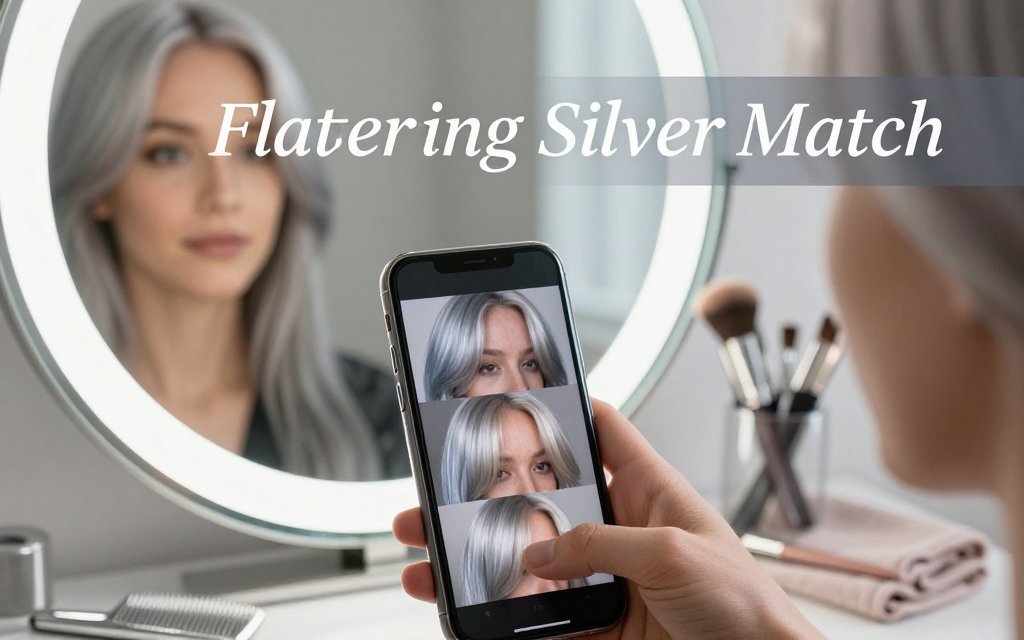
Silver is not one color, and that is the secret to making gray look expensive instead of flat. The most flattering “silver” on you depends on two things: your undertone (cool, warm, or neutral) and your contrast level (how much your features naturally stand out against your skin). An icy, almost-white silver can look editorial on one person and instantly wash out another, even if they both have the same haircut. Before you book a toning service or commit to a boxed gray, use a virtual try-on to sample multiple silvers side by side on your own photo. With Fravyn, you can test several silver families quickly, then save screenshots to compare in different lighting and outfits.
Here is a simple visual concept to guide your eye: imagine three identical swatches of “silver” placed right under your chin in a mirror selfie. Swatch A is blue-leaning (icy, steely), Swatch B is beige-leaning (champagne, mushroom), and Swatch C sits in the middle (pewter, greige). You are watching for what happens to your face, not the hair. The right silver makes your whites of the eyes look clearer, your skin look more even, and your lip color look naturally present. The wrong silver can turn skin slightly gray-green, emphasize redness, or make your features feel less defined, especially in daylight photos.
If a silver makes your under-eye area look shadowy or your lips fade, it is not the wrong gray for everyone, it is the wrong gray for your undertone and contrast. Test three silvers before you decide.
Quick silver shade picker, cool vs warm vs neutral
Think of silver shades as three “families.” You do not need to know seasonal color analysis to use this. You just need to notice whether your skin looks better next to blue-gray, beige-gray, or true neutral gray. If you tend to love crisp white shirts, cool pink lipstick, and bright contrast in your wardrobe, cool silvers often feel instantly chic. If you look best in cream, camel, warm browns, and softer makeup, warm silvers can look more elevated and less stark. Neutral undertones can usually wear both, but the finish matters: super icy can feel harsh, and super beige can feel muddy, so staying centered usually wins.
An easy at-home check is the jewelry test: stand in indirect daylight, pull your hair back, and hold silver jewelry on one side of your face and yellow gold on the other. If silver makes your skin look clearer and more even, start with icy silver, pearl, and steel. If gold makes you look warmer and healthier, start with champagne silver, beige silver, and mushroom gray. Then confirm with a try-on, because hair color adds reflection that jewelry cannot mimic. In Fravyn, pick three silvers from different families and compare them to a warm brunette inspiration too, like cherry mocha hair shade match, so you can see what truly lifts your face.
A very common mistake is choosing the lightest, iciest silver because it looks trendy on social media. On lower-contrast faces (lighter brows, softer eye definition, or a naturally blended look), that near-white silver can erase dimension and make skin look dull, even if the tone is technically “cool.” If you love bright silver but it washes you out, you do not have to abandon the vibe. Try a smoky ash version first, or add depth with a shadow root and a softer money piece. Virtual try-on helps here because you can keep the same haircut and simply toggle between icy silver, pearl, and smoky ash to see when your eyes look brightest.
Use your natural eyebrow and root contrast as your guide
Your brows and natural root depth are a shortcut to believable, flattering silver. If your eyebrows are dark and your natural base is around level 3 to 5 (think deep brown to light brown), a deeper silver blend usually looks more like “you,” compared to a pure white silver that can feel wig-like without heavy makeup. Ask for a smoky gray, steel, or ash-silver balayage with a root smudge so your features stay defined. If your natural base is level 7 to 9 (dark blonde to very light blonde), brighter silvers can look seamless sooner because the distance between your starting level and the final silver is smaller. If you are curious about levels, Redken’s traditional level system shows how professionals map depth from darker to lighter.
Contrast also predicts maintenance. A level 3 to 5 base going to bright silver often requires significant lightening, plus consistent toning to keep brassiness away, which is why many people feel like their silver “turns yellow” quickly. If you want a softer commitment, aim for a dimensional gray: peppery lowlights, a smoky ash midtone, and a lighter pearl ribbon near the face. It photographs as silver, but grows out kinder. In-app, try a bright silver next to a smoky ash and a pewter greige, then zoom in on your brow area and hairline. The option that keeps your brow-to-hair relationship balanced usually looks the most natural and the most flattering.
Once the shade is right, pairing it with the right cut is what makes silver look intentional. Fravyn’s face shape analysis can nudge you toward proportions that help the color shine. For round faces, collarbone-length layers with a little vertical movement can make a bright silver look airy instead of helmet-like. For heart shapes, a soft side part and cheekbone pieces can balance a wider forehead and keep pewter or mushroom gray from feeling heavy around the temples. For square faces, a textured lob and wispy fringe can soften the jaw, especially with steel or smoky ash. Whatever your texture (straight, wavy, curly, coily), try the silver shade and the cut together in your preview before you commit, especially if you are planning photos like engagement shoots or weddings.
How to go gray without harsh grow out
Most people look and feel better transitioning with some kind of blend instead of quitting dye cold turkey. The reason is simple: a hard line where permanent color ends and silver begins can look severe, especially under bright indoor lighting and in photos. Blending keeps your hair looking intentional while your natural pattern shows up gradually, so you can still enjoy highlights, dimension, and shine during the in-between months. It also gives you flexibility. If you love the silver that is coming in, you can lean lighter at the next appointment. If you feel unsure, you can keep the overall tone closer to your current shade while reducing how often you touch up roots.
Three realistic transition paths
Think of going gray as choosing a route, not a single appointment. Path 1 is a highlight and lowlight blend (sometimes with a shadow root), best if you want a polished look but hate the every-4-weeks root cycle. Path 2 is the full transition, meaning you stop permanent color and cut it off gradually, which works well if you are ready to embrace your natural shade and you like frequent trims or shorter styles. Path 3 is a soft cover approach: you switch to a demi-permanent gloss, a root smudge, or a low-ammonia deposit-only color close to your natural level, plus subtle face-frame brightness. This path suits people who want less contrast now, but still want a graceful exit later.
In a salon consult, the fastest way to avoid disappointment is to talk in specifics, not just "blend my gray." Share how often you can realistically come in (every 6 weeks, every 10 weeks, or only seasonally), then ask your colorist to map placement around your part, temples, and hairline first. Those zones read the most "rooty" on video calls and wedding photos. Also mention your texture and porosity. Tight curls can look brighter with fewer foils because they reflect light differently, while straight hair may need a finer weave so highlights do not sit like stripes.
Gray blending highlights vs full gray transition
Gray blending highlights means adding lighter ribbons (and sometimes lowlights) through your mid-lengths and around the face to blur the line between dyed hair and incoming silver. Done well, it looks dimensional, not “highlighted.” Many people refresh toner every 6 to 10 weeks to keep brass away and keep silver tones crisp, while root touch-ups can stretch to 8 to 12 weeks with a blend because the regrowth line is intentionally softened. If your goal is to get to gray blending highlights naturally, ask for a fine weave (babylights or teasylights) plus a root melt one level deeper than your natural base. That combo prevents the stripey effect that happens when foils are too thick or too evenly spaced.
A full transition is more like a timeline than a technique. If you stop permanent dye and trim steadily, it commonly takes about 6 to 18 months depending on your length, your growth rate, and how much old color you need to remove. The awkward stage is the demarcation line, so your best tools are shape and softening. A collarbone-length lob with textured ends hides contrast better than one-length long hair, and a modern shag can make mixed tones look deliberate. Many colorists soften the line with balayage plus backcombing to avoid a distinct boundary, similar to what is shown in this balayage technique guide. At home, keep silver bright with an occasional purple shampoo, and use a clear gloss to boost shine without locking you into permanent coverage.
Low-maintenance alternatives that still look current in 2026
If you are a brunette who is not ready for visible silver yet, “candlelit brunette” can be a smart stepping stone. The idea is a soft, warm reflect that mimics candlelight, think espresso or chocolate with chestnut and toffee ribbons, not a flat all-over warm dye. It works best when your natural gray is concentrated at the temples or along the part, because the warmer dimension distracts from the first silvers without forcing a stark root line. Ask for a demi-permanent glaze (so it fades softly), plus subtle face-framing brightness and a root shadow that matches your natural level. With that plan, you can often book color every 8 to 12 weeks and still look current.
“Soft black” is another low-commitment option for people who want depth but hate frequent touch-ups. The key is to avoid a single-process, inky black permanent color, which can create a sharp, high-contrast root line within 3 to 4 weeks, especially if your grays are bright white at the hairline. Instead, ask for a softened level 2 to 3 deposit-only tone (often described as smoky, blue-black, or velvet black) and build in subtle gray blending around the hairline and part so new growth reads like intentional dimension. If you are using Fravyn, try-on both a soft black and a cooler dark brunette next to a silver money piece to see which option flatters your face shape and makes your eyes pop before you commit in the chair.
Toner, purple shampoo, and silver upkeep basics
Silver and gray look their freshest when they stay bright, cool, and reflective. The two biggest villains are yellowing and dullness, and they usually come from a combo of buildup and oxidation, not because your hair is “doing gray wrong.” Hard water minerals (like calcium and iron) can cling to porous strands and skew the tone warmer. Chlorine from pools can also shift color and rough up the cuticle. Add heat styling, UV exposure, and styling product residue, and that crisp icy look can start reading beige or smoky in a way you did not plan. If your silver suddenly looks flat, think “surface problem” first: clarity, shine, and moisture.
A realistic upkeep plan is the confidence booster. Decide which “silver family” you want to live in most days: pearl, icy platinum, steel gray, or soft beige-gray. Then build a routine that protects softness while keeping tone clean. Most people do best with three pillars: a hydrating everyday shampoo and conditioner, a toning step that is not overused, and an occasional reset for minerals and product film (often a clarifying or chelating wash once every few weeks, followed by a rich mask). If your hair is curly, coily, or very dry, treat toning products like spice, not the main course. Tone is cute, brittle ends are not.
Gray hair toner vs purple shampoo, what each one really does
Here is the clean distinction you can repeat to your stylist or to yourself in the mirror: “Toner changes the undertone for weeks; purple shampoo only cancels yellow temporarily.” Toner is a corrective color step, either a salon gloss or an at-home toning product, that adjusts undertones using violet, blue, pearl, or beige pigments. It can make your whole look read cooler, warmer, smokier, or creamier, and it typically holds for weeks because it is meant to settle into the hair. A practical refresh schedule is about every 6 to 10 weeks, depending on porosity (how much your hair grabs and releases pigment) and water hardness (how quickly minerals distort your tone).
Purple shampoo is the maintenance cleanser in the story. It uses violet pigments to visually mute yellow tones on the surface, but it will not truly change your base color the way a toner or gloss can. For many people, using it 1 time weekly is the sweet spot; if your hair starts feeling dry, rough, or looks slightly smoky, back off to every other week and lean harder on a moisturizing mask. Treat it like a timed treatment, not an everyday shampoo: apply, lather, let it sit briefly, then condition well. If you want the “why” in one sentence, purple cancels yellow on the color wheel, so a little violet pigment can make silver look cleaner fast.
How do I go gray without looking older or washed out?
Aim for contrast and dimension, not “as gray as possible.” A soft shadow root, a few lowlights, or subtle silver babylights can keep your features defined so your hair reads intentional, not faded. If your skin is warm, a pearl-beige silver often looks fresher than a hard icy tone; if your skin is cool, steel or icy silver can look sharp and bright. Maintenance matters too: dullness is what makes people feel washed out, so prioritize shine (gloss, masks, heat protectant) before you chase more pigment. A great haircut helps instantly, think collarbone lob, textured shag, or a clean tapered pixie.
What should I ask for at the salon if I want gray blending, not full highlights?
Use service words that signal softness: ask for “gray blending” or “gray diffusion” with a lived-in grow-out, plus a gloss to control warmth. Techniques to mention include babylights around the hairline, a root smudge or shadow root for a seamless transition, and targeted lowlights to keep depth (especially if you are going salt-and-pepper). Bring 2 to 3 photos: one for brightness level, one for tone (pearl vs steel), one for placement. Finish by asking, “What is my upkeep schedule, and what is my at-home plan between glosses?”
Can I test silver hair color ideas on my photo before I dye it?
Yes, and it is one of the easiest ways to avoid regret. A virtual try-on lets you compare a bright icy silver against a softer mushroom gray, or a pearl gray against a smoky graphite, before you commit to bleach, gloss, or a long grow-out plan. In Fravyn, you can preview 29+ hair colors (including several silvers) on your own photo, then save favorites and show them to your stylist as a clear target. Try the same shade with two different hairstyles too, because a sleek blunt bob can make silver look bolder, while long layers can make it look softer and more wearable.
Once you understand upkeep, you can choose a silver that fits your real life, not just your Pinterest board. If you love ultra-icy tones, plan for a toner or gloss cadence and be gentle with purple shampoo so hair stays touchable. If you prefer a beige-gray or smoke silver, you might use purple shampoo less and focus more on shine and mineral control. This is also where face shape based style picks pay off: the right cut can make your silver look intentional even on low-maintenance weeks. Pair your shade try-on with Fravyn’s face shape analysis, then test options like a side-part lob for round faces, a soft shag for square jaws, or a tapered pixie for oval faces, and pick the combo you can maintain confidently.
Ready to see how a new silver look will actually read on your face before you book the appointment? Try Fravyn and preview 50+ hairstyles and color vibes on your own photo in seconds, so you can choose a flattering, low-maintenance option with confidence. Download Fravyn on iOS and start testing styles today.
Try a New Hairstyle Today
Preview 50+ hairstyles and 29+ colors on your own photo with Fravyn.