Hair Color Undertones, Quick Test With White Towel
Use a plain white towel to spot your skin undertone in under 60 seconds, then match it to hair color families that flatter you, from warm honey tones to cool charcoal brunette and buttercream blonde trends for 2026.
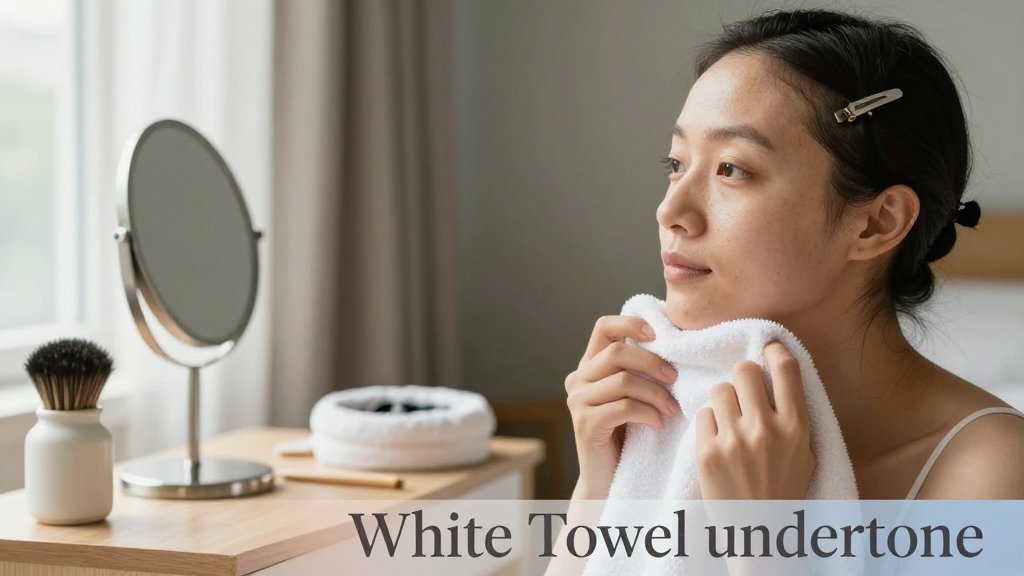
Picking the wrong hair color undertone can make your skin look dull, emphasize redness, or wash you out, especially with the bright, high-contrast shades trending for 2026. The good news is you can spot your undertone in under a minute with a white towel and natural light. In this guide, you will do the quick towel test, learn how to confirm what you see, then match warm, cool, or neutral undertones to the most flattering hair color families.
What the white towel undertone test reveals
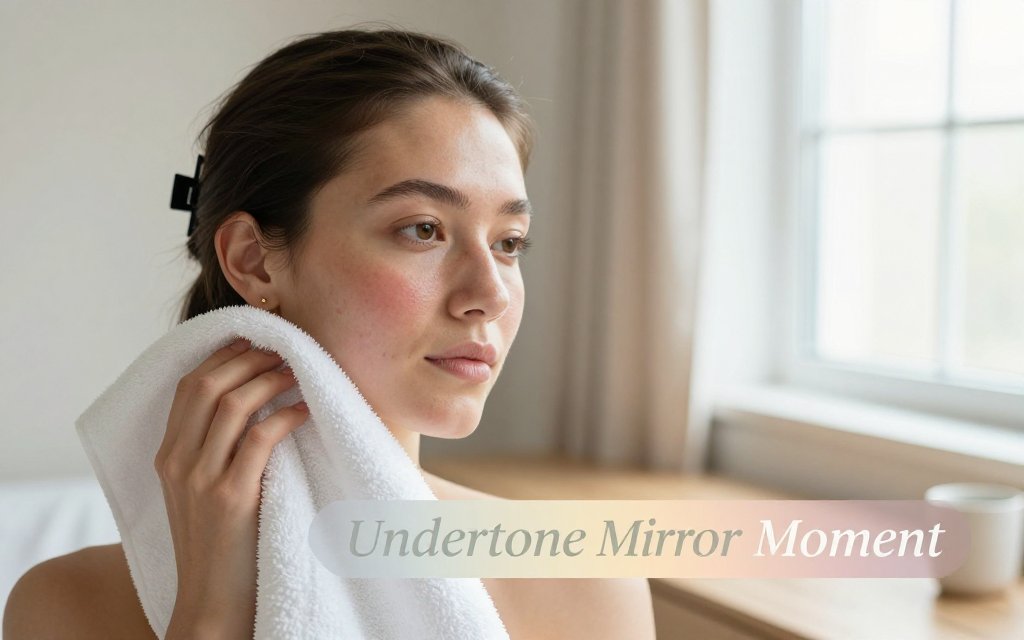
Hair color can make the same face look rested and bright, or a little tired and shadowy, even when your makeup and sleep are exactly the same. The difference is often undertone. Undertone is the subtle temperature under your skin (warm, cool, or neutral), while skin depth is how light or deep your skin is. Two people can be “medium” depth and still react totally differently to caramel highlights or an ash brunette. A tan can shift your surface tone, but your undertone generally stays consistent, which is why tests like undertone vs skin tone matter when you pick hair color families.
Here is the real-life reason this matters: hair sits right next to your complexion, so it “reflects” a temperature back onto your face. A warm hair shade like honey blonde, copper, or chestnut can make warm undertones look smoother and more alive. Put that same warmth next to a strongly cool undertone and it can pull out facial redness, emphasize under-eye circles, or make your skin look a bit ruddy. The opposite happens with very cool shades. A smoky ash brown or blue-black can look expensive and crisp on cool undertones, but can read flat or slightly greenish on warm undertones, especially around the mouth and neck.
Do this 60-second test in daylight
The white towel test works because “true white” gives your eye a clean reference point. You are not trying to decide if you are pretty in white. You are checking what your skin looks like when it is right next to a neutral, bright baseline. Stand near a window in daylight, but not in direct sun (direct sun adds strong highlights and hides subtle color). Pull your hair back with a clip or headband so it cannot cast a warm or cool reflection onto your cheeks. Remove foundation and bronzer first, and if you can, wipe off tinted moisturizer too. Then hold a true white towel or white cotton tee under your chin and up alongside both cheeks.
Pay attention to your full face and neck, not only the “apple” of your cheeks. If you flush easily, your cheeks will always look pink, even if your undertone is warm or neutral. Look at the jawline, the area beside your nostrils, and the neck just under the jaw. You are looking for the overall cast that shows up next to the towel: does your skin read more golden, more rosy, or nicely balanced? Common mistakes are doing this in bathroom lighting (many bulbs are warm and yellow), using an “off-white” towel (cream can make you look pinker by comparison), or leaving your hair down so your current dye job influences what you see.
How to read the result without overthinking it
Warm undertones usually look golden, peachy, or slightly yellow next to true white. In a good way, the skin can look “sunlit” and even. Cool undertones tend to look rosy, pink, or slightly blue next to true white, and the skin often looks clearer with silver jewelry and cool hair shades. Neutral undertones read balanced, not strongly pink and not strongly yellow, and they can often wear both warm and cool hair colors as long as the shade depth is right. For example, a neutral person might look great in beige blonde, soft “bronde,” or a neutral chocolate brown, while a warm person often shines in caramel balayage or cinnamon auburn.
If you feel stuck between two categories, use a tie-breaker that is harder to “fake” with temporary redness: compare your jawline to your neck. The neck is usually less affected by flushing, acne treatments, and sun exposure, so it gives a calmer read. Take one portrait mode photo from the same spot by the window, with the towel in the frame, and look at it again later. Screens help you step back, and you will often notice details you missed in the mirror, like a subtle olive cast, or how the towel makes the shadows around the mouth look more yellow or more gray.
If the towel makes your skin look clearer and brighter, that is your undertone leaning into harmony. If it makes you look gray, sallow, or extra red, your hair color choices may need a temperature shift.
Once you have your read, you can shop hair color in a way that feels much less random. A cool undertone bride might love an icy pearl blonde updo, a glossy espresso chignon, or a cool-toned mushroom brown blowout, while a warm undertone bride may glow in champagne highlights, copper curls, or a golden brown half-up style. This also helps with special events where your dress color and neckline matter, since hair tone frames your face in photos. If you are planning a formal look, pair your undertone result with prom hair for dress necklines so the color and the silhouette work together, not against each other.
Warm vs cool vs neutral hair color families
Hair color “temperature” is the quickest way to predict whether a shade will make you look bright and healthy or a little off. Think of it as the reflect you see when light hits the hair: warm reflects read golden, honey, caramel, copper, or strawberry, while cool reflects read ash, pearl, smoky, or inky. Neutral sits in the middle and often shows up as beige, soft mocha, or natural chocolate. Many color lines literally label tones this way, for example Wella explains warm tones as red, orange, and gold, and ash as a cool tone used to reduce warmth in their tone key guide. Use that same logic when shopping or booking a consultation: choose the temperature first, then pick the depth (blonde, light brown, deep brunette).
Warm undertone: golden, honey, copper, caramel
If your skin reads warm, warm reflects usually make you look instantly more rested, like you just came back from a weekend outside. The goal is “sunlit,” not “brassy.” Easy shade families to ask for: honey blonde (think creamy gold, not yellow), golden brunette (light-catching brown with a soft gold veil), caramel balayage (warm ribbons through brunette hair), soft copper (peachy copper rather than vivid orange), and strawberry tones (a blonde base with a delicate red-gold whisper). At the salon, you can say: “I want warmth, but I want it controlled. Please keep the gold soft and reflective, not yellow or orange.” Bringing 2 photos helps a lot, one in indoor lighting and one in daylight.
A super common warm-undertone mistake is asking for “natural” and ending up too ashy. Ash can look pretty in a swatch book, but on warm skin it often drains color from the face, making your complexion look a bit gray or dull, especially if you do not wear much makeup day to day. If you have been told you pull “brassy,” you still do not have to go icy. Instead, ask your stylist for a warm-toned gloss or toner that is beige-gold (not orange), and request placement that keeps dimension: a caramel balayage, a golden face-framing piece, or a warm root melt that keeps the grow-out soft. Warm reflects also photograph beautifully on curls and coils because the light hits each bend, so “honey ribbons” can look expensive without being loud.
Cool and neutral undertones: ash, beige, mocha, smoky tones
Cool undertones tend to look best with cool reflects, shades that feel crisp rather than sun-kissed. If you want blonde, ask for ash blonde, pearl tones, or an icy-beige that stays soft instead of going silver. For brunettes, “cool espresso” and “smoky mocha” are flattering phrases because they signal depth without red. Blue-black can be stunning on cool undertones, but use caution: it is high contrast and can look harsh if your natural brows are much lighter, and it can be stubborn to lift later. A safer version to request is “soft black” or “cool espresso that reads almost black in low light,” which gives the vibe without the inky edge.
Neutral undertones get the biggest playground, and “beige” is usually the friendliest middle ground to shop for. Beige blonde is not yellow-gold and not icy silver, it is the kind of balanced blonde you see described as “champagne,” “sand,” or “oatmilk.” For brunettes, ask for neutral chocolate, soft mushroom, or a beige-brown that looks airy instead of red. If you like highlights, a bronde (brown plus blonde) with beige ribbons is a low-risk way to test lighter color without committing to an extreme temperature. Salon language that works: “Can we keep it neutral and beige, then finish with a beige gloss so it does not swing too warm or too ashy?” That gloss step is what keeps neutral shades looking polished for weeks.
If the temperature is wrong, your skin usually tells on it fast. Too cool on warm undertones can pull the life out of your complexion, making you look sallow, tired, or slightly gray, especially around the mouth and under-eye area. Too warm on cool undertones can make cheeks look overly red and can exaggerate pinkness in the nose or any surface redness. Neutral undertones can wear both, but extremes still show up as “something is off” in photos. The fix is often simpler than a full redo: ask for a demi-permanent gloss to shift the reflect one step warmer or cooler, or a toner refresh that targets only the highlights. If you are at home shopping box dye, look for shade names like “beige,” “neutral,” “soft ash,” or “golden,” and avoid jumping from one extreme to the other in one appointment.
Here is a practical way to talk to your colorist so you get the tone you mean. Use two descriptors every time: one for temperature, one for intensity. For example, “warm honey, not bright copper,” or “cool ash, not gray.” Then add a guardrail: if you want cool, say “cool reflect but not green,” because some very ashy mixes can look slightly khaki on porous or heavily lightened hair. If you want neutral, ask for “neutral reflect with a beige gloss,” because beige keeps it balanced without flattening dimension. Pairing the tone with a haircut description also helps: a cool espresso looks sharp with a blunt bob, while caramel balayage melts beautifully into long layers, a shag, or a curly cut where the highlights can dance through the shape.
Undertones to 2026 shades, plus quick FAQs
You did the white towel test and got a clue, warm, cool, or somewhere in the middle. Now you can use that result to “steer” a trend shade so it looks expensive and intentional on you, not like it is wearing you. Two of the most requested 2026 salon shades right now are buttercream blonde and charcoal brunette, and both can be customized with gloss, root work, and tiny undertone shifts. If you want proof that these names are not just random internet labels, outlets tracking hair colour trends have called out buttercream blonde and charcoal brunette as key looks for 2026. The trick is choosing the version that makes your skin look clear, your eyes brighter, and your lips naturally more defined.
Buttercream blonde 2026 and charcoal brunette 2026 made wearable
Buttercream blonde is a creamy, soft blonde that sits closer to “vanilla latte” than “highlighter yellow.” It is especially flattering if you like airy dimension, ribbon highlights, and that bridal, candlelit glow in photos. For warm undertones, ask for a buttery-gold reflect, think honeyed pieces around the face plus a slightly warmer beige toner so your skin looks sunny, not sallow. For cool undertones, keep the blonde creamy-beige and finish with a pearly gloss (not icy silver), so the hair reads soft and bright without turning you pink. For neutral undertones, aim for beige-butter with a balanced toner and a lived-in root, so the blonde does not look too golden or too ashy on different lighting days.
Charcoal brunette is a deep, smoky brunette with a cool reflect, like espresso with a faint graphite haze. It is striking on curls and coils because the shine pattern makes the “smoke” read dimensional, not flat. If you have warm undertones and still want charcoal, you absolutely can, just build in subtle mocha warmth or a warm-root melt so your face stays lively. Cool undertones can go full smoky with a cooler gloss and inky lowlights for that sleek, reflective finish. Neutral undertones can split the difference with a soft graphite tone that stays deep but not stark. The “too far” sign for either shade is immediate: your skin suddenly looks gray, or your lips look dull and you feel like you need extra blush to look awake.
What if the white towel test makes me look both pink and yellow?
That is common, and it usually means you are neutral, olive, or you have surface redness on top of a warmer base. Do a quick same-day double check: take two photos in natural window light, one in a white tee and one in a cream or ivory tee. If white makes you look a little flushed but cream makes you look “even,” choose neutral shades (beige-butter blondes, soft graphite brunettes) and avoid extremes like icy platinum or copper-red. If you are still unsure, pick a root melt and a gloss first, since both are easier to adjust than full permanent color.
Does my undertone change if I tan or if I am getting married in summer?
Your undertone generally stays the same, but your overtone can shift with sun, self-tanner, and even skincare, which is why your “perfect” shade in February can feel off in July. If you are tanning for a summer wedding, plan a flexible formula: keep buttercream blonde slightly warmer through the mids but add a neutral-beige face frame so it still flatters when the tan fades. For charcoal brunette, ask your colorist to keep the depth but adjust the reflect, adding a touch of mocha when you are bronzed and going smokier as your skin returns to its baseline. Book a gloss 7 to 14 days before the event for a final tweak.
How can I test buttercream blonde or charcoal brunette before dyeing?
Try a zero-commitment stack: virtual try-on, then a temporary or demi step if you still want more “proof.” With Fravyn, you can preview buttercream blonde and charcoal brunette directly on your own photo, then compare them with different hairstyles (it has 50+ styles) and 29+ hair colors, plus face shape analysis so you can see whether a sleek lob, long layers, or curtain bangs makes the shade feel softer. For a real-world test, ask your stylist for a clear or tinted gloss first, or do a few strategic face-framing pieces rather than a full head change. If the shade makes your skin look gray or your lips disappear, pivot the toner, do not force the trend.
Ready to see how a new hairstyle looks on you before you commit to a cut or color? Try Fravyn and preview 50+ styles on your own photo in seconds, so you can test different vibes with confidence. Download the app, upload a clear selfie, then compare looks side-by-side to find your favorite. Get it on iOS and start experimenting today.
Try a New Hairstyle Today
Preview 50+ hairstyles and 29+ colors on your own photo with Fravyn.