Receding Hairline Haircuts: Pick a Style That Works
A practical guide to men’s haircuts that reduce the look of a receding hairline, with barber-ready requests, face shape cues, and a simple way to try styles virtually before you commit.
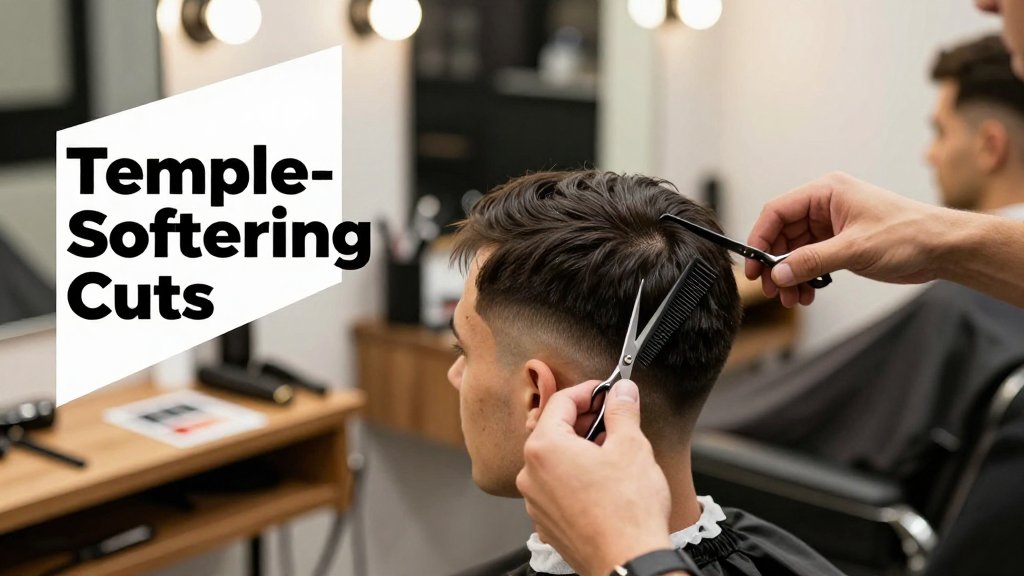
A receding hairline does not mean your haircut options are shrinking. The right cut can make your hairline look deliberate, keep attention on your strongest areas of density, and balance your face shape so everything feels cohesive. In this guide, you will learn the most reliable barber-friendly haircuts for a receding hairline, exactly what to ask for in the chair, and how to avoid common mistakes like overcompensating with length. You will also get a simple way to preview the look before you commit.
Which haircuts actually flatter a receding hairline
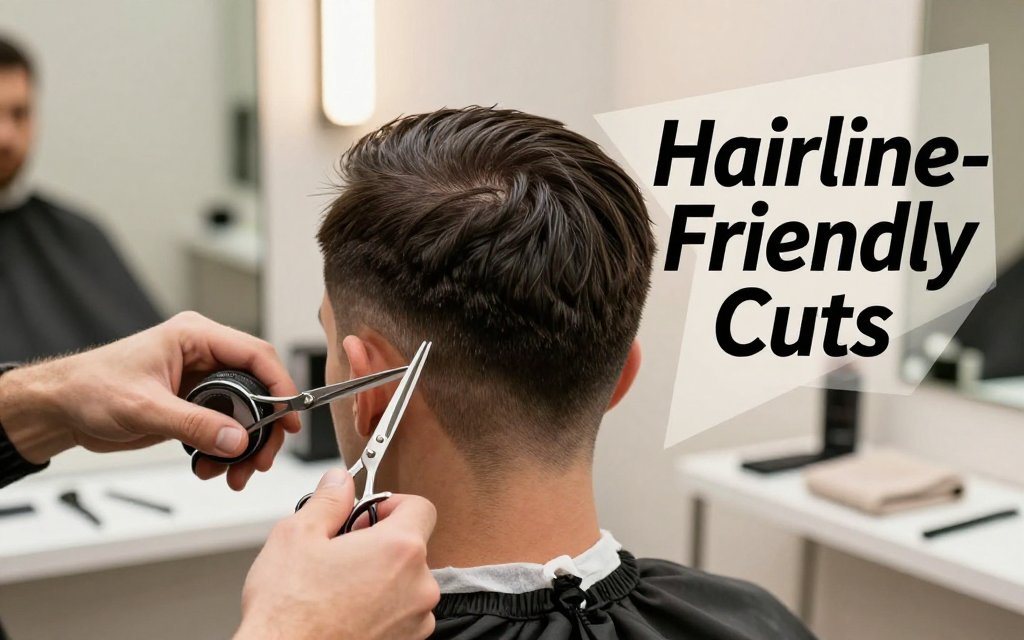
The best haircuts for a receding hairline do three things: they reduce contrast at the temples, add texture on top, and avoid styles that separate into see-through strands. That is the whole game, both in real life and on camera. In 2026, the most consistent “wins” for men are cuts that look intentionally textured, not “grown out,” and that keep the eye moving across the top instead of stopping at the corners. If you can see little shiny lanes of scalp between pieces of hair, the cut is usually too long, too slick, or too evenly separated. A good barber cut should read as soft, dense, and controlled, even under bright bathroom lighting.
Start with length rules that make thin areas behave. Shorter hair holds its shape better, which is why dermatology organizations often suggest keeping men’s hair shorter for the appearance of fuller coverage (see these hair loss styling tips). Mid-length, floppy tops can collapse into gaps, especially if your hair is fine or straight. Texture is your second rule: you want irregular, piece-y movement, not perfectly separated “strings.” Third, think contrast, not just hair density. A slightly deeper, warmer shade can make the hairline look less stark against skin, and options like cherry mocha hair color can be a surprisingly flattering low-contrast choice for many complexions.
Textured crop for thinning hair: the safest bet
A textured crop works because it breaks up the outline that thinning hair tends to create. Instead of long sections separating and exposing scalp, the top is intentionally choppy, which visually “fills in” gaps. Ask your barber to keep about 1.5 to 3 inches on top, then add point-cut texture so the ends look irregular, not blunt. Styling slightly forward is the key detail for temple recession: a small forward fringe softens the corners without looking like a dramatic comb-over. Also, skip a hard part. A hard part draws a bright, straight line into the exact area you want to look softer and fuller.
This cut photographs well because it minimizes two things cameras exaggerate: shine and symmetry. If you use a glossy pomade, flash and overhead lighting can reflect off the scalp and make thinning look bigger than it is. Go for a matte clay, paste, or a small mist of sea salt spray for grip, then rough-dry with your fingers so the hair clumps into thicker pieces instead of separating into wisps. For wavy or curly hair, a crop can be even easier, since natural texture creates built-in density. Just ask your barber to remove bulk with careful scissor work, not aggressive thinning shears that can make curls look frizzy and sparse at the ends.
Think in photos: keep the top matte and broken up, aim the fringe forward, and keep the sides softly tapered. If light hits your scalp in strips, your cut is too long or too separated.
Taper fade for receding hairline: clean without overexposing temples
A taper fade is the “clean haircut” option that still plays nicely with recession, as long as you choose the right height. The big difference compared to a high skin fade is where the shortest area starts and how far up it travels. A high skin fade removes a lot of hair near the temples, which can make the recession line look sharper and more dramatic, especially in bright overhead light. With a low or mid taper, the sides get neat around the edges, but you keep more softness and shadow at the temple area. That shadow is useful, it visually blends the hairline instead of spotlighting it.
A simple rule of thumb to tell your barber is this: the higher the fade goes, the more it can highlight recession. If you like a sharp look, ask for a low taper with a gentle transition and a slightly longer “corner” at the front so the hairline does not look carved out. If you wear facial hair, a taper that blends into the beard can help balance the face, too. Consider asking for a natural edge rather than a super crisp line-up at the temples, since hard corners can create a strong frame around the very area you want to soften. You will still look polished, just not overexposed at the hairline.
If you are choosing between these two “winner” cuts, match them to your daily routine and how you are usually seen. Textured crops are forgiving if you air-dry, wear hats, or get caught in wind because the messiness looks intentional. Low or mid tapers are great if you like a cleaner perimeter and take lots of close-up photos. Before committing, take two selfies: one in soft window light and one under a bright ceiling light, then look specifically at the temple area. That quick test tells you whether your cut is blending or spotlighting the corners. Tools like Fravyn can also help you preview similar silhouettes on your face shape so you can choose confidently before your next appointment.
How to ask your barber for the right cut
A good cut for a receding hairline is only half the win. The other half is making sure you and your barber mean the same thing when you say “short on the sides” or “keep it textured.” Before you sit down, decide three specifics: where you want the taper to start (low, not creeping above the temples), how long you want the top in inches, and how you plan to style it (forward, slightly up, or side-swept). If you can say those clearly, your barber can execute cleanly without guessing. If you cannot, you risk getting a higher fade than you wanted, or a top that is too long and collapses into see-through sections under bright lights.
Barber-ready scripts and guard numbers that work
Guard numbers help because they remove ambiguity, but only if you anchor them to a taper placement and a blending plan. For most receding hairlines, a safe, flattering range is sides in a 0.5 to 2 guard with a low taper, and the top kept around 1.5 to 3 inches so you have enough “fiber” to add texture without flopping flat. If your barber uses a different clipper system, that is fine, just describe the result and let them translate. If you want a quick reference for what common guard numbers typically leave behind, Wahl’s overview of clipper guard sizing is a helpful baseline. Then add one more key phrase: “scissor-over-comb at the parietal ridge so it does not form a shelf.”
Copy-paste script for a textured crop (easy, forgiving, and great for softening temple recession): “I want a textured crop. Keep the sides a low taper, starting at the sideburn and nape, not a high fade. Use about a 0.5 to 1 at the very bottom and blend up to a 2, leaving some weight near the temples. On top, keep 1.5 to 2.5 inches with lots of point cutting for texture, and I want it styled forward, not slicked back.” If you like a sharper look, ask for “a slightly choppy fringe that sits just forward,” rather than “a straight fringe,” which can look too heavy or too blunt on finer density.
Copy-paste script for a short messy quiff (good if you want height without exposing the hairline): “I want a short, messy quiff, not a pompadour. Keep the taper low and soft, 0.5 to 2 on the sides, and do not take the fade above the temple corner. On top, leave about 2 to 3 inches in the front and slightly shorter toward the crown, then texture it so it can lift and separate. I want it to style up and slightly forward, like a loose quiff, not straight back.” If you use product, tell them. A matte paste or clay look usually needs more texture than a shiny pomade, and that changes how much the barber should debulk or layer.
Copy-paste script for a classic crew cut with taper (neat, office-friendly, and low effort): “I want a classic crew cut with a low taper. Keep the sides around a 1 to 2 guard with a low taper at the edges, and blend with scissor-over-comb around the parietal ridge so it stays smooth and not boxy. On top, leave 1.5 to 2 inches and keep it slightly longer at the front so I can brush it forward or up.” Say this, not that: say “low taper that stays below the temples, keep the corners” instead of “fade it up,” because “fade it up” is how people accidentally get a high fade that pulls the eye to thinning temples and makes the top look wider by comparison.
Two common mistakes that instantly highlight thinning
Mistake 1: going too long on top, then styling straight back. Long, fine hair tends to separate into clear “lanes,” especially under overhead lighting, and pushing it backward can outline the M shape because the hair parts along the recession. The fix is not always “shorter everywhere,” it is “shorter with smarter direction.” Ask for the top to be kept in that 1.5 to 3 inch zone, add visible texture (point cutting, razor texturizing if your hair tolerates it), and style forward or forward-up so the separation lines break up. Even if you like a quiff, keep the front airy and slightly forward, not combed tight like a helmet.
Mistake 2: asking for a sharp lineup that “fixes” the hairline. On a receding hairline, an aggressive lineup can backfire because it creates a darker, straighter border that makes the temples look emptier by contrast. It can also push the perceived hairline farther back if the barber cleans too much at the corners to make it symmetrical. The fix: ask for a natural edge. Try: “Please keep the front natural, just clean stray hairs. No hard cornering at the temples, and do not push the line back.” If you want cleanliness for an event, ask for a gentle tidy plus a low taper, then rely on styling (and maybe a little matte product) for polish.
One more pro move before the chair is to bring two photos: one of the finished shape you want, and one that shows the taper height on the side profile. Tell your barber which detail you care about most, like “I’m protecting the temple area” or “I need forward texture for coverage.” If you are unsure what looks best on you, test-drive the direction first. In Fravyn, you can try a textured crop versus a short quiff on your own photo, then show your barber the screenshot and say, “This is the outline I want, especially at the corners and around the temples.” That tiny bit of prep keeps the appointment focused on execution, not interpretation.
Match the haircut to your face shape and hairline
The best haircut for thinning hair is the one that balances your face shape first, then minimizes recession. If you only chase “coverage,” you can end up with a style that fights your proportions, like a tall pompadour on a long face or a severe slick-back that spotlights temple corners. Start by identifying what you want to visually add (height, width, softness, or structure), then place your length and texture so the hairline feels less dominant. That logic works for all genders and textures, from tight curls to pin-straight hair, and it matters whether your goal is everyday polish or a wedding look with face-framing pieces that photograph well.
If you are unsure what is “hairline” versus “face shape,” remember that recession is a pattern and face shape is a frame. In classic androgenetic alopecia, the hairline can recede into an M shape and thinning can show at the front and crown, which is why certain angles suddenly feel less forgiving. The NIH hair loss overview describes this recession pattern clearly, and it is a helpful reference if you are trying to name what you are seeing. Once you name it, you can choose a cut that adds balance, then choose styling that reduces contrast at the temples.
Face shape analysis for men: quick pairing rules
Round faces usually benefit from a bit of height and texture up top, plus tighter (not necessarily skin-tight) sides. Think a short quiff with a textured top, or a messy brush-up with a low taper, styled with a matte paste so the hairline does not look “outlined.” Long faces usually do better with less height and more fringe, like a textured crop, soft Caesar, or forward-styled top that shortens the face visually. Square faces can handle a cleaner crew cut or Ivy League style, as long as the sides are not taken too high, because a very high fade can make the temples look more hollow. Temple recession often reads stronger when the sides are ultra-tight and the top is slicked straight back.
To validate your pick before you cut, use face shape analysis plus a virtual try-on, then check three things: the silhouette from the side, the temple corners in a front-facing photo, and the crown in overhead lighting. In Fravyn, you can preview 50+ hairstyles and 29+ hair colors on your own photo, then compare versions like a textured crop versus an Ivy League with a side-swept fringe. Save two winners and show them at your appointment. If you are considering a color change, test a softer shade too (for example, medium brown instead of jet black) because lower contrast can make sparse areas look less obvious, especially around the hairline.
What is the best haircut for a receding hairline and thinning hair?
The best haircut is the one that keeps some texture and movement at the front, while staying proportional to your face. If your temples are receding, try a textured crop, short quiff styled slightly forward, or an Ivy League with a soft side part. If your crown is thinning too, avoid long, separated strands that expose scalp. Ask for scissor texture on top (so it looks dense) and a low taper or low fade (so the temples are not overly emphasized). If your hairline is high, a light fringe or forward styling usually looks more natural than a hard slick-back.
Do short haircuts make thinning hair look thicker?
Often, yes, but only when “short” is paired with the right finish. If thinning is diffuse, going shorter can reduce the see-through effect because there is less length to separate into wispy pieces. A short, textured top (think 1.5 to 3 inches) with a matte product usually looks thicker than longer hair that falls flat. If your temples are recessed, do not assume the shortest sides are best, since ultra-tight fades can spotlight the hairline shape. If you go very short all over, keep the hairline neat and the top slightly longer than the sides for balance.
How do I know a haircut will work before I commit?
Use a two-step test: proportions first, hairline second. First, run a face shape analysis and preview two or three silhouettes that correct your proportions (for example, adding height for round faces, adding fringe for long faces). Second, check the recession zones in multiple angles, not just a straight selfie. With a virtual try-on like Fravyn, compare a forward-styled textured crop versus a side-swept Ivy League, then zoom in on the temples and crown to see which looks more even. If you are nervous, choose a cut that is easy to shorten later, and ask your barber for a conservative first pass.
Ready to see how a new hairstyle looks on you? Try Fravyn and preview 50+ styles on your own photo in seconds, so you can pick a cut that works with your hairline before you book the appointment. Download the app, test a few options, then show your favorite to your barber for a cleaner, more confident result. Get Fravyn on iOS.
Try a New Hairstyle Today
Preview 50+ hairstyles and 29+ colors on your own photo with Fravyn.