Pool Day Hair Survival, Chlorine Defense Playbook
A swimmer-proof, vacation-ready routine that prevents chlorine dryness, color fade, and that sneaky green tint. Includes hair-type tweaks (curly, fine, extensions, color-treated), long-hair swim cap hacks, and low-tangle style ideas you can try on virtually before you pack.
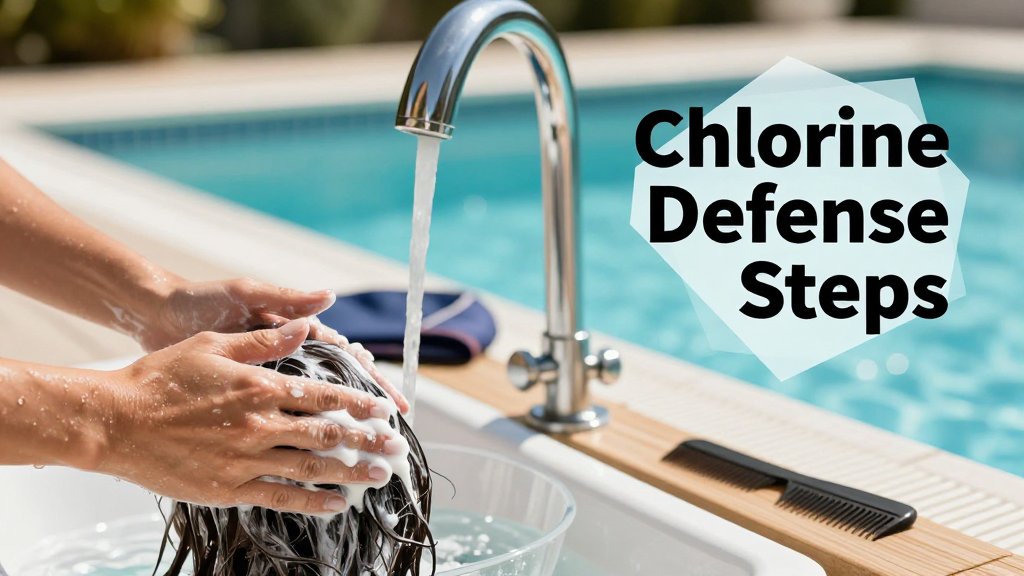
Pool days should leave you feeling refreshed, not stuck with dry ends, faded color, or frizzy curls. Chlorine and sun can rough up the cuticle fast, but damage is not inevitable if you control what your hair absorbs before you ever get in. In this playbook, you will learn a simple pre-swim shield, what to do during your swim, and the quickest post-swim reset to protect shine, curl pattern, and color. You will also get swim-friendly styles that make detangling easier.
Pre-swim steps that block chlorine absorption
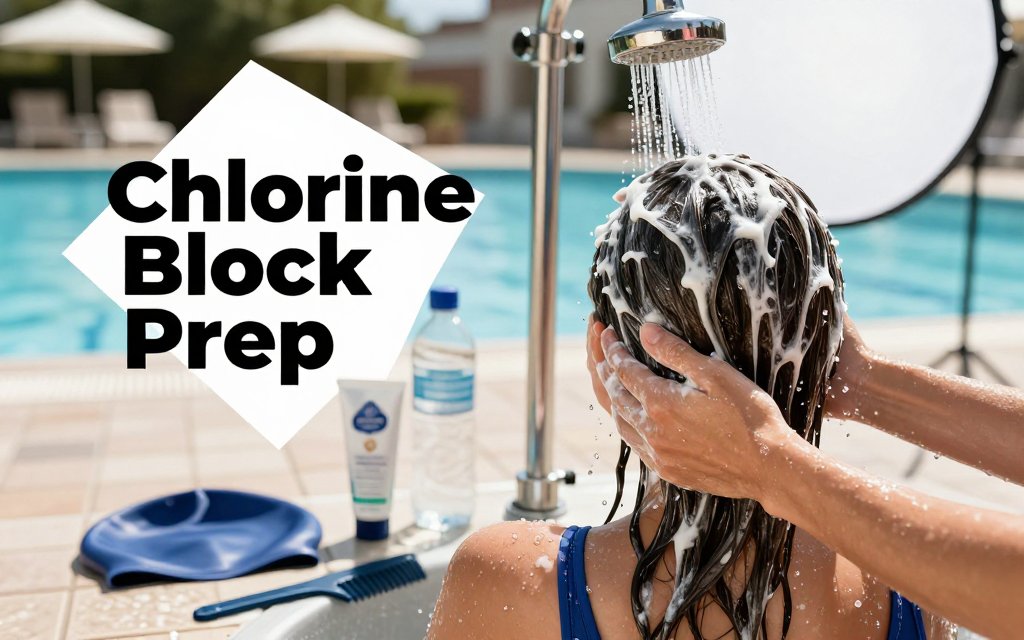
Hair absorbs pool water like a sponge, so the goal is simple: soak it with clean water first, then add a barrier. That 2 to 5 minute pre-swim habit can be the difference between soft, easy-to-comb hair and the crunchy, knotty feeling that makes you regret the whole pool day. The most common mistake is showing up with bone-dry hair and hoping a strong shampoo will “fix it later.” Dry hair has more room to take in chlorinated water, which means more dryness and more tangles to fight afterward. Think of your pre-swim routine as setting your hair up to absorb less, snag less, and fade less, especially if you are wearing highlights, vivid color, or a glossy brunette toner.
The 3-step rinse, coat, contain method
This is the fastest routine that actually changes what happens to your hair in the water. Step 1 is a thorough fresh-water rinse for 30 to 60 seconds, long enough that your hair feels uniformly saturated, not just damp on the surface. Step 2 is a barrier product focused on mid-lengths to ends, where hair is older, drier, and more porous. Step 3 is containment, meaning you put your hair into a low-tangle style before the swim cap or before you get in the pool. Each part matters: saturation reduces chlorine uptake, coating reduces friction, and containment reduces tangles and breakage when hair rubs against straps, shoulders, and the inside of a cap.
For containment, choose styles that match your length and texture, not just what looks cute on land. A low bun at the nape is great for medium to long hair because it sits flatter under a cap and creates fewer knots than a high topknot. Two braids (or two flat twists) are even better for curly and coily hair because they keep sections separated, so you do not come out with one giant felted knot. Short hair can be slicked back with water plus a dab of leave-in, then pressed flat with the palms before you put your cap on. If you are skipping a cap, aim for a low ponytail secured with a soft, snag-free tie, then coil it into a small bun so it does not whip around and tangle.
If you only do one thing, soak your hair with fresh water first, then add a thin conditioner barrier and secure it. Saturated hair drinks less pool water, and contained hair tangles less during cap-on, cap-off friction.
Pre-swim oil or conditioner, what actually works
Clear rule: conditioner or a leave-in is usually safer than straight oil for most people because it spreads more evenly and rinses out more predictably. Oils can be great, but they are easy to overapply, which can trap heat, attract grit, and make fine hair look stringy before you even leave the pool deck. If you want a simple default, grab a lightweight rinse-out conditioner or a silicone-leaning leave-in (the kind that feels slippery, not greasy) and apply it from ear level down. The American Academy of Dermatology also notes that applying oil or a leave-in before swimming can create a physical barrier between hair and chlorine, which is especially helpful during frequent pool days, as shared in their dermatologist swim-season tips.
Here is how to pick textures like a pro. If your hair tangles easily or feels rough when wet, a silicone-leaning leave-in (often featuring ingredients like dimethicone or amodimethicone) gives slip that helps hair glide against itself and against a cap, which means fewer snapped ends when you detangle later. If your hair is fine, low density, or you are wearing a crisp bob, lean toward a lightweight conditioner that feels milky or gel-cream rather than buttery. Apply sparingly at the crown and heavier on the ends. For very coarse, high-porosity hair, you can use a few drops of oil (think three to five drops, warmed in palms) and then seal it under conditioner, which helps the oil distribute instead of sitting in patches.
Hair-type tweaks make this routine feel custom in under a minute. Curly hair: prioritize saturation, then “glaze” conditioner over the outside of curls and gently squeeze it in, do not rake aggressively and disturb your clumps. Fine hair: keep the barrier product mostly on mid-lengths and ends, and choose a low bun or a single braid so you do not get a flat, dented crown. Oily scalp: rinse well, skip heavy product at the roots, and focus your barrier from cheekbone level down so you are not trapping oil under a cap. Color-treated hair: be extra faithful about the rinse, then use your barrier mainly on the ends where color fades fastest; avoid thick coating at the roots so your hair does not look limp in photos afterward. If you are unsure which contained style will flatter your face shape for post-pool plans, Fravyn can help you preview options like a sleek low bun versus soft braids before you commit.
If you want a time check, this whole routine can be done while your friend is finding sunscreen. Rinse for 30 to 60 seconds, smooth on your barrier for 20 seconds, then contain your hair in under a minute. That is it. The biggest “after” problem people run into is trying to rescue a dry, chlorine-soaked bob or layered cut with extra shampoo, which often makes it feel even more squeaky and tangled. If your goal is shiny, swishable hair afterward, think of the pre-swim barrier as your gloss insurance policy, and keep your ends protected. If you wear a bob and worry about flatness, pair this pool routine with the styling tips in our gloss bob shine checklist so your hair still looks intentional once it air-dries.
Swim-day tactics for curls, color, and caps
You did the pre-swim prep, now you are actually poolside with wet hands, sunscreen on your shoulders, and a towel that keeps slipping off the chair. This is the moment most routines fall apart, so pick one simple goal: keep hair contained, keep hair wet with fresh water as much as possible, and cut down the time your hair spends drying in the sun. If there is an outdoor shower, use it before your first dip and fully saturate your hair. Even a quick dunk under the rinse station helps. Then smooth on a small amount of leave-in conditioner or curl cream through the mid-lengths and ends only (skip your roots if you get greasy easily). Your hair will feel slippery on purpose, which means less friction and fewer knots later.
For detangling prevention, act like your lengths are a delicate fabric. The biggest tangle creators are hands constantly raking through hair, rough towel drying, and letting wet hair whip around in the wind. If you are wearing your hair down for photos, do it for a short window, then switch back to a protective shape before you swim again. A soft scrunchie beats a tight elastic, especially if your hair is fine, highlighted, or breakage-prone. If you have curls, try to keep curl clumps together by smoothing water and product downward, then gently scrunching upward. If you have straight hair, a sleek low ponytail or low braid keeps strands aligned so you are not fighting a seaweed knot by mid-afternoon.
Swim cap tips for long hair that actually stay on
Swim cap reality check: a cap is about reducing exposure, not creating a perfect seal. Water will usually get in around the edges, especially if you are diving, playing, or doing laps. The win is that your hair is not freely floating in chlorine or saltwater the whole time, and your ends are protected from constant friction. Silicone caps tend to feel smoother, pull less, and last longer than latex, which can snag finer hair. If you have very long hair, look for caps labeled for long hair or extra volume. If you have textured hair or protective styles (braids, twists, locs), sizing up can keep you from crushing your hair into an uncomfortable lump that makes the cap creep backward.
The easiest way to get a cap to stay on long hair is to make your hair flatter, not smaller. A high top-knot under a cap is the classic mistake because it creates a bump that acts like a ramp, so the cap slides off and can grind against your hairline, which is where breakage loves to start. Instead, do a low braid, then coil it into a flat bun at the nape of your neck and secure with a couple of small snag-free pins. Thick hair often does better with two low braids because it spreads out the bulk and keeps the shape low and wide. For short layers that escape, smooth them back with wet hands first, then put the cap on from forehead to nape in one steady motion.
If caps usually feel like they are ripping your edges out, try a comfort trick that is surprisingly effective: a tiny amount of conditioner right at the hairline can reduce pulling. Use a pea-sized amount and spread it thinly around the perimeter only, not through the whole head, because too much slip can make the cap slide. For textured hair, an extra layer helps. A thin satin or lycra liner cap under a silicone cap can cut friction and protect the hairline, especially if you have twists, locs, or a fresh silk press you are trying to preserve. After you swim, pop the cap off, rinse the perimeter, and gently finger-detangle only the ends so you do not turn a few small knots into one big mat.
Saltwater vs chlorine, which one is worse for hair
Here is the takeaway you can repeat in one breath: “Chlorine is more likely to fade dye and leave hair feeling rough and straw-like, while saltwater is more likely to dehydrate and tangle because it leaves residue and increases friction.” Chlorine is tough on color, especially fashion shades, reds, and fragile blonding work like highlights and balayage. Saltwater can make hair feel gritty and stiff as it dries, and that texture makes strands catch on each other, which is why beach hair can turn into a snarl fast. If you have curls, both can disrupt your curl clumps, but friction and sun are the hidden villains. Keeping hair contained (braids, bun, cap) plus a UV-protectant hair spray or a hat during breaks can make a bigger difference than chasing a perfect product lineup.
Green hair is the plot twist nobody wants in their vacation photos, and it is not limited to kids doing cannonballs all day. The people most at risk are light blondes, gray or white hair, heavy highlights, and any hair that is porous from bleaching, chemical straightening, perms, or frequent heat styling. The green tint is usually from metals like copper in the water that can cling to porous hair, and it shows up more because pale hair is basically a brighter canvas (the green hair causes explanation spells out copper as a common culprit). Your best poolside defense is speed: rinse with fresh water right after swimming, do not let your hair air-dry with pool water in it, and if you notice a tint starting, keep hair wet, slick it into a braid, and plan a chelating wash as soon as you are home.
Post-swim reset that prevents dryness and green tones
Most pool hair drama happens after you get out, not while you are swimming. If chlorine sits in your hair for hours (especially under a bun or cap), it keeps pulling moisture from the cuticle and makes color look dull. The other big culprit is brushing through pool tangles while the hair is swollen and fragile. Your goal is simple: get the pool water out fast, cleanse without over-stripping, then replace slip and moisture before you detangle. This works for straight hair, waves, tight coils, locs, and everything in between, and it is just as important for short fades as it is for long layers.
The 10-minute rinse and repair routine
Step one is immediate: rinse for 60 seconds with the strongest comfortable water pressure, even if you plan to “wash later.” Really saturate the hair, lift sections with your fingers, and let the water run through your part line, nape, and around the ears where residue hides. If you have curls, resist the urge to rake aggressively. Use a gentle “prayer hands” motion to keep clumps intact. If you wear extensions, keep the water flowing through the attachment area, but do not scrub or twist, since that invites tangling and loosening at bonds, tapes, or wefts.
If you only do one thing after swimming: rinse right away, add conditioner before detangling, and skip the rough towel rub. Hair that feels “crispy” usually needs slip and time, not more force.
Step two is a smart cleanse: shampoo for 30 to 60 seconds, focusing on the scalp and hairline, then let the suds rinse down the lengths rather than piling the ends on top of your head. Color-treated hair usually does best with a gentle, color-safe shampoo most swims, then a swimmer shampoo or chelating wash only when needed. A super common mistake is using a harsh clarifying shampoo after every single swim. That can make hair feel worse over time because you remove lipids faster than you replace them. People who should clarify more often are frequent swimmers, heavy product users (dry shampoo, wax, gels), or anyone noticing a waxy, coated feel that resists regular shampoo.
Step three is conditioning like you mean it: apply conditioner to the mid-lengths and ends for 3 to 5 minutes, then detangle with fingers first, followed by a wide-tooth comb. For curls and coils, choose a conditioner with lots of slip and do your detangling in sections so you keep definition. For extensions, keep conditioner off tape tabs or keratin bonds when possible, and concentrate on the lengths to prevent slippage. Finish with a cool rinse to help the cuticle lie flatter and reduce that squeaky feeling. If you are doing a quick shower, stop here and add a leave-in. If it is full wash day, follow with a mask or bond-builder, then style.
FAQ: Pool hair protection questions people actually ask
Think of the FAQ as troubleshooting. If you are still feeling dryness, noticing tangles, or seeing a weird tone shift, it usually means you need one small tweak, not a total routine overhaul. Also, if you are experimenting with a new cut or shade, this is a great time to preview low-maintenance options (like a blunt bob, a textured crop, or soft highlights) in Fravyn before your next salon appointment, so your “pool schedule” and your hair goals actually match.
How do I protect color-treated hair from chlorine without fading it faster?
Rinse immediately after swimming, then use a gentle, color-safe shampoo most of the time, not a strong clarifier. Save a chelating or swimmer shampoo for 1 time per week, or every 3 to 4 swims, depending on how your hair feels. Condition for 3 to 5 minutes and add a leave-in conditioner or cream before you brush. If you are platinum, copper, or vivid, ask your stylist about a weekly mask plus a bond-builder (like Olaplex-style or peptide repair) to keep hair strong, since breakage makes color look faded faster than shampoo does.
How do I prevent green hair from the pool if I am blonde?
First, know the real cause: the green tint is usually from copper in the water binding to hair, not “chlorine dyeing your hair green,” which is why city water and pool chemistry matter. The green hair causes guide explains why lighter hair shows it more. Prevention is practical: rinse right away, clarify or chelate when you notice a tone shift, and avoid letting pool water dry in your hair. If you already see green, try a chelating shampoo, then follow with a rich mask. Skip purple shampoo until the metal residue is removed.
What is the best shampoo for swimmers chlorine, and how often should I use it?
Look for a swimmer shampoo that is labeled chelating or “removes minerals,” since it is designed to lift chlorine byproducts and metals, not just oil. Great options are often sold as “swim” formulas (for example, Malibu C, TriSwim, or Paul Mitchell Shampoo Three). Frequency depends on exposure: occasional swimmers can use it every 1 to 2 weeks, while frequent swimmers may use it weekly or after heavy pool days, followed by a deep conditioner. On non-clarifying days, stick with a gentle shampoo. If your hair feels straw-like, scale back chelating and increase conditioning time instead.
Ready to see how a new hairstyle looks on you before your next pool trip? Try Fravyn and preview 50+ styles on your own photo in seconds, so you can pick a swim-friendly look that suits your face shape and hair vibe. Download the app and start testing styles today on iOS, then save your favorites for vacation-ready confidence.
Try a New Hairstyle Today
Preview 50+ hairstyles and 29+ colors on your own photo with Fravyn.