7 Low Effort Mens Haircuts Trending Spring 2026
Spring 2026 men’s hairstyle trends are all about wearable texture, softer tapers, and haircuts that look good even when you skip the blow dryer. This outline covers 7 low-maintenance cuts, who they suit (including thin hair and curls), and copy-paste barber wording. Plus, how to use a virtual hairstyle try on to avoid regret.
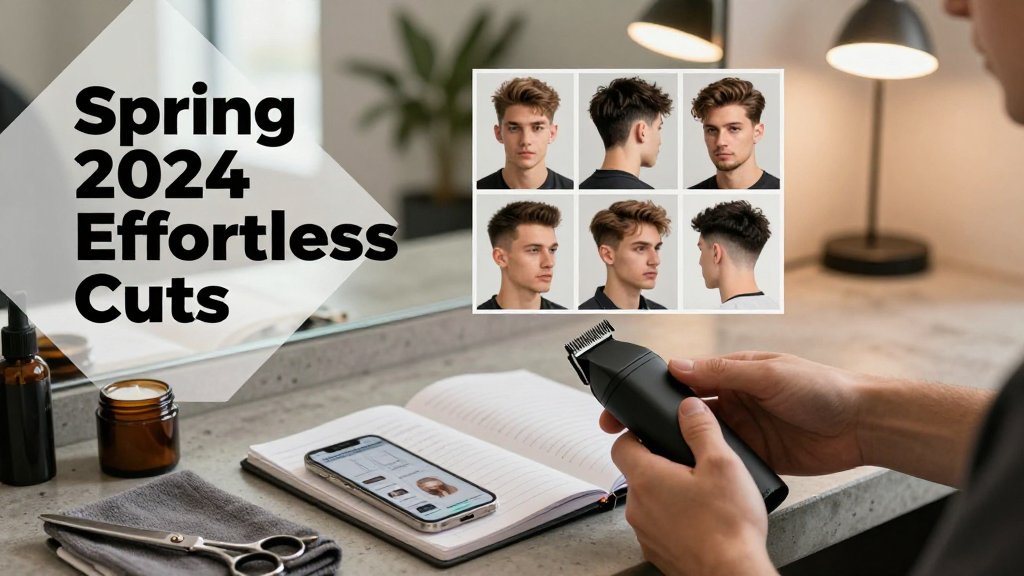
Spring has a way of putting your hair under a spotlight. Wedding invites stack up, the weather warms, and suddenly you are in more photos than you expected. If you want better hair but do not want a 20-minute styling routine, you are in the right place. Ahead are 7 low-effort men’s haircuts trending for Spring 2026, with quick guidance on who each cut suits by hair type and face shape. You will also get barber-ready wording so you can book with confidence.
The 7 easiest men’s haircuts trending Spring 2026
In Spring 2026, the most requested men’s cuts are the ones that look intentional with air-dry texture and a softer grow-out window, not razor-sharp perfection. Think low tapers instead of severe skin fades, scissor texture instead of helmet shapes, and edges that still look clean when you skip a week. It is a practical shift too: guys want hair that works for office days, gym days, travel days, and wedding season photos without needing daily heat styling or constant “fresh fade” appointments. The good news is that these cuts are not niche. They cover straight, wavy, curly, coily, thick, and fine hair, and they look great across face shapes because the outlines are customizable.
What makes a haircut “low effort” in 2026
Low effort in 2026 means three plain things: (1) it looks good air-dried, so your texture does the work; (2) it grows out on purpose, so you do not hit an “awkward phase” after ten days; and (3) it does not require daily heat styling to look like the photo. Practically, most of these cuts are designed around barber visits about every 5 to 8 weeks, not every 2 to 3. That timeline makes sense when you remember that hair grows about a half inch per month on average, so you can predict how quickly your perimeter will expand. A common mistake: choosing a super tight skin fade when you hate frequent cleanups, because it looks “overgrown” fastest around the ears and neckline.
Here is the full lineup of seven low maintenance cuts you will see everywhere this spring. Each one includes why it is trending, a typical length range (so you can sanity check what the barber suggests), the one product that makes it effortless (or none), and who it is best for. If you are unsure about your face shape, start with a softer outline. You can always tighten it up later, but it is harder to “add back” weight once the sides are taken too high.
If you want a cut that stays flattering between appointments, ask for a low taper and soft, movable texture on top. Skip super-tight skin fades unless you love frequent lineups, because the ears and neckline show regrowth first.
One quick “tell the barber” script that works for most of these: “Keep the perimeter clean but soft, low taper at the temples and nape, and add texture on top so it air-dries well.” Then show a photo that matches your hairline and density, not just the vibe. For example, if your hair is thin, pick a textured crop or Ivy League photo where you can see a natural parting and scalp visibility, because that is more realistic than a thick, heavily styled reference. If your hair is very thick, ask for internal debulking with scissors on top, so it does not puff up as it dries.
Quick pick guide: choose your cut in 30 seconds
Use these decision rules and you will land in the right chair with confidence. If you have curls, keep weight on top and clean the perimeter, that is the curly top low fade. If your hair is straight and fine, avoid heavy disconnection and go for texture or a classic shape, that is the textured crop with fade or a grown-out Ivy League. If you want the lowest maintenance possible, pick a buzz cut with a low taper. If you like length but still want it to feel styled even when it is not, the modern mullet and soft wolf cut are your best bets because the layers and taper do the “styling” for you.
To make any of these look better with less effort, focus on scalp and hair health first, since clean roots make texture look intentional instead of greasy. If you deal with buildup from dry shampoo, gel, or hard water, try a simple scalp exfoliation routine for buildup once a week. Then, before you commit, test the silhouette on your own face. Fravyn lets you preview 50-plus hairstyles and 29-plus hair colors on your photo, plus face shape analysis and personalized recommendations, so you can decide if you prefer a cleaner hairline, more height, or more fringe before your appointment.
Barber-ready wording for each low-maintenance cut
Two people can ask for a “textured crop” and walk out with totally different haircuts. One gets a short Caesar-style fringe that sits straight across the forehead. The other gets a choppy top with a low fade and a lighter, broken fringe, simply because nobody agreed on fringe length or how tight the edges should be. The fastest way to get the haircut you actually want is to describe shape, lengths, and edges, not just the trend name. Think of it like ordering coffee: “iced latte” is a start, but your barber needs the equivalents of size, milk, and sweetness to nail it consistently.
A clean script usually has four parts: how long on top, where the fade or taper starts, what you want at the neckline and sideburns, and how you want texture handled. If you like clipper numbers, remember the basics so you can translate your preference: a #2 is about 1/4 inch and a #4 is about 1/2 inch, but guard systems vary by brand and setup, so bring a reference like this clipper length comparison chart on your phone. If you hate clipper talk, inches work just as well, especially for tops, fringes, and longer napes.
The one list you should screenshot: 7 barber scripts
Copy, paste, and tweak one of these in your notes app before you go. Each line includes your top length, where the blend lives (fade or taper), what you want at the neckline and sideburns (that is where a cut looks “fresh” or “grown out”), and one texture instruction so they do not default to thinning shears everywhere. If you are between two options, choose the longer top length and the softer edge choice on your first visit. You can always take more off next time, but it is harder to undo a too-short fringe or a neckline that got boxed higher than you wanted.
A quick way to personalize these without overthinking: decide if you want “show scalp” or “soft shadow” on the sides. “Fade” usually reads tighter and higher contrast in photos, which can look extra crisp for engagement shoots, wedding weekends, or any time you want your hairline to look very intentional. “Taper” keeps more hair around the ears and nape, which tends to feel more work-friendly and forgiving between appointments. If your hair is thick or grows straight out at the sides, ask them to remove bulk with scissors above the blend so the cut does not turn into a helmet by week three. If you have a strong cowlick at the front, keep the fringe slightly longer so it can lay forward or split naturally.
Common miscommunication fixes that barbers love
If you mean “low taper,” say “keep length on the sides, just clean around ears and nape,” because a low fade can still go down to skin and feel much sharper than you pictured. If you say “textured,” clarify the method: “point cut and make the ends uneven,” not “thin it out everywhere,” since aggressive thinning can make hair look frizzy or see-through fast. If you want your corners natural, say “no hard line-up,” because some barbers default to crisp edges that look great day one but can feel harsh as they grow. Counterintuitive tip for thin or fine hair: ask to avoid heavy texturizing on top, since it can make the ends look wispy sooner and make styling paste harder to grip.
Two small “save your haircut” moves make a huge difference. First, bring two photos of the same haircut: one straight-on and one side profile, so your barber can match the silhouette and the blend height (a front photo alone hides how high the fade goes). Second, say what you do each morning: air dry, quick towel dry, or blow dry, plus whether you use a matte clay, curl cream, or nothing. That tells them how much structure the cut needs to behave. Before you book, use a virtual hairstyle try-on men tool like Fravyn to preview the cut from multiple angles on your own face, then test a couple hair colors too. It stops you from committing based on one influencer angle and helps you walk in with a plan that fits your face shape.
Match the trend to your face shape and hair type
The “best” men’s haircut trend in 2026 is not the one with the loudest before-and-after, it is the one that behaves with your hair and still looks intentional after 3 to 6 weeks of grow-out. Face shape matters, but so does your cowlick, your density at the temples, and whether you are a hat person or a pomade person. If you want a quick visual for balance, barber Matty Conrad’s GQ face shape guide is a helpful reference point. After that, you can keep it simple: add height where you need length, add width where you need balance, and keep outlines clean so the haircut does the work for you.
Best picks by face shape, including thin hair shortcuts
Here are easy pairing rules you can screenshot for your next appointment, using the seven low-effort cuts from this guide (short messy quiff, Ivy League, textured crop, buzz with taper, curly top low fade, wolf cut, modern mullet). These are meant to feel practical for real life, like commuting, gym days, and last-minute events, not just mirror selfies. If you wear hats often, lean toward a textured crop, Ivy League, or buzz with taper, since they flatten gracefully. If you are in a corporate dress code, ask for a low taper and a natural neckline, since high contrast can read “fresh fade” even when you want “polished.”
Hair type is the other half of the equation. Straight hair shows every line, so a textured crop or Ivy League looks sharp with minimal product, just avoid over-thinning so the ends do not look see-through. Wavy hair loves the short messy quiff and wolf cut because your natural bend creates volume without a blow dryer. Curly hair usually looks best with a curly top low fade or a slightly longer textured crop, since curls need a bit of length to form cleanly. Coily hair can do any of these, but a low taper with a shaped outline plus a slightly longer top tends to look neat for work and still flexible for the gym.
Quick mini-guide for thin hair, especially if temples are your sensitive spot: choose structure, not shredding. The Ivy League with soft parting adds the illusion of density because it gives the top a controlled direction and a clean perimeter. A textured crop with a controlled fringe can bring the eye forward and reduce the “see scalp” effect under bright overhead lighting. A buzz with taper is surprisingly flattering because it lowers contrast at the sides while keeping a strong outline. What can backfire: super tight skin fades (they make temples look more hollow) and overly separated mullets (the disconnected look can spotlight sparse areas).
If your hair is fine or your temples are receding, ask for a haircut that keeps a clean outline. A strong silhouette reads “fuller” in photos. Soft tapers, controlled texture, and a neckline that stays neat usually beat extreme fades.
For Spring, color can be the easiest refresh that still looks believable at brunch, in office lighting, and in wedding photos. If you want low commitment, ask for a tone-down gloss (often a demi-permanent service) to deepen and smooth the look without a dramatic shade shift. Soft warm brown works well if your hair looks ashy or dull after winter. Espresso is great when you want “clean and expensive” without going jet-black. If you want something subtle but visibly new, try a slightly lighter, sun-kissed top while keeping the sides natural, since it adds dimension without forcing constant root touch-ups.
FAQ: How do I choose a low maintenance men’s haircut?
Start with your “tolerance level” for styling: 0 to 2 minutes, 3 to 5 minutes, or 6+ minutes. For 0 to 2 minutes, pick the buzz with taper or textured crop. For 3 to 5 minutes, the Ivy League and short messy quiff give you options without demanding heat tools. For 6+ minutes, the wolf cut and modern mullet look best with a little product and daily adjustment. If your work is corporate, ask for a low taper version of any cut so it grows out quietly.
FAQ: What is the best men’s haircut for thin hair in 2026?
The three safest picks are the Ivy League, textured crop, and buzz with taper. All three create a clean outline and reduce harsh contrast at the sides, which helps temples look less exposed. At the barber, use this line: “Keep the top blunt enough to look dense, no heavy thinning shears.” For styling, go simple: a pea-sized matte paste on towel-dry hair, rake it through, then stop touching it. Overworking fine hair separates it and makes scalp show more under light.
FAQ: Can I pull off a modern mullet at a formal event?
Yes, if it is tapered and blended, not disconnected. Ask for a low taper at the sides, a layered back that sits at the collar or just above, and a clean neckline that looks intentional in photos. For a wedding-friendly finish, use a light cream, then either tuck behind the ears or do a soft side sweep so the shape reads polished from the front. The common mistake is letting the back get too long without layers, which can look messy and uneven in formal lighting.
Before you commit, it helps to see the whole vibe, cut plus color, on your actual face. Fravyn lets you preview 50+ hairstyles and 29+ hair colors on your own photo, so you can compare an Ivy League versus a textured crop, or espresso versus a warm brown, without guessing. You also get face shape analysis and personalized recommendations, which is perfect if you are stuck between “this looks cool online” and “will this work for my forehead, jaw, and hairline.” Download Fravyn on iOS, test a few options, then walk into your appointment with receipts.
Ready to see how a new hairstyle looks on you before you commit? Try Fravyn and preview 50+ styles on your own photo in seconds, so you can pick a Spring 2026 cut that actually fits your face and hair type. Download the app, test a few options, then take your favorite screenshot to your barber. Get Fravyn on iOS and start your try-on now.
Try a New Hairstyle Today
Preview 50+ hairstyles and 29+ colors on your own photo with Fravyn.