Trim or Wait? Haircut Timing by Texture
Not sure if you should book a trim now or stretch it a few more weeks? This guide breaks down a realistic haircut schedule by hair type, length, and goals, with week-by-week ranges and a simple checklist to prevent split ends without overcutting.
Booking a haircut should not feel like a gamble between staying neat and protecting your length. Trim too soon and you may feel like you are not making progress, wait too long and split ends can undo your work fast. The best schedule depends on your hair texture, density, current length, and how you style week to week. In this guide, you will get a clear, weeks-based timing chart by texture plus a quick decision check to help you book with confidence.
Trim vs haircut difference and when it matters
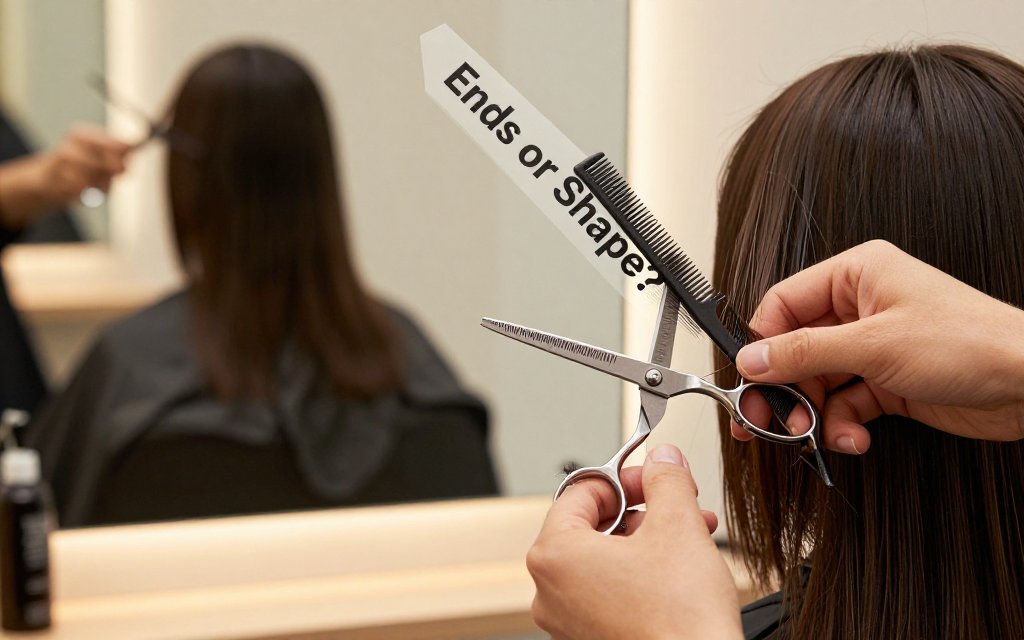
If your hair appointment anxiety starts with, “Do I need a trim or a whole haircut?”, you are not alone. In plain terms, a trim is a small cleanup of the very ends, while a haircut is a shape decision that can change your perimeter, layers, or overall silhouette. The easiest way to choose is to ask yourself one question in the mirror: does your hair still fall the way you like, but the ends look or feel rough? That points to a trim. If the shape is collapsing (think triangle hair, flat crown, bulky ends, or bangs that no longer blend), you are due for a haircut, even if you only want to lose a little length.
This difference matters because split ends are not just a cosmetic issue. A split is a fray in the hair fiber, and as that fray worsens, it can move upward and lead to more breakage higher on the strand. Cosmetic chemists describe how damage can progress along the fiber as it accumulates, which is why catching splits early saves length over time (see this split-end travel explanation). A trim removes the weak, splitting tips before they turn into “mystery breakage” that makes mid-lengths look shorter, thinner, and harder to style.
A trim is damage control, a haircut is shape control
Here is the practical, salon-chair version: trims usually remove a small amount, about 0.25 to 0.5 inches, with the goal of cleaning up the perimeter and stopping splitting. Haircuts can remove more (sometimes just an inch, sometimes several) because the goal is to rebuild the silhouette: a sharper blunt bob line, a refreshed long-layer pattern, more face-framing, or a new fringe. If you are growing out a shag or wolf cut, a “haircut” might mean reorganizing the layers so the crown does not get puffy. If you are maintaining waist-length hair, a “trim” might be all you need to keep ends from shredding.
One surprise: asking for “just a trim” can still change your shape if your hair is fine, very short, or freshly color-treated. On fine hair, removing even half an inch can make a blunt lob look thicker because it deletes the see-through ends, but it can also make the front feel shorter if it was already slightly face-framed. On short cuts like a pixie, a tapered crop, or a fade, a trim around the ears and neckline is basically a haircut because those millimeters create the whole outline. If you are planning engagement photos, a wedding, or a big color shift like platinum, copper, or jet black, a true haircut can be the difference between “new color” and “new look.”
Ask for a trim if your style still sits right but the last inch feels rough. Ask for a haircut if your perimeter has lost its line, your layers look heavy, or you need a fresh blueprint.
The hidden signs you need one now
You can test for “trim now” signs at home in under two minutes, no magnifying mirror required. Start with dry hair. If the ends feel crunchy or squeaky when you rub the last inch between two fingers, that is usually cuticle damage. Next, pay attention to where tangles live. If knots cluster in the bottom 2 inches and you keep snapping strands while detangling, your ends are likely splitting and catching on each other. For wavy, curly, and coily textures, watch your clumps: if your curls refuse to group and look stringy even with your usual gel or cream, ragged ends can be breaking the pattern. For straight hair, a blunt line that has turned wispy and transparent at the bottom is another classic trim signal.
A common mistake is blaming frizz on humidity when the real combo is split ends plus heat damage. If your hair frizzes mainly from mid-length to ends (not at the roots) and the ends look lighter, rougher, or bend at odd angles, you may be looking at breakage, not “weather hair.” In that case, a trim removes the frayed tips, while a haircut helps if the overall shape has become uneven from snapping. If you are unsure, try a quick preview first: with Fravyn, you can compare a clean blunt lob vs long layers or curtain bangs on your own photo, then pair it with prom hairstyles by neckline planning so your cut supports the vibe of your outfit and your face shape.
How often should you trim hair by texture
Trim frequency ranges that actually work in real life
Straight hair often looks best with trims every 6-10 weeks, wavy 8-12 weeks, curly 10-16 weeks, and coily 12-20 weeks. The fine hair exception is real: fine hair that is heat-styled often needs the shorter end of its range, because the ends get wispy fast and show fraying earlier than thicker strands. If you are maintaining the same length and want a crisp perimeter, many stylists still point clients toward the classic “every 6-8 weeks” rhythm, because shape and split ends show sooner on most cuts (see this trim timing overview). Use the ranges as your default, then adjust based on what your hair is actually doing week to week.
Straight textures usually want the most frequent cleanups because the ends line up in a way that makes unevenness obvious. If you wear a blunt bob, a lob with a sharp edge, or a pixie with tight sides, plan on 6-8 weeks for reshaping even if the hair feels healthy. Fine straight hair, especially if it is highlighted or flat-ironed, can feel “see-through” at the last inch, so asking for a dusting (just the transparent tips) can keep it looking fuller. Thick straight hair can push closer to 8-10 weeks, but if you get heavy face-framing layers or curtain bangs, those front pieces often need a mini trim sooner than the rest.
Wavy hair lives in the middle, it can hide a little growth, but it tangles easily if the ends are rough. Most people with loose S-waves do well at 8-12 weeks, then tighten up to 8-10 if they diffuse often, blow out weekly, or keep long layers that need to sit just right. If your waves go flat at the ends, a trim is sometimes less about “damage” and more about bringing back bounce by removing the stretched-out portion. On the other hand, thick wavy hair that is mostly air-dried can often stretch to 12 weeks, especially in softer shapes like a shag, a long wolf cut, or lived-in layers.
Curly and coily textures can go longer between trims because the pattern disguises tiny splits and shrinkage makes growth less obvious. Curly hair typically lands at 10-16 weeks, with the shorter end for tight ringlets that tangle at the ends or anyone who regularly straightens their curls for a silk press look. Coily hair often sits comfortably at 12-20 weeks, especially when you wear protective styles like twists, knotless braids, or a sew-in and you are focused on length retention. The key detail is that “longer between trims” still needs regular end checks: if detangling suddenly takes twice as long, the ends are catching, and that is your sign to book sooner.
Adjust your schedule for color, heat, and hair goals
Your goal changes everything. If you are growing length, ask for micro-trims of about 0.25 inches on the longer end of your texture range, for example every 12 weeks for straight hair that is usually on an 8-week schedule, or every 16 weeks for curls that normally feel best at 12. That keeps splits from creeping while you still see progress. If you are maintaining a sharp shape, do the opposite: book more frequent reshaping and tell your stylist you are protecting the outline. Think blunt bob, precise fade, heavy fringe, or a strong U-shape with crisp ends, these styles look “off” quickly even when the hair is healthy.
Heat and chemical services shorten the timeline because they rough up the cuticle and make ends chip sooner. If you flat-iron weekly, move yourself to the shortest end of your range and commit to heat protectant every single time, not just on special occasions. If you get balayage, highlights, or full bleach, plan a trim at the same appointment or within the following 1-2 weeks, because lightened ends can feel dry fast and start to snag on each other. Swimming in chlorine is another sneaky one: hair can feel fine wet, then turn crunchy when it dries, so a post-vacation trim can save you from having to take off more later.
Daily habits count, too. If you wear a tight ponytail to the gym, sleep in a topknot, or keep your hair in the same part all week, the ends and the perimeter take more friction, which can mean earlier trims even without heat. Protective styles can extend time between trims, but only if you are gentle when you take them down and you are not letting the ends mat inside the style. One simple trick is to book trims right after major color services or seasonal shifts (late winter and late summer are common culprits), since that is when dryness spikes and you notice breakage. If you are unsure what schedule fits your face shape and cut, Fravyn can help you preview different lengths so you choose a trim plan that supports the shape you actually want to maintain.
Hair maintenance schedule by length and lifestyle
If you want haircut timing to feel less like guesswork, build a simple planning system around two things: how “architectural” your cut is, and how hard your week is on your hair. Architectural cuts (a sharp fade, a crisp bob, a short pixie with a tight neckline) look amazing, but they also show grow-out fast. Softer cuts (long layers, a shag, a loose lob) have more forgiveness, so you can stretch appointments further. Lifestyle matters just as much: daily hot tools, frequent swimming, helmet days, or lightening your hair can all speed up fraying and flattening. A practical trick is to choose a default interval, then set one “checkpoint week” where you do a quick mirror check and decide trim versus wait. If you are changing your look for a wedding, graduation, or a big color appointment, try saving a few hairstyle and hair color options first in Fravyn so your haircut timing matches the vibe you actually want.
Your haircut schedule if you wear it short, medium, or long
Short hair usually needs the most frequent shape refreshes because the eye catches millimeters. Think buzz cuts, skin fades, tapers, cropped cuts, pixies, and short textured crops with a clean outline. In real life, that often lands at every 3 to 6 weeks, especially if you keep the sideburn area tight or you like a crisp hairline around the ears. Medium hair sits in the “style holds, but details drift” zone. Bobs and lobs commonly land around 6 to 10 weeks, depending on how blunt the perimeter is and whether you wear a strong fringe. Curtain bangs, eyebrow bangs, and face-framing pieces can be the first thing that feels messy, even if the rest still looks fine.
Long hair can often stretch 10 to 16-plus weeks if your ends are healthy, your layers are grown-in, and you are not fighting constant tangles. The goal is not “never cut it,” the goal is fewer emergency cuts. If you are wondering “how often to get a haircut men” or “how often to get a haircut women,” the honest answer is that it is mostly about the cut, not gender. A man growing out a textured crop with a low taper may need a clean-up every 4 to 6 weeks, while a woman with long layers and no bangs might be fine at 12 to 16 weeks. Grow-out visibility is the real driver: fades, fringes, and blunt lines announce themselves sooner.
If your style still feels like “you” from the front, but the back looks bulky, the neckline feels fuzzy, and you keep fixing one side more than the other, you are past a trim and into reshape territory.
Decision checklist: trim now or wait
Use this as a pre-booking check the week you hit your “checkpoint.” If 2 or more boxes are true, book a trim. If 4 or more are true, consider a haircut reshape so your overall silhouette looks intentional again. While you are stretching time between appointments, stack a few split-end prevention habits that make waiting actually work: sleep on a satin pillowcase, use heat protectant every time you blow-dry or flat iron, detangle gently from the ends upward (the American Academy of Dermatology shares similar advice in their hair detangling tips), and rotate hairstyles so you are not wearing the same tight ponytail in the same spot every day.
After you score your checklist, match the appointment type to the problem. A trim is usually a micro-cleanup, often around 0.25 to 0.5 inches, plus dusting any see-through ends so your hair behaves again. A reshape is more like re-sculpting the line and balance: re-tapering a neckline, rebuilding the bob’s blunt edge, or re-layering long hair that has gone triangle-y at the bottom. If you color your hair, a smart rhythm is to pair a trim with every other color visit, or add a quick dusting a few weeks after a lightening session. If you swim, wear a hard hat, or run a lot, you may need the earlier end of the range because friction and repeated washing can make ends look tired faster, even when your scalp hair growth is totally normal.
How often should you cut your hair when growing it?
Most people can grow their hair and still keep the ends looking fresh by trimming every 10 to 16 weeks. Ask for a micro-trim (about 0.25 inches) if your ends feel smooth and you mainly want to prevent splits from starting. The counterintuitive part is that skipping trims for 6-plus months can backfire: once splits climb upward, you often have to remove more length later to get back to a clean edge. If you are growing out bangs or a bob, plan one “shape reset” cut, then switch to micro-trims as soon as the perimeter stops looking choppy.
What is the best trim frequency for curly hair?
Many curly textures do well with trims every 10 to 16 weeks because the curl pattern can disguise small changes in length. High-porosity curls, frequent diffusing, or regular straightening often do better closer to 8 to 12 weeks. The reason is not that curls “need more cutting,” it is that uneven ends show up as uneven definition: clumps stop forming, your wash-and-go looks fuzzy faster, and you start using extra gel just to get the same shape. Early warning signals are tangles at the ends, lost spring in face-framing curls, and one side shrinking differently than the other.
What is the best trim frequency for fine hair?
Fine hair often looks fullest with trims every 6 to 10 weeks, especially if it is straight, worn in a blunt bob, or heat-styled. Fine strands can be perfectly healthy and still look “less” at the ends because the tips get wispy sooner, which makes the whole style feel thinner even if breakage is minimal. The visual cue is see-through ends: your ponytail looks narrower at the bottom, and your blowout loses that thick, swishy finish. If you want to keep length, ask for a dusting plus a blunt-but-soft perimeter, and limit daily high heat so your ends stay dense between visits.
Ready to see how a new hairstyle looks on you before you commit to the cut? Try Fravyn to preview 50+ styles on your own photo in seconds, so you can choose a look that fits your texture and your timing. Download now and start experimenting today on iOS.
Try a New Hairstyle Today
Preview 50+ hairstyles and 29+ colors on your own photo with Fravyn.