Taper vs fade comes down to how much skin shows at your neckline
A taper stops at short hair, a fade goes to bare skin. Here's how low, mid and high versions differ, how fast each grows out, and why a skin fade can cost over $1,000 more a year than a low cut.
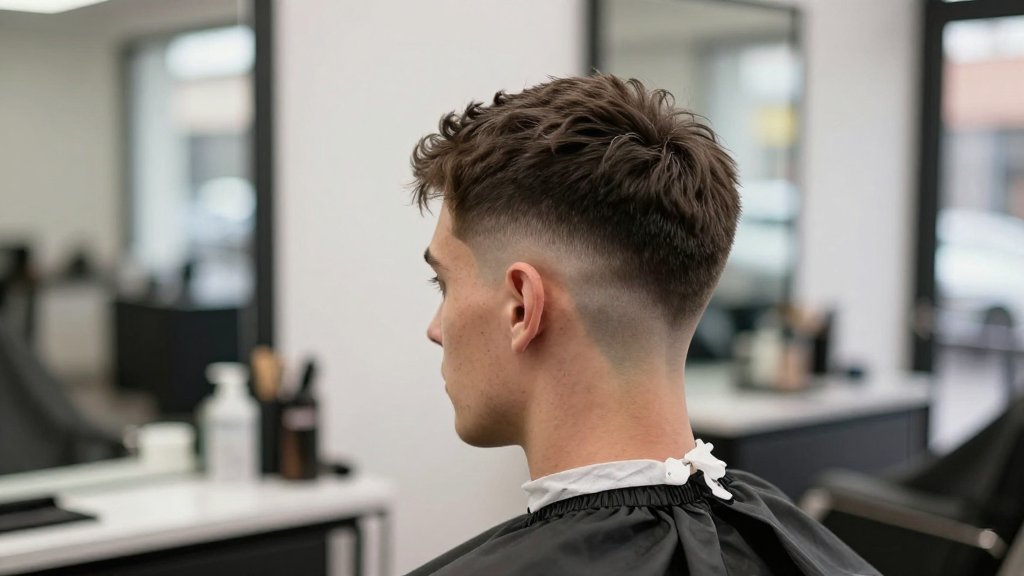
Ask a barber for a taper and you'll leave with short hair at your neckline. Ask for a fade and you'll leave with bare skin there. That one detail decides how the cut looks, how quickly it grows out and how much you'll spend keeping it sharp.
Most confusion in the taper vs fade debate comes from guys using the two words as if they mean the same thing. They overlap, but they aren't interchangeable, and the difference shows up in your bank balance as much as in the mirror.
Taper vs fade is really a question about skin
A taper shortens the hair gradually from the top down toward your natural hairline, and it stops before the skin. A fade keeps going. The barber blends the sides and back all the way down to the scalp, often finishing with a foil shaver so the bottom reads as bald. Put simply, a fade is just a very short taper.
All fades are tapers, but not all tapers are fades. If you can see skin at the nape, it's a fade. If you can still see hair, it's a taper.
That's why the order you say the words in matters. A taper fade usually means a fade kept low and tight around the ears and neckline, while the top and most of the sides stay fuller. It's the quiet version, and it's the one most offices won't notice until someone asks where you got your hair cut.
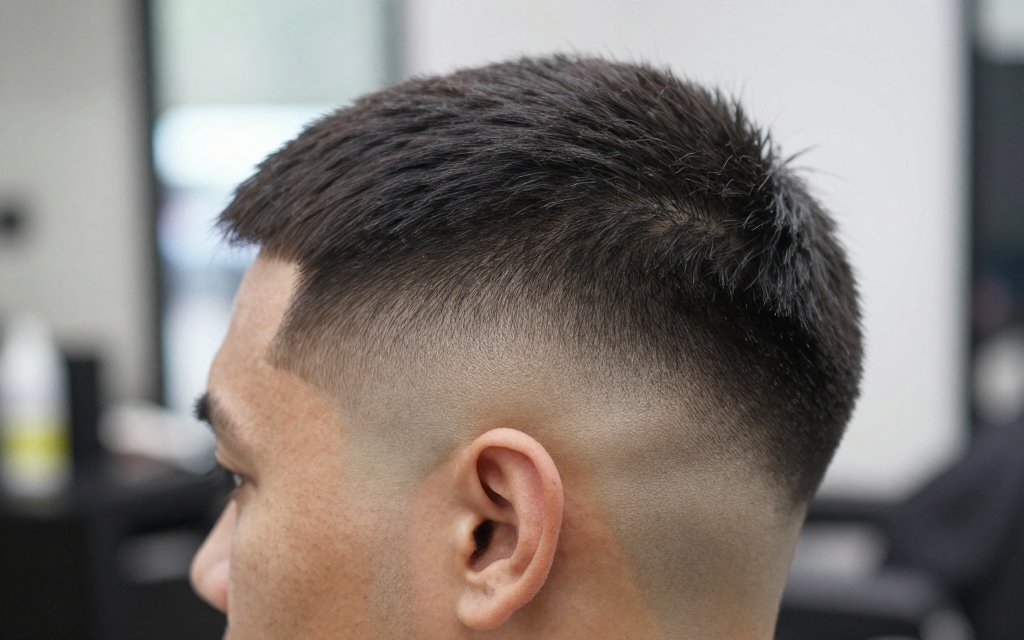
Where the line starts on a low, mid or high fade
Height is the second decision after skin or no skin. Barbers name every version by where the shortest section begins on the side of your head, and that starting point changes the whole silhouette.
| Cut | Starts at | Touch-up |
|---|---|---|
| Taper fade | Just above the ear | Every 4-5 weeks |
| Low fade | Around the ear | Every 3-4 weeks |
| Mid fade | The temple | Every 2-4 weeks |
| High fade | High on the sides | Every 2-3 weeks |
| Skin fade | Down to bare skin | Sharp for 1-2 weeks |
Low fade and low taper
A low fade haircut begins right around the ear and keeps most of the side length intact. It's the easiest version to wear to a job interview and the slowest to look scruffy, since the short part covers so little of your head.
Mid fade and mid taper
A mid fade haircut starts at the temple, so the contrast lands halfway up the side. The mid taper version keeps a little hair at the bottom instead of skin. Both work well if you want the cut to look deliberate without going all the way up the side.
High fade and high taper
A high fade pushes the shortest section up near the top of the sides, which leaves a strong block of length on top. A high taper does the same with hair left at the base. It's the boldest shape and the one that shows growth fastest.
A skin fade looks sharp for about two weeks
Hair grows roughly half an inch a month, and on bare skin you see every bit of it. One Florida barbershop's growth timeline says a cut taken down to skin stays crisp for about 1 to 2 weeks, and even 3 to 5 days of regrowth softens the line enough to notice.
The closer a cut gets to bare skin, the sooner regrowth shows. A few days of stubble is enough to blur a skin line, while a taper hides a month of growth.
If you like the look but see your barber once a month at most, a skin line will spend half its life looking tired. A taper holds up far better on that schedule.
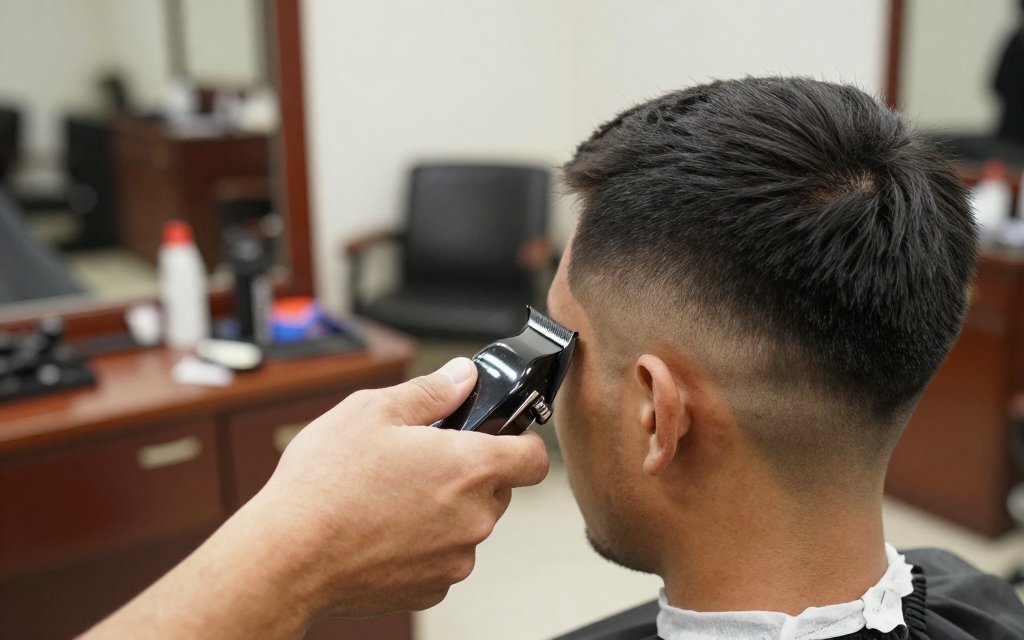
What each cut costs you over a year
The sticker price per visit isn't wildly different, but frequency changes everything. A 2026 fade pricing guide puts a low fade at $25 to $35, a mid fade at $30 to $45 and a high fade or skin fade at $35 to $60, with city shops at the top of that range.
| Cut | Per visit | Yearly cost |
|---|---|---|
| Low fade, every 4 weeks | $25 to $35 | $325 to $455 |
| Mid fade, every 3 weeks | $30 to $45 | $510 to $765 |
| Skin fade, every 2 weeks | $35 to $60 | $910 to $1,560 |
Those yearly figures are simple math: 13 visits a year on a four-week cycle, 17 on three weeks and 26 on two. Add a 15 to 20 percent tip and the gap between a relaxed low cut and a tight skin line can pass $1,000 a year.
None of this makes going to skin a bad choice. It just means you should pick it knowing it's a subscription, not a one-off.
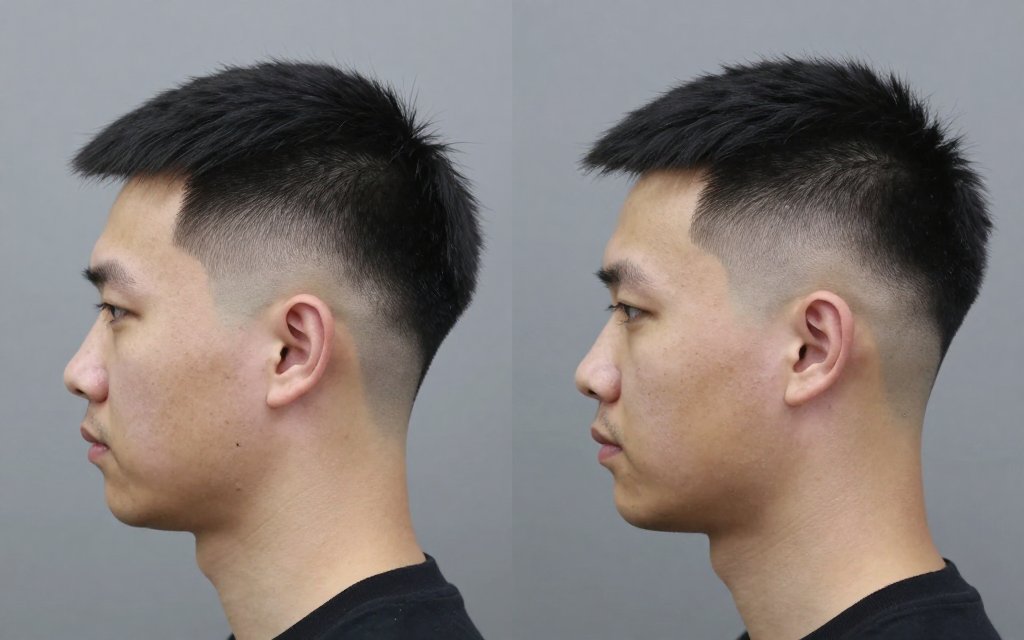
How to ask for a taper fade haircut and get it
The words taper and fade get used loosely from shop to shop, so vague requests get vague results. Be specific about three things: where the line starts, whether you want skin at the bottom and how much length stays on top.
Try the height on your own face first
Fade height changes how wide or long your head looks. A high fade tends to make a round face look longer, while a low fade keeps width at the sides, which our guide to round face shape hairstyles covers in more detail. If your face is already long, the oblong face shape guide explains why fuller sides help. You can preview a few versions with the AI hairstyle try-on before you sit in the chair.
Bring two photos, not one. A side view shows the height of the blend and a back view shows whether the neckline ends in hair or skin.
Taper vs fade questions barbers hear all the time
Is a taper fade the same as a fade?
Not quite. A regular fade can sit at any height and runs to skin, while a taper fade keeps the blend low around the ears and neckline. Some barbers treat the phrase as contradictory, so describe the finish you want rather than relying on the name.
How often should you touch up a skin fade?
Every 10 to 14 days if you want it looking fresh, and no longer than 2 to 3 weeks. Between visits you can clean up the neckline and sideburns with a trimmer, but leave the blend itself to your barber.
Does a drop fade cost more than a regular fade?
Usually a little. A drop fade curves down behind the ear instead of running straight across, and that custom blending typically adds $5 to $15 to the bill.
Ready to see whether a low taper or a high skin line suits you? Try Fravyn and preview 50+ styles on your own photo in seconds, so you can walk into the shop knowing exactly what to ask for. Get the app here: iOS.
Try a New Hairstyle Today
Preview 50+ hairstyles and 29+ colors on your own photo with Fravyn.