Sock Curls and Heatless Rollers Beat the Flat Iron
Sock curls and heatless rollers deliver bouncy waves overnight with zero heat. Here is how each method works, the flat iron temperatures that fry your hair, and how to match a technique to your length and texture.
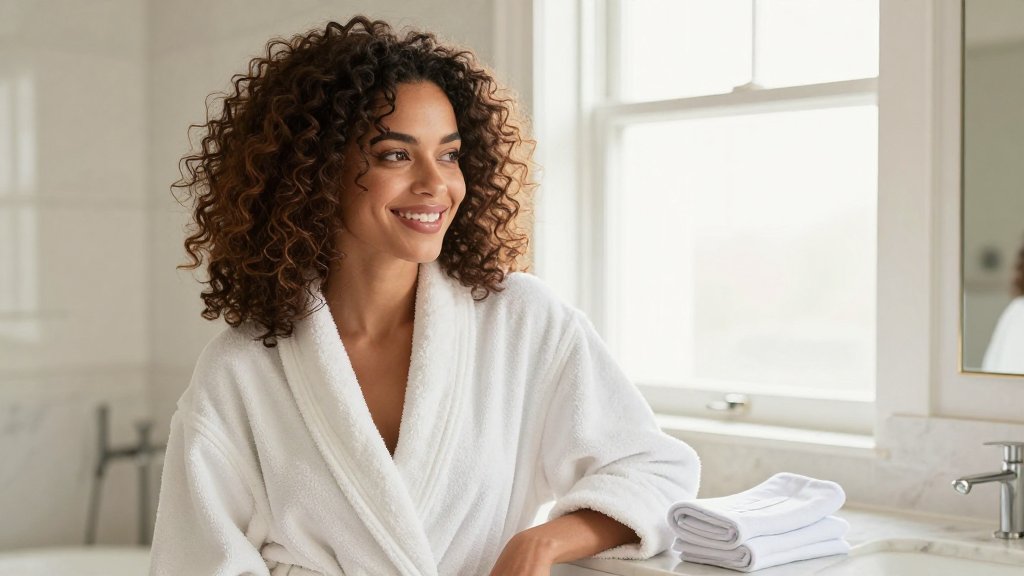
Sock curls give you soft, bouncy waves by morning, and they never touch a hot tool. You wrap damp hair around a fabric roll before bed, sleep on it, and unwrap a full head of curls when you wake up. No plug, no waiting for a wand to heat, no burnt-hair smell. The trade is time instead of temperature, and your hair keeps its shine for it.
That swap matters more than it sounds. A flat iron reshapes each strand by forcing heat through it, while a heatless set does the same job with water and a few hours of patience. The results look almost identical in the mirror, but one path chips away at your hair over months and the other does not.
Why Sock Curls and Rollers Work Without Heat
Hair holds its shape because of hydrogen bonds, the weak links between keratin proteins that break the moment your hair gets wet and reset as it dries. Wrap a damp section around a roller and those bonds reform in a curved position. Let it dry fully and the curl locks in. That is the whole idea behind heatless rollers and every no heat curls method your grandmother ever used.
Heat does the same thing faster. A hot iron snaps those bonds in seconds instead of hours, which is why a curling wand works in a single pass. Speed is its only real advantage, and you pay for that speed in moisture and protein every time you reach for it.
Water breaks the same hydrogen bonds that heat does, but it never scorches the protein underneath, so a curl set overnight can look as crisp as one set with a 400 degree wand.
What a Flat Iron Actually Does to Your Hair
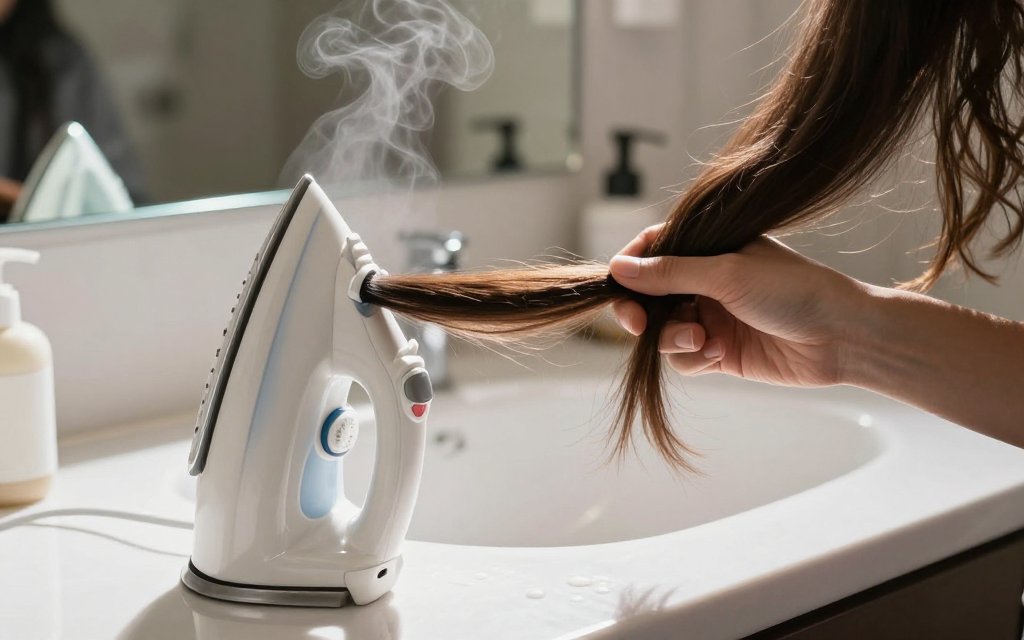
Keratin starts to break down with heat, and the threshold is lower than most people think. On dry hair, proteins begin denaturing around 464 degrees, serious cortex damage shows up above 410 to 428 degrees, and past 430 degrees the proteins start to burn, hair-science researchers report. On damp hair the danger arrives far sooner, between 248 and 302 degrees.
Now look at where people set their irons. Fine or bleached hair should stay under 300 degrees, yet stylists run 350 to 375 degrees on fine strands and 400 to 450 degrees on thick, coarse hair, according to L'Oreal Paris stylists. A thick-hair setting sits right in the cortex-damage zone. Repeat that a few times a week and the fraying adds up fast.
| Hair type | Iron temp | Risk starts |
|---|---|---|
| Fine or bleached | 350-375 F | 300 F |
| Thick or coarse | 400-450 F | 410 F |
| Damp hair | Avoid heat | 248 F |
Heat protectant helps, but only up to the temperature printed on the bottle. A spray rated for 350 degrees does nothing once your iron climbs to 430 degrees, so the product can give a false sense of safety. If you want to protect your color and stop split ends before they start, the surest move is skipping the heat on the days you can. Our guide to keratin treatments covers the heat-heavy smoothing route if you still want pin-straight hair.
How to Do Heatless Curls Overnight
Here is the version that actually holds. Start with hair that is damp, not soaking. Wash and let it air-dry for about 15 minutes, or mist dry hair until it is evenly damp, since the bonds only reset when there is water in the strand. Work in a pea-size drop of light oil or a spritz of flexible hairspray so the set stays put.
The direction you wrap sets the whole look. Curl every section away from your face for a soft, retro bend, or alternate directions for a lived-in, beachy finish. Bigger sections and a wider roll give loose waves, while thin sections and a skinny rod give tight ringlets. This mirrors ipsy's method breakdown, which times most sets at four hours or more.
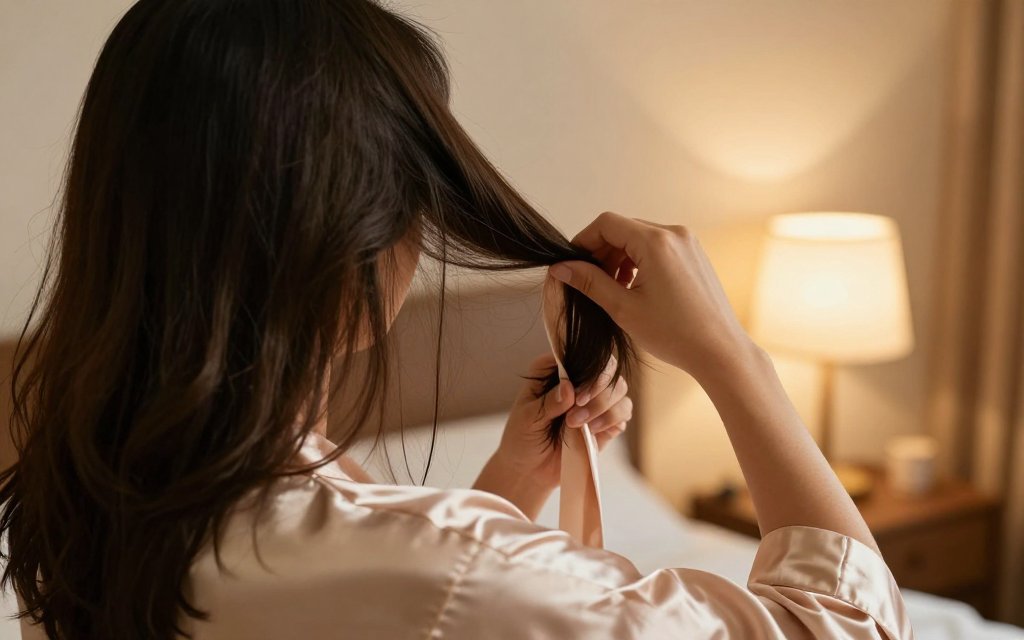
Tension is the one thing to watch. Wrapping too tight can snap strands the way an overstretched rubber band does, so keep it snug but never straining. Silk scrunchies and a satin pillowcase cut the friction that causes most overnight frizz. If your hair seems to take forever to dry, its porosity is usually the reason, and our porosity guide explains how to speed a set up.
Sock Curls, Robe Curls, and Heatless Rollers Compared
The method matters less than the diameter you wrap around, but each one has a personality. Here is how the popular options stack up, so you can choose without a dozen failed nights.
| Method | Set time | Curl type |
|---|---|---|
| Sock curls | 4-8 hours | Defined waves |
| Robe curls | 6-8 hours | Loose waves |
| Heatless rollers | 4-6 hours | Springy curls |
| Braids | 6-8 hours | Beachy bends |
The sock curls method
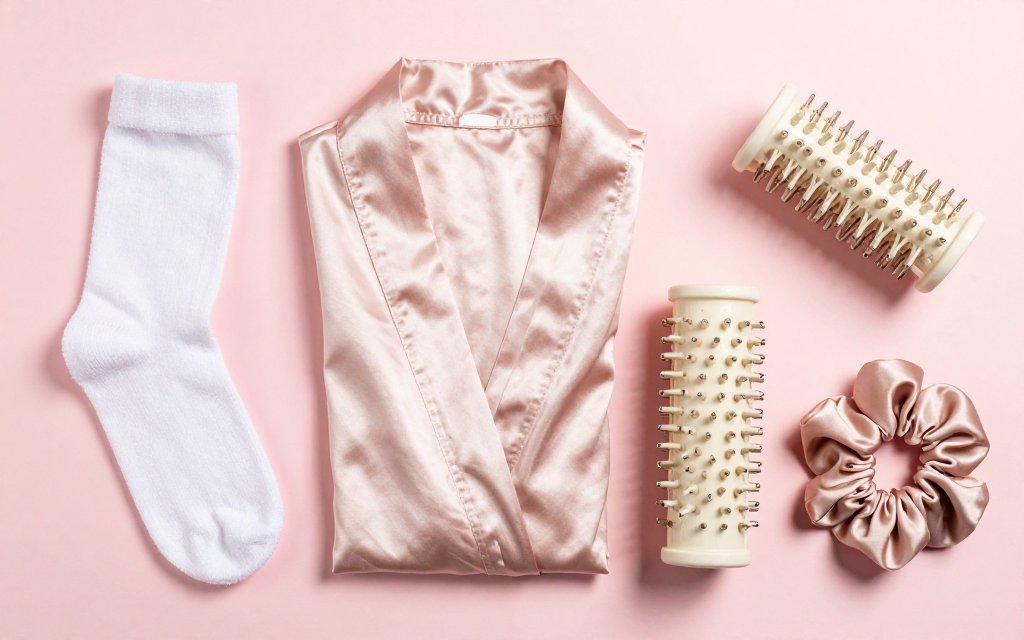
A clean tube sock is the cheapest heatless tool you already own. Twist a section down to the ends, wrap it around the sock, and pin it into a bun, or lay the sock over your head and coil hair around it. Four sections give even, bouncy waves, while two give looser bends. It sets in as little as four hours.
The robe curls method
The robe tie method uses the soft belt from a bathrobe. Center it on your head, split your hair in two, then wrap each side down and around the tie and tuck the ends. It is the gentlest choice for long hair because the fabric spreads tension evenly, and it gives the loose, glossy waves that made the method go viral.
Heatless rollers and ribbons
Foam or satin heatless rollers and flexible curling ribbons do the same work with a bit more structure. They hold a rounder curl than fabric and come in several widths, so you can dial in the curl size. Satin-covered versions slide against hair instead of grabbing it, which means less frizz on fine strands. The heatless curls tutorial below walks through the robe method on camera.
The robe tie method spreads tension across soft fabric, so long hair sets into loose waves without the dents that a hard clip leaves behind.
Match the Method to Your Hair Length and Texture
Length changes everything. On short hair, small twists along the hairline and a few pin curls do more than a big rod ever could, so heatless curls short hair works best with tighter sections and a texture spray to finish. Long hair has the opposite problem, since the weight can drag a curl out by noon.
For heatless curls for long hair, wrap higher on the head and use a wider roll so the curl starts near the root and survives the day. Thick hair needs more, smaller sections, while fine hair needs a skinny rod or it falls flat. Heatless curls with socks suit almost any length because you control the section size yourself.
Curls also soften angular features and add height to a longer face, so the shape you choose can flatter you as much as a good cut. If you are not sure which curl suits you, our face shape guide is a quick read before you commit to a whole night of setting.
What Skipping the Heat Saves You
The real payoff is not only healthier hair, it is the money and time you stop spending. Heat fades color faster, so every hot-tool session shortens the life of a balayage or gloss you paid good money for. Skip it and your color holds weeks longer between salon visits.
Split ends are the other hidden cost. Fried ends mean more frequent trims, and badly damaged hair often needs a real cut to fix. A sock, a robe tie, or a set of foam rollers costs a few dollars and lasts for years, while a curling wand carries the damage risk above. You also get the time back, since the curls set while you sleep instead of eating twenty minutes before work.
A flat iron for thick hair runs 400 to 450 degrees, above the point where the cortex starts to fray, so color and ends both last longer when you skip it.
Want to see a curly look on yourself before you commit a whole night to it? You can preview curls and other styles on your own photo first, so you know the shape suits you before you wrap a single section.
Common Questions About Heatless Curls
How do you curl hair without a curling iron?
Wrap damp hair around any soft, round object and let it dry all the way. A sock, a robe tie, foam rollers, or even a few braids all work, because the curl comes from your hair drying in a bent shape rather than from heat. Give it four to eight hours, then finish with a light hairspray.
How do you do sock curls on short hair?
Use smaller sections and a thinner sock, or fold the sock in half. Twist each piece from the crown down, wrap it around the sock, and pin it close to the scalp so the curl starts high. Short hair holds tighter curls well, so expect more spring than length.
How can you curl hair without a flat iron overnight?
Set it before bed on damp, not wet, hair and sleep on silk. The robe tie and sock methods are the most comfortable to sleep in, and both are usually dry by morning. If your hair is still damp when you unwrap it, the curl will not hold, so start earlier or dry the roots on a cool setting.
Ready to see how these curls would look on you before you spend a night setting them? Try Fravyn to preview 50+ hairstyles and 29+ colors on your own photo in seconds, then pick the curl that fits your face. Get the app here: iOS.
Try a New Hairstyle Today
Preview 50+ hairstyles and 29+ colors on your own photo with Fravyn.