Silk press hair stays sleek for two weeks if you wrap it nightly
A silk press on natural hair usually lasts one to two weeks. Here's what happens in the chair, the iron temperatures to watch, what it costs by city, and the nightly habits that keep your press sleek longer.

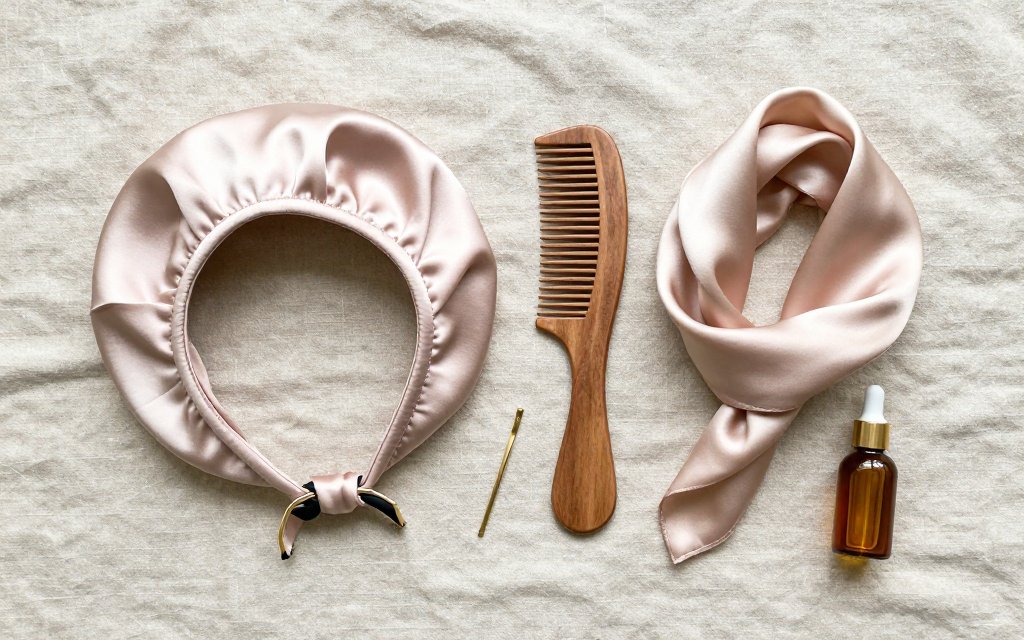
Most presses on natural hair hold for one to two weeks, and the biggest factor you control is what happens after you leave the chair. Sweat, steam and a humid commute all pull the strands back toward their natural pattern. Wrapping it every night under a satin bonnet or scarf is the cheapest way to stretch the result.
Silk press hair isn't chemically changed. It's blow-dried with tension and passed through a flat iron in small sections, so your curl is only on pause. That's great news for your curl pattern and less great news for your budget if you're paying close to $100 every couple of weeks.
How long does a silk press last on different curl types?
The honest answer depends on texture. According to Un-ruly's silk press guide, Type 3 curls often hold close to two weeks with careful upkeep, while Type 4 hair usually gets about a week of full sleekness before the roots start to puff in week two. Cool, dry weather stretches both numbers.
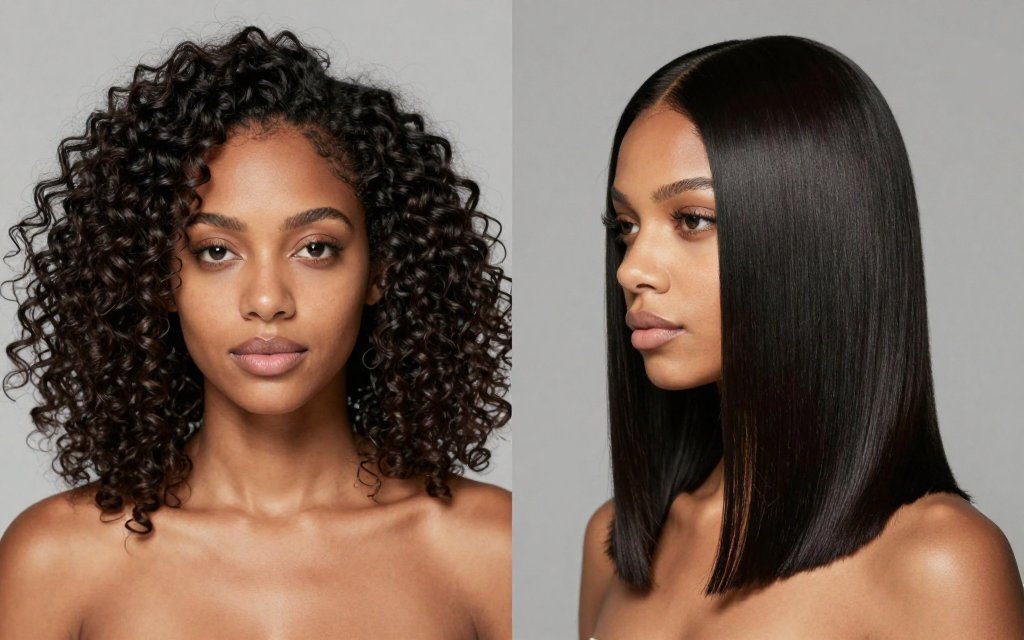
Most presses live one to two weeks. Type 3 curls often reach two, while Type 4 hair tends to get one perfect week before the roots puff.
Silk press 4C hair results usually fade first
Tighter coils revert at the root first, so 4C wearers tend to see puffiness by the second week. If you're not sure where you land, our curl pattern chart from 2C to 4C walks through each type. Knowing your number helps you set realistic expectations before you book.
Why silk press hair reverts in humidity
A press is temporary by design. Unlike a relaxer, it goes back to your natural texture when it meets water or sweat, as the Wikipedia entry on the silk press points out. A steamy shower, a spin class or one rainy walk can undo a whole section.
What a good stylist does before the iron touches you
A full appointment runs about two hours, and most of that time goes into prep. The more straightening the blow-dryer does, the less work is left for the flat iron, and the iron is where heat damage happens. Here's the order a careful stylist follows.
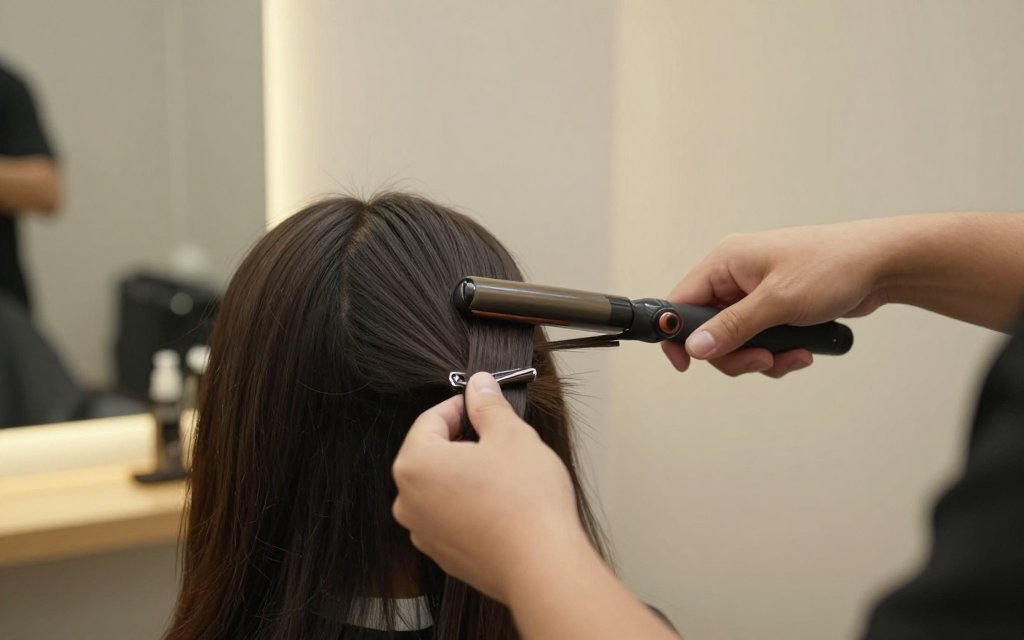
That last step matters more than the brand of iron. Repeated passes stack heat on the same strand, and Un-ruly flags a burnt smell, dryness or smoke as the cue to lower the temperature right away.
Silk press vs flat iron at home
A home flat iron job and a salon press use the same tool, so the difference comes down to method. The press leans on the clarifying wash, the deep conditioner and the tension blow-dry before any iron work, then finishes with small sections and a single pass. Skip that prep and you need more heat to get the same smoothness.
Heat settings that keep your curls coming back
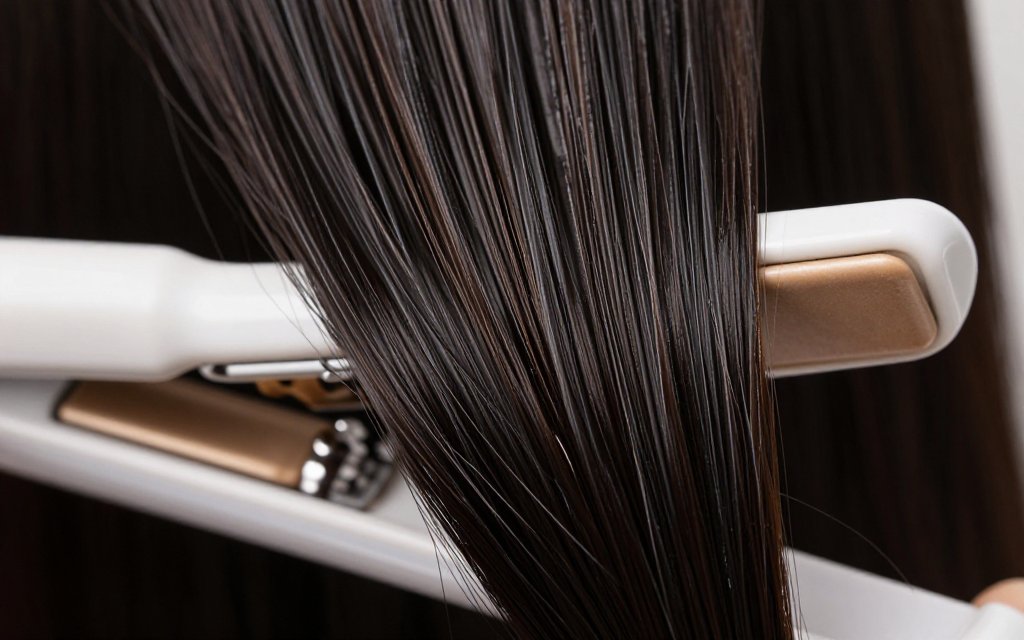
Temperature is where a press goes from glossy to regrettable. Un-ruly suggests starting around 350°F and raising it slowly, with coarse strands sometimes needing about 410°F. Past 420°F, the odds of damage jump.
| Hair texture | Iron heat | What it means |
|---|---|---|
| Most textures | Start near 350°F | Raise in small steps only if needed |
| Coarse strands | About 410°F | May be needed for a smooth finish |
| Any texture | Over 420°F | Damage risk climbs sharply |
| Any texture | 450°F | Stylists advise staying below this |
Heat damage is the outcome everyone fears, and it's permanent. Sections that stop curling after a wash won't bounce back with a mask, which is why our guide to stopping breakage on damaged hair focuses on trimming and prevention.
Space presses at least four to six weeks apart. The heat adds up over time even when each session looks perfect.
Signs your stylist is using too much heat
How to maintain a silk press between appointments
Upkeep is mostly about keeping water and friction away. Your roots are the first place moisture gets in, so protect them at night, in the shower and at the gym.
Silk press styling ideas for week two
When the roots start to swell, change the style instead of reaching for the iron. A silk press and curl, where the stylist sets bends or pin curls at the end of the service, hides some root puff because the whole head already has movement. A curly silk press with soft ends forgives a muggy afternoon better than bone-straight hair does.
Low buns, sleek ponytails and flexi rod sets also buy a few extra days. If you're torn between straight and curled ends, you can preview both looks on your own photo at aihairfilter.com before your appointment.
What silk press hair costs over a year
Prices swing more by city than by stylist. StyleSeat's pricing data puts the typical U.S. press between $61 and $104, with Michigan at the low end and Utah at the top. Un-ruly's city roundup shows how far big metros stretch that range.
| Location | Price range | Typical spend |
|---|---|---|
| U.S. average | $61 to $104 | Michigan low, Utah high |
| New York City | $65 to $280 | Most pay $100 to $200 |
| Los Angeles | $70 to $240 | Basic often $130 to $150 |
| Washington, DC | $80 to $300 | $145 to $175 with a cut |
Now do the yearly math. At the national range, one press every four weeks works out to 13 visits and roughly $793 to $1,352 a year before tips. Rebooking every two weeks to stay sleek doubles that and breaks the four to six week spacing rule, so your curls pay for it too.
Thirteen presses a year at $61 to $104 each adds up to about $793 to $1,352, before tips or add-ons.
When you type silk press near me into a booking app, filter for stylists who post natural hair work on their profile. In Los Angeles, a search for a silk press salon near me can surface listings from $70 to $240, and the gap mostly reflects length, thickness and extras like trims.
Silk press natural hair questions people actually ask
Can you work out with a silk press?
You can, but sweat at the roots is the fastest route back to curls. Pin the hair up, wear a breathable headband and let your scalp dry with cool air afterward rather than reaching for heat.
How often is it safe to get a silk press?
Plan on at least four to six weeks between presses. In between, low manipulation styles let your strands recover, and our look at knotless braids and your edges covers one gentle option.
Is a silk press better than a keratin treatment?
They solve different problems. A press is fully temporary and reverts with water, while keratin is a chemical smoothing service that lasts far longer. Our keratin treatment breakdown compares the cost and timeline.
Will a silk press stop frizz?
For the life of the press, mostly yes. Once humidity creeps in, frizz shows up at the roots first, and the fix is moisture rather than more heat. Our frizz guide explains why dry hair frizzes in the first place.
Not sure whether you want it bone straight or with a soft curl at the ends? Try Fravyn and preview 50+ styles on your own photo in seconds, so you walk into your press appointment knowing exactly what to ask for. Get the app here: iOS.
Try a New Hairstyle Today
Preview 50+ hairstyles and 29+ colors on your own photo with Fravyn.