Modern Soft Perms: Curl Types, Costs, Aftercare
A practical guide to modern soft perms: which curl type to choose, what you can expect to pay in 2026, how long results last, and an aftercare routine that keeps hair bouncy without frying it.
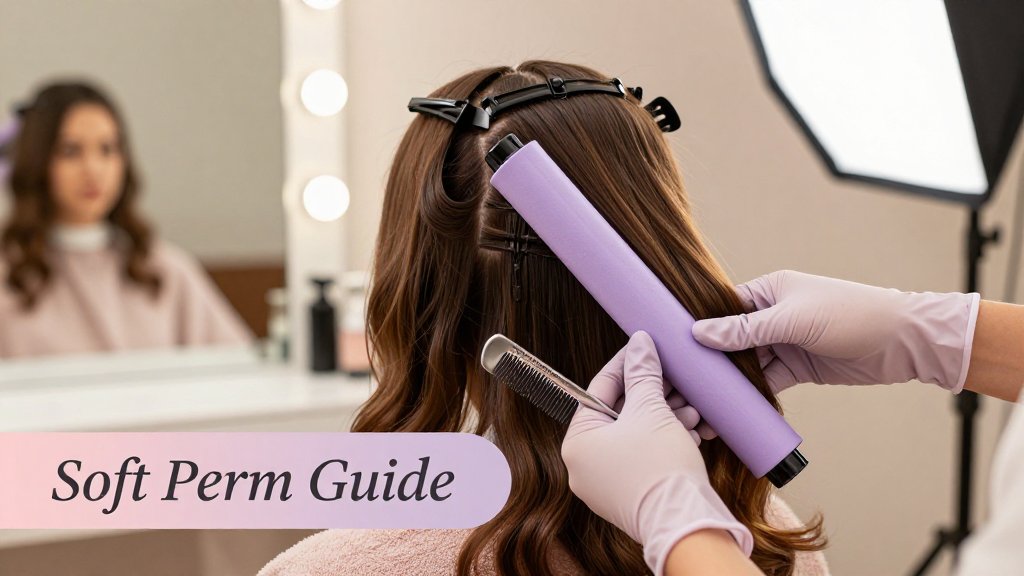
Modern soft perms have evolved far beyond the tight, crunchy curls many people still imagine. With today’s techniques, you can get airy beach waves, defined spirals, or subtle lived-in texture that actually feels touchable. In this guide, you’ll learn the most popular curl types, how to choose a pattern that suits your hair and routine, what a realistic perm budget looks like in 2026, and the aftercare habits that keep your curls bouncy, healthy, and frizz-resistant.
Which soft perm curl type fits your hair goals
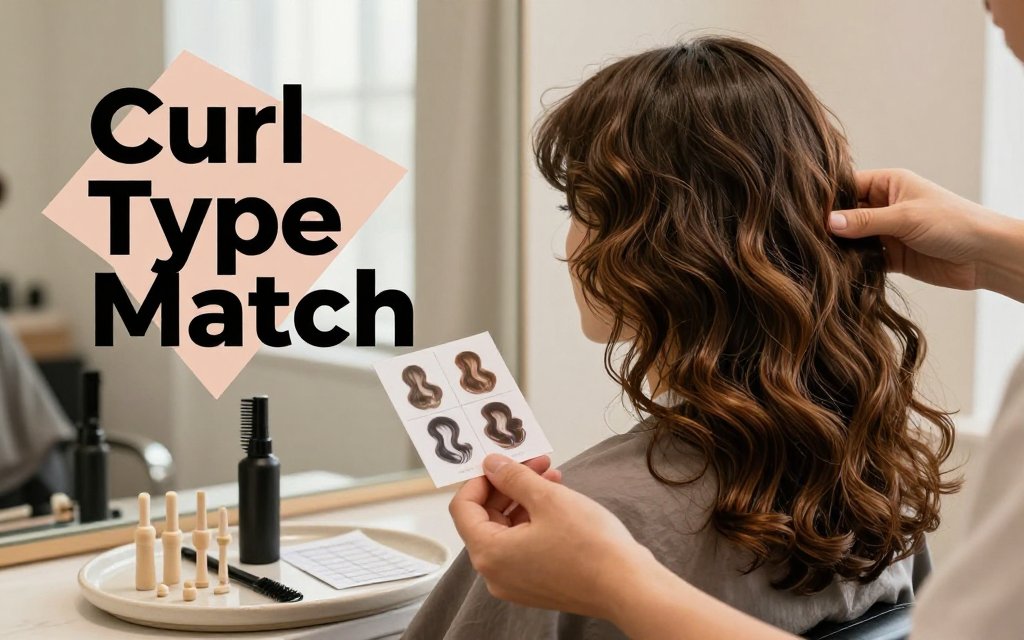
A modern soft perm is less about looking “permed” and more about making your hair behave the way you wish it naturally did: bend where it usually falls flat, hold shape past lunch, and dry into a style that still looks good after a hood, a beanie, or a windy commute. The trick is picking a curl pattern that matches your daily styling habits, not just a perfectly lit salon photo. If you love quick air-dry days, ask for a pattern that looks intentional when it is a little imperfect. If you prefer a polished finish, choose a curl type that can be brushed out or blow-dried smoother without losing all the movement.
The most requested “soft” results usually land in four families: loose body waves (big, buoyant bends), beachy S-waves (more texture, less curl), soft spirals (defined but not springy), and classic spirals (clear corkscrews). Then there are targeted options like a partial perm (top only, ends only, or face-framing only) and spot perming to support a specific haircut shape. What changes the outcome is not only the chemical, it is the hardware and geometry: bigger rods mean wider curls, smaller rods mean tighter curls, and smaller hair sections per rod create more definition than chunky sections.
If your goal is lift without obvious curl, ask about root-focused techniques first. A root perm (sometimes called a volume perm) is placed mainly at the base, usually around the crown or hairline, so you get a subtle “stand up” effect even when you air-dry. The placement matters more than people realize: the hair near the scalp is supported and set for height, while the mid-lengths and ends can stay closer to your natural texture. Marie Claire’s overview of root perm technique explains how the lift comes from how the hair is laid and set at the root, rather than wrapping the full length into waves.
Loose wave vs spiral perm, what you really get
“Loose wave perms read like movement and volume; spirals read like definition and shape.” In plain terms, loose waves usually come from larger rods and a wrap that stacks hair around the rod like a ribbon, which encourages a softer bend. Spirals are created by wrapping hair along the rod in a corkscrew path (often with vertical rods), which makes the curl pattern look the most consistent from root to ends. Two more behind-the-chair details matter: wrap direction and section size. If the stylist uses smaller sections, you see cleaner curl outlines. If they use larger sections, the result is softer but can be less uniform, especially on thick hair.
The most common “day 1 shock” is bringing a photo of a blowout wave and asking for that exact look from a perm. Blowout waves are often created with heat, tension, and brushing, so they look extra smooth and stretched. A fresh perm, especially before the first couple of washes, can look curlier, shorter, and more piecey than expected because the hair is newly set and not yet relaxed into your normal styling routine. If you want definition but hate a tight corkscrew, ask for a “soft spiral” approach: bigger spiral rods, slightly larger subsections, or a mixed-rod map that keeps the crown more defined while leaving the perimeter looser for a wearable finish.
Bring two references: your ideal curl shape and your real styling routine. The same perm can look airy with scrunching, or much curlier on day 1. Ask how rod size, sections, and wrap change the silhouette.
Perm for fine hair and men’s textured cuts
Fine hair tends to show every mistake: too-tight rods can read frizzy, too-uniform wrapping can look poofy, and too much curl at the ends can make the length feel sparse. A safer “soft perm” recipe for fine hair is larger rods with strategic root control (lift where you need it, not everywhere), plus thoughtful spacing so the curls do not stack into one dense ringlet. Coarse or very thick hair is the opposite problem. It can resist shape, so stylists often use smaller subsections and may adjust processing time during the service to get consistent bend. Afterward, your best habit is gentle handling and lower-heat styling so the new texture stays shiny instead of swollen.
For men, a soft perm is a shortcut to the current textured top silhouette, including the broccoli haircut shape: height and curl at the top, cleaner and tighter at the sides, and a controlled outline around the temples and neckline. Length on top matters more than most people think. If the top is too short, the curl has nowhere to form, and you get fuzz instead of shape. As a rule of thumb, having enough top length to show a full bend (often a few inches) makes the silhouette look intentional. Face shape tweaks help, too: round faces often look longer with vertical curl and height, while longer faces can feel more balanced with looser waves that widen near the cheek area. If you also wear facial hair, use a face-proportion check like this haircut and beard face chart so your curl volume and your beard outline work as one look.
Digital perm vs cold perm, costs and timing
If you have been told “digital” or “cold” like it is a personality test, here is the translation into real life hair. Digital perms usually feel smoother and look more like you did a big barrel curl or loose beach wave set, especially once your hair is fully dry. Cold perms usually feel more textured and can deliver a stronger curl pattern, including defined spirals or tighter S-waves, even on shorter cuts. Neither is automatically “healthier” for everyone, because both rely on chemical bond reshaping. The right choice depends on your hair length, your styling habits, and whether you want your curl pattern to show up as glossy waves or as more obvious curl definition.
Digital perm vs cold perm, the decision shortcut
Choose digital if you want bigger, smoother waves and you heat style rarely. Choose cold if you want stronger curl patterns, shorter hair compatibility, or more texture. The mechanism is simple: digital perms wrap hair on heated rods connected to a machine, then use chemistry plus heat to set the wave shape. Cold perms rely on chemical processing at room temperature, and the curl shape is mostly controlled by rod size, wrapping method, and how many sections your stylist creates. A practical clue is how the curl “shows up”: cold perms often look curlier when wet and loosen a bit as they dry, while digital perms often look softer when wet and pop into shape as you dry and scrunch.
Hair health tradeoffs are more about your starting point than the label on the service. Digital perms add heat on top of chemistry, so they can be a lot for very bleached, fragile, or highly highlighted hair unless your stylist is conservative with rod tension and processing. Cold perms often use a stronger chemical approach to get stubborn straight hair to hold a curl, which can also be drying if your hair is already porous. If you color your hair, ask about spacing services (many stylists like at least two weeks between chemical services) and add-ons like bond builders (Olaplex or similar) plus a finishing treatment. If your goal is “wedding hair that behaves,” digital waves are usually easier to pin into low buns, Hollywood waves, and half-up styles without looking frizzy.
A counterintuitive insight that shows up in salons a lot: some people with naturally wavy hair get the most expensive-looking results from a subtle cold perm that just evens out their pattern. Think of it as “pattern correction” instead of “more curl.” If one side flips out and the other side falls flat, a mild cold perm with larger rods can make your waves match so your hair air dries more uniformly. This is also where trend perms like a Korean shadow perm, a root perm for lift, or a soft S-curl can shine, because the goal is movement and consistency, not tight ringlets. For face shape, this kind of evened-out wave can be especially flattering on round and heart shapes, since the volume can be kept lower at the cheeks and fuller below the jaw.
Perm cost 2026 and what you are paying for
For 2026 budgeting in the US, a realistic range is about $90 to $250+ for a cold perm and about $180 to $450+ for a digital perm, with luxury salons and very long hair landing higher. Part of what you are paying for is time, sectioning, and rod work, plus the stylist’s judgment about how to protect your hair while still getting a lasting result. A helpful baseline for typical perm ranges and why pricing changes is this average perm costs guide, which breaks down how length, location, stylist level, and perm type move the number up or down. Prices jump fastest when you have lots of hair (density), hair past the shoulders, or you want a specialty look like a modern spiral, beachy wave pattern, or a digital machine set with more rods. Also ask what is included: some salons bundle the haircut and diffused finish, others price them separately.
Appointment timing is usually 2 to 3.5 hours for a cold perm, and about 3 to 5 hours for a digital perm, because the heating phase plus cooling time adds steps. Your day typically looks like this: clarifying shampoo (sometimes), sectioning and rod wrapping, solution processing, rinse, neutralizer, rinse again, then styling and education. The first wash window matters, so plan to keep hair dry for about 48 hours unless your stylist gives a different timeline for your formula. Day 1 is almost always curlier or puffier than what you will see long term, because the set is fresh and your hair has not had a few gentle washes to relax into its final shape. Bring reference photos that match your hair length, because “loose wave” on collarbone hair is a different outcome than “loose wave” on mid-back hair.
How long it lasts and what grow-out looks like
Most modern perms last months, not weeks, but the timeline depends on your hair and how tight you go. A common expectation is about 3 to 6 months for a cold perm and about 4 to 8 months for a digital perm, with finer hair dropping faster and coarser hair holding longer. Grow-out is the part people do not picture clearly, so here is the realistic version. At week 2, your curl pattern usually “settles,” meaning it loosens slightly and looks more natural, especially after your first few washes and a good curl cream plus diffuser routine. At week 6, you will see about three quarters of an inch of straighter root, and your waves may start lower on the head, so a face-framing cut or soft layers can keep it intentional. At week 12, you may have about 1.5 inches of new growth, and the contrast between root and permed lengths is more obvious, so many people book a shaping trim, a gloss or toner if they are colored, and refresh their product lineup (a sulfate-free shampoo, a lightweight conditioner, and one strong hold styler) to keep definition without crunch.
Perm aftercare routine that keeps curls soft
Your soft perm will look its most expensive when the curl pattern stays springy, hydrated, and touchable, not crunchy or puffy. Aftercare is basically curl-bond protection plus friction control: keep the new shape from getting stretched out, keep the cuticle from getting roughed up, and keep moisture levels steady so frizz does not take over. Plan on a gentler wash routine than straight hair, fewer high-heat styling sessions, and a lighter hand with oils so your curls do not drop. If your perm is loose and wavy, your goal is lift and definition. If it is tighter, your goal is clump control and softness without buildup.
The first 72 hours and the weekly routine
Treat your perm like fresh paint for the first 48 to 72 hours. Skip shampooing, soaking, steam rooms, and sweaty spin classes where your scalp gets drenched. Avoid tight ponytails, claw clips that pinch the curl, hat hair, and tucking hair behind your ears for hours (that little bend can set a weird kink). Do not brush aggressively, especially not from roots to ends. Instead, sleep on a silk pillowcase or wear a satin bonnet, gently detangle only if needed with a wide-tooth comb, and scrunch with a microfiber towel or soft cotton T-shirt after any light misting.
Treat your perm like fresh paint: for the first 48 to 72 hours, avoid water, tension, and rough handling. Let the new curl pattern set, then start a gentle routine built around moisture and low friction.
After that set period, wash cadence depends on how tight your curl is and how oily your scalp runs. Loose wave perms usually tolerate 2 to 3 wash days per week because they flatten faster, especially on longer hair. Tighter curls often look better with 1 to 2 wash days per week plus refresh days in between. Use lukewarm water, focus shampoo on the scalp, and let suds run through the ends rather than scrubbing them. Choose a sulfate-free shampoo for gentler cleansing, and go for a moisturizing formula similar to the dermatologist curly hair tips that emphasize hydration for curls.
Conditioning is where soft perms either stay bouncy or start feeling straw-like. Fine hair usually needs a lightweight conditioner on every wash day (think slip, not butter), applied from mid-lengths to ends, then rinsed well so waves do not collapse. Coarse, thick, or high-porosity hair often needs a richer mask once weekly, left on for 5 to 10 minutes with a shower cap for better penetration. Alternate moisture masks with occasional strengthening treatments if your hair feels gummy or overly stretchy, but do not overload protein if your curls feel hard. A common mistake is overusing heavy oils and butters, which can coat the hair and make soft perms drop flat.
Drying technique matters as much as products. Right after the shower, blot and scrunch, do not rub. If you diffuse, keep heat low and use a hover method first (holding the diffuser near the hair without stirring it), then cup curls upward only once a light cast forms. Air-drying works well for many loose perms, but avoid constantly touching your hair while it dries because that breaks up curl clumps and invites frizz. For styling, pick curl cream when you want softness and flexible definition, and pick gel when humidity or halo frizz is your enemy. Tighter perms often do best with a gel cast you can scrunch out once fully dry, while wavy perms often prefer mousse for lift without heaviness.
Keep this quick consultation checklist in your notes app so you do not forget it in the chair, especially if your hair is colored, highlighted, or you are planning a wedding timeline. - Tell them your hair history (bleach, box dye, keratin, relaxer, metallic dye removers) - Ask what perm type they recommend (digital vs cold) and why for your texture - Confirm rod size plan (bigger rods for modern waves, smaller for tighter spirals) - Ask how they will protect ends (porosity equalizer, extra conditioner, or end papers) - Request a strand test if hair is lightened or feels fragile - Ask what at-home routine and re-perm timing they recommend for you
How long does a perm last on different hair types?
Most modern soft perms last about 3 to 6 months, but the way they “fade” depends on your hair and the curl size you chose. Loose wave perms can relax sooner because gravity pulls on them, especially on thick or long hair. Very straight, fine hair may loosen faster if it gets over-conditioned or weighed down. Coarse hair can hold shape well, but it may need more moisture to stay soft. Your haircut also matters: lots of long layers help waves bounce, while one-length hair can make curls look stretched.
Can you get a perm on fine hair without damage?
Yes, but fine hair needs a conservative plan. Ask for larger rods and a softer result instead of chasing tight curls for volume, since fine strands can kink or break more easily if over-processed. The safest signs are a thorough consultation, a strand test when hair is highlighted, and a stylist who talks about elasticity and porosity before they talk about Pinterest photos. At home, keep heat low, use lightweight conditioner, and avoid heavy oils that collapse fine-hair waves. If your hair is heavily bleached and feels stretchy when wet, postpone and rebuild first.
What should I ask in a perm consultation before booking?
Bring 3 to 5 photos that match your curl tightness goal and your hair density, plus one photo of your current hair air-dried. Say: “I want a soft perm that still feels touchable, what rod size and wrap pattern would you use on my hair, and how will you protect my ends?” Then listen for specifics, not vague reassurance. Red flags include skipping a strand test on heavily lightened hair, rushing the neutralizing step, or promising your perm will look identical to someone with a different cut and texture. Ask what aftercare products they want you to use the first month.
Ready to see how a new hairstyle looks on you before you commit? Try Fravyn to preview 50+ styles on your own photo in seconds, so you can explore waves, curls, and cuts with confidence. Download the app and start testing looks right now on iOS, then save your favorites to show your stylist at your next appointment.
Try a New Hairstyle Today
Preview 50+ hairstyles and 29+ colors on your own photo with Fravyn.