Knotless braids for women are gentler on your edges than box braids
Knotless braids skip the tight root knot of box braids, so they pull far less on your edges. Here is what the sizes and styles mean, what a full head costs, how long a set lasts, and how to care for it.
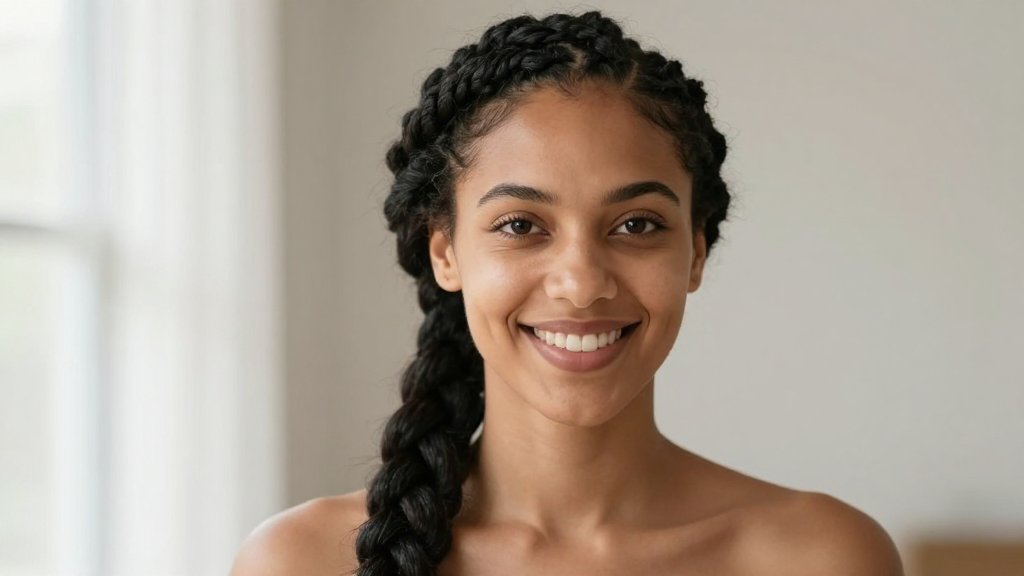
Knotless braids for women skip the tight knot that box braids tie at the root, and that one change is why so many people switch. Instead of anchoring the extension with a knot, your braider feeds the added hair in gradually, so the braid lies flat against your scalp from the first row. Less pull at the roots means less strain on the fine hairs along your face.
If your scalp is tender or your hairline already looks thin, knotless braids for women are the gentler pick. A set costs a little more and takes longer to install, but the trade is real comfort and a lower risk of the tension damage box braids can cause. You can even preview the look on your own photo before you commit to a long appointment.
What makes knotless braids different from box braids
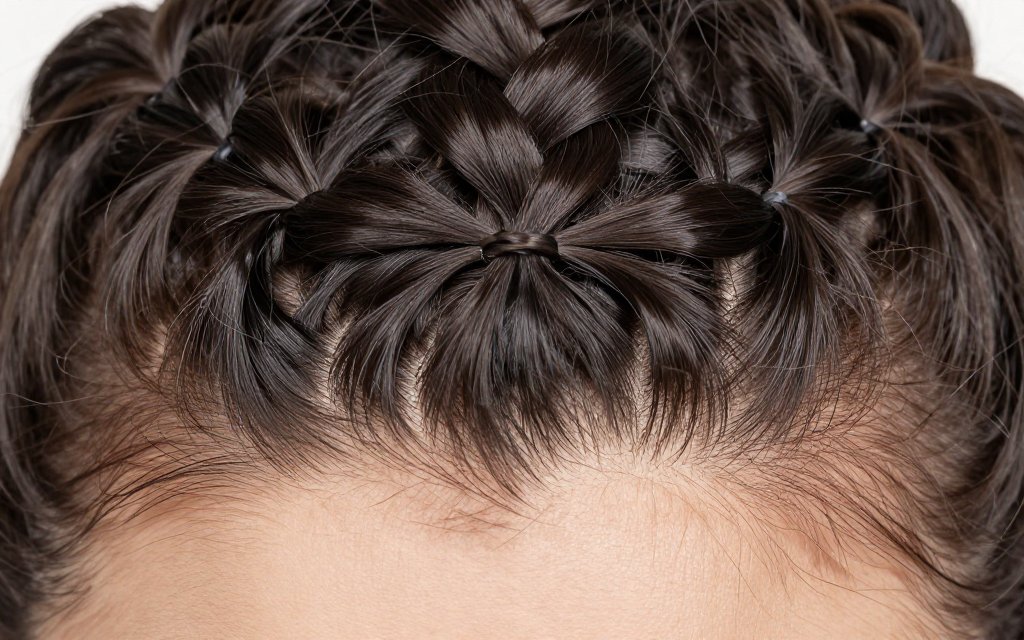
The difference is all in how the braid starts. With box braids, the stylist wraps braiding hair around your own hair and locks it with a knot at the root. That knot sits up off the scalp and carries the weight of the whole braid. Knotless box braids drop the knot. Your braider begins with your natural hair, then feeds in the extension a little at a time, so the base stays flat and light.
That flat base is why knotless vs box braids comes up in almost every salon consultation now. A knotless set moves more naturally, the parts look cleaner, and you can pull it into a ponytail without a row of knots showing. Stylists point out that the feed-in method also puts less tension on your scalp.
| Feature | Knotless | Box braids |
|---|---|---|
| Root knot | None, fed in | Knot at base |
| Install time | 4 to 8 hours | 3 to 6 hours |
| Full head cost | $150 to $350 | $100 to $250 |
| Typical wear | 4 to 8 weeks | 6 to 12 weeks |
Why knotless braids for women protect your edges
Your edges are the fine, fragile hairs along your hairline, and they break first when a style pulls too hard. Because a knotless set feeds hair in slowly, it puts less weight on those hairs than a knotted braid that tugs from day one. Stylists often recommend a knotless install for women who have traction hair loss or a scalp that stings after a tight set.
A knot yanks from the first day. A feed-in braid eases the weight on over several rows, which is why sensitive scalps tolerate it far better.
If your ends and edges already snap easily, treat braids as a rest from heat and friction, not a cure for damage. Our guide on how to stop hair breakage explains why prevention beats repair every time.
Knotless braid sizes, from small to jumbo
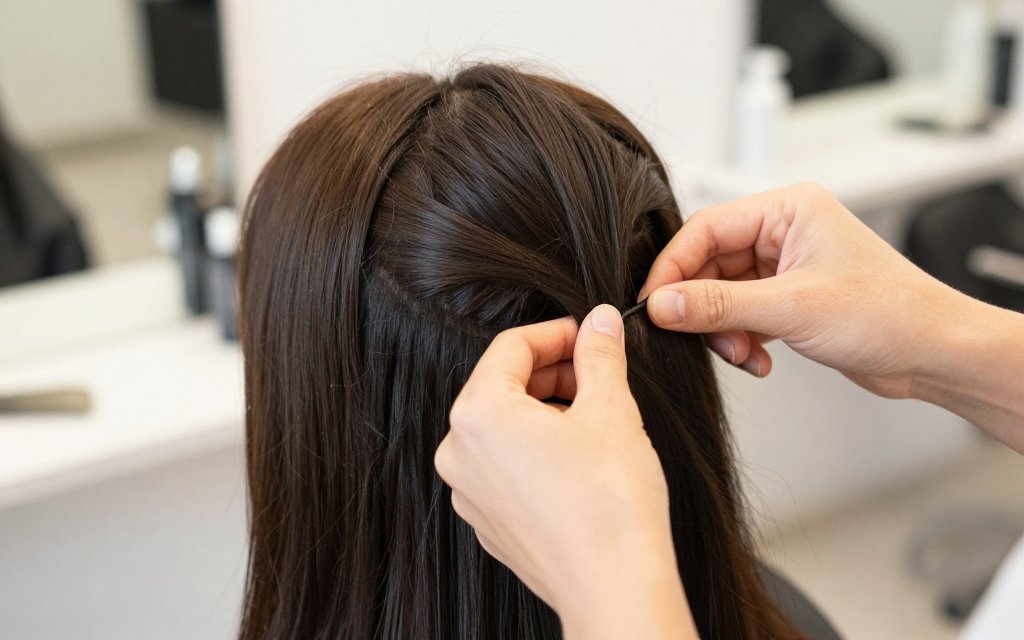
Size decides almost everything about the look and the appointment. Small knotless braids give you the most braids, the most styling options, and the longest chair time, often near the eight hour mark. Smedium knotless braids sit just above small and shave off some of that time. Medium knotless braids are the popular middle, quicker to install and easy to restyle. Large knotless braids and jumbo knotless braids use the fewest sections, so they can finish closer to four hours.
The catch is wear time. Chunkier braids loosen a little sooner around the face, while smaller braids hold their parts longer. Pick the size for your patience and your budget, not just the photo you saved.
Popular knotless braid styles to try
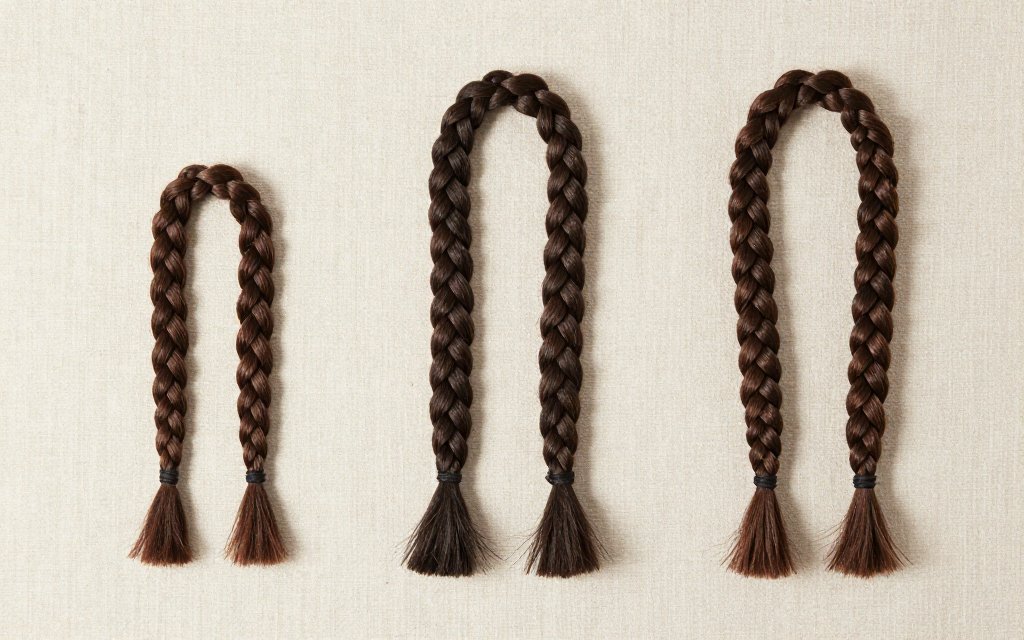
Once you pick a size, the style is where it gets fun. You can add curly ends, gold cuffs, or a deep side part, and you can go long or cut the look short. For a dressed-up event, our wedding hairstyle guide shows how braided looks pull into an updo.
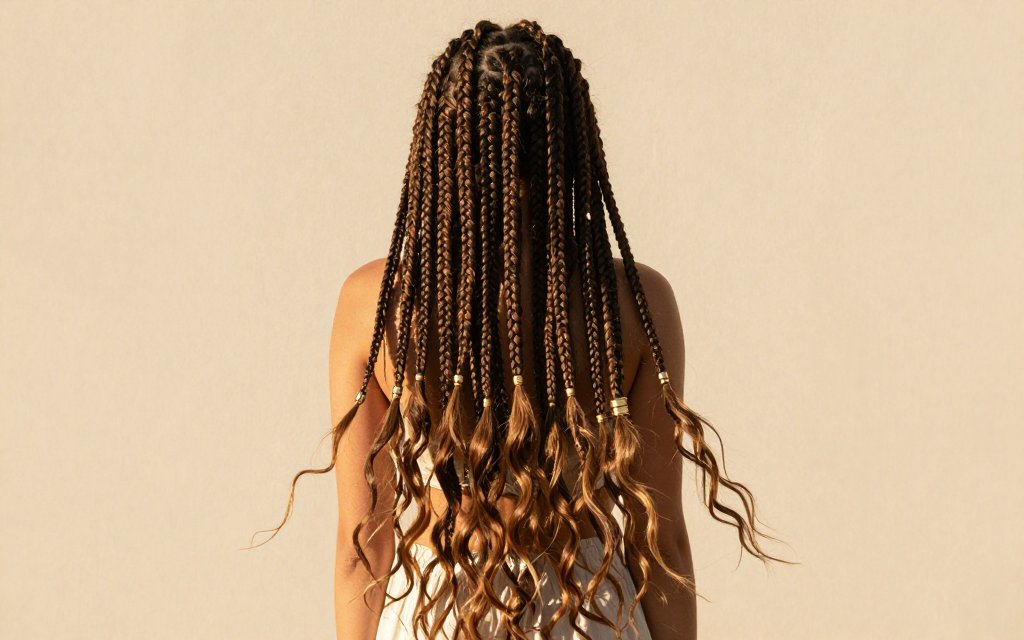
Boho knotless braids
Boho knotless braids leave loose, wavy pieces along the length for a softer, undone finish. They read relaxed rather than sleek, and the free curls hide a little new growth as the set ages.
Fulani knotless braids
Fulani knotless braids borrow the traditional Fulani pattern, with braids that flow front to back and often a few cornrows framing the face. Small beads or gold cuffs finish the look.
The knotless bob
A knotless bob keeps the same gentle base but stops at the jaw or shoulder. It is lighter to carry, dries faster after a wash, and feels fresh for warm weather.
What knotless braids cost and how long they last
Here is the money part. A full head of knotless braids usually runs $150 to $350, while box braids land around $100 to $250. A medium, waist length knotless set can sit near $250 on its own. You pay more because the feed-in method takes longer, four to eight hours against three to six for box braids, and time in the chair is what you are really buying.
Most sets look their best for four to eight weeks. Coarser textures can stretch a set toward three months, though by then the roots have grown out and the parts have softened. Salon menus in 2026 mostly land in that price band, so divide the cost by the weeks you wear it.
Think in cost per week. A $250 set worn for eight weeks is about $31 a week of finished hair, with no daily heat and almost no product.
How to care for knotless braids so they last
Aftercare is short but it matters. Keep the braids dry for the first day or so while the base sets. Wash your scalp at least once a week with a gentle, diluted cleanser, then dry the roots well so they do not itch or smell. If you tend to over wash, read why more washing is not always the answer.
At night, wrap your hair in a scarf or sleep on a silk or satin pillowcase to cut friction and keep your edges smooth. Skip tight ponytails for the first week, since pulling a new set hard undoes the low tension you paid for. Light oils keep the scalp comfortable without buildup, the same idea behind caring for low porosity hair.
Wrap at night, wash weekly, and skip tight styles for seven days. Those three small habits decide whether a set lasts four weeks or eight.
Common questions about knotless braids
How long do knotless braids last?
Most knotless sets hold up for four to eight weeks. Coarser hair can carry them toward three months, but the parts loosen and new growth shows as the weeks pass. Book a takedown before the braids start to matte at the roots.
Are knotless braids better for thin edges?
Usually, yes. The feed-in base puts less tension on your hairline than a knot that tugs from the first day, so a knotless set is the safer choice if your edges are fragile or thinning. They still are not risk free, so ask your braider for looser tension near the face.
How much do knotless braids cost?
Plan on $150 to $350 for a full head, with small sizes and long lengths at the top of that range. A medium, waist length set often lands near $250. Finer, longer work costs more because it takes more hours in the chair.
Can you wash knotless braids?
Yes, and you should. Wash your scalp at least once a week with a gentle, diluted cleanser, then dry the roots fully. Clean braids itch less and last longer than a set left to collect product and sweat.
Curious how knotless braids for women would frame your face before you spend a day in the chair? Fravyn lets you preview braided looks, dozens of other styles, and 29 plus colors on your own photo in seconds, so you walk into the salon sure of your pick. Get the app here: iOS.
Try a New Hairstyle Today
Preview 50+ hairstyles and 29+ colors on your own photo with Fravyn.