How to Style Curtain Bangs for Your Face Shape
Curtain bangs suit nearly every face shape when cut and styled right. This guide covers how to style curtain bangs at home, which length works for round, oval, square, and heart faces, and exactly what to tell your stylist before the cut.

What Are Curtain Bangs?
Curtain bangs are a face-framing fringe, and knowing how to style curtain bangs correctly means matching the length to your face shape and the technique to your hair texture. Cut shorter at the center of the forehead and gradually longer at the sides, they blend into your hair rather than sitting as a separate section. Unlike blunt bangs that create a hard horizontal line, curtain bangs end in a feathered, open edge that settles naturally around the eyes and cheekbones.
The style draws on 1970s inspiration from icons like Brigitte Bardot, and today the phrase "curtain bangs" pulls over 246,000 Google searches a month, reflecting how consistently people search for personalized guidance. Curtain bangs rank among the most-requested fringe styles at salons, largely because they grow out gracefully rather than creating an awkward phase. The key is choosing which variation of the curtain bangs haircut suits your specific features, because small changes in length and density produce very different results.
Curtain bangs are one of the most forgiving fringes to grow out. Because the sides taper longer, they blend back into face-framing layers with no awkward in-between phase.
Best Face Shape for Curtain Bangs
The best face shape for curtain bangs is essentially any face shape, provided the cut is customized to your proportions. Round, oval, square, heart, diamond, and long faces all suit some version of this fringe. The differences come down to length, density, and how far the side pieces fall toward the jaw.
Curtain Bangs for Oval Face
An oval face offers the most styling freedom with this fringe. Curtain bangs for oval face shapes can range from short and wispy at the brow to long pieces that fall to the cheekbone, and both read well against balanced oval proportions. Start at mid-forehead if you are trying curtain bangs for the first time and want a versatile entry point before going shorter or longer.
Curtain Bangs for Round Face
For a round face, the goal is visual elongation. Curtain bangs for round face shapes work best when the pieces extend past the cheekbones toward the jaw, drawing the eye downward and creating a vertical line that lengthens rather than widens. A slightly off-center part adds asymmetry, which further breaks up the circular frame of a round silhouette. Avoid short, dense versions that add fullness to the upper face.
Square and Heart Face Shapes
Square faces have strong angles at the jaw and a broad forehead. Curtain bangs for square face shapes work best when the texture is wispy and feathered, softening those angles without framing them more sharply. For heart-shaped faces, a mid-cheekbone length with medium density draws attention toward the center of the face and away from a wider forehead. Both face shapes benefit from curtain bangs with face framing layers that blend the fringe into the rest of the cut.
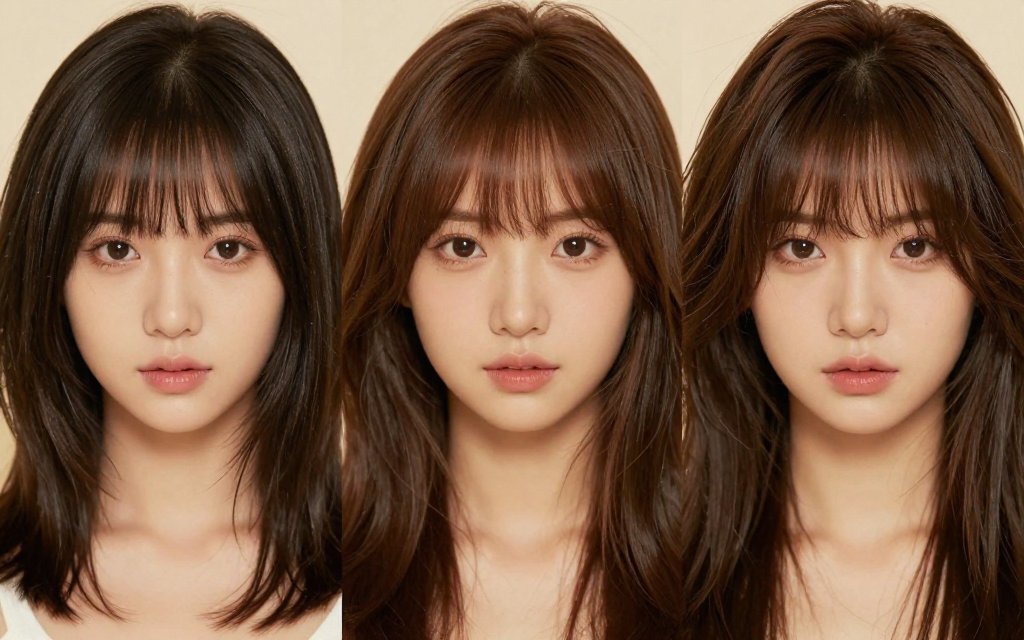
| Face Shape | Ideal Length | Key Adjustment |
|---|---|---|
| Oval | Brow to cheekbone | Any length works; start at mid-forehead |
| Round | Cheekbone or below | Longer pieces elongate the face visually |
| Square | Mid-forehead | Go wispy and feathered rather than blunt |
| Heart | Mid-cheekbone | Medium weight; avoid dense center sections |
| Long/Oblong | Brow length | Denser sections add horizontal width |
Curtain Bangs for Every Hair Type
Hair texture changes how curtain bangs behave once they are cut. The same cheekbone-length fringe that flows on straight hair will spring shorter on curly hair and read differently on fine hair. Matching the cut to your texture avoids the most common disappointments and reduces daily styling time significantly.
Curtain Bangs Thin Hair: Keep It Wispy
Curtain bangs thin hair combinations work best with a lightweight, low-density section. A wispy curtain bang adds interest to fine hair without pulling volume away from the rest of the style. Ask your stylist to use texturizing shears on the ends so the fringe appears airy rather than flat across the forehead, and to keep the bang section smaller than they would for thicker hair.
Thick Hair and Curtain Bangs Wavy Hair
Thick hair handles a full, flowing curtain bang with face framing layers very well because there is enough density to create the face-framing effect without looking sparse. Ask your stylist for internal texturizing on the mid-lengths to reduce bulk while keeping shape. For curtain bangs wavy hair types, request a slightly longer cut than your target length because the natural wave will shrink the result once the hair dries.
Curtain Bangs Curly Hair: Always Cut Dry
Curtain bangs curly hair requires a dry cut every time. Cutting curly hair wet can result in bangs that end up 1 to 2 inches shorter than intended once the curl springs back. As a cut guide, 2B wavy types should be cut at the cheekbone, 3B curly at the bridge of the nose, and 4A coily hair at eye level when dry. For 4C kinky hair, cutting at eyebrow level when dry gives the right proportion after the coil sets.
Never let a stylist cut curtain bangs on wet curly or coily hair. What looks like the right length while damp ends up 1 to 2 inches shorter once the curl springs back.
How to Style Curtain Bangs at Home
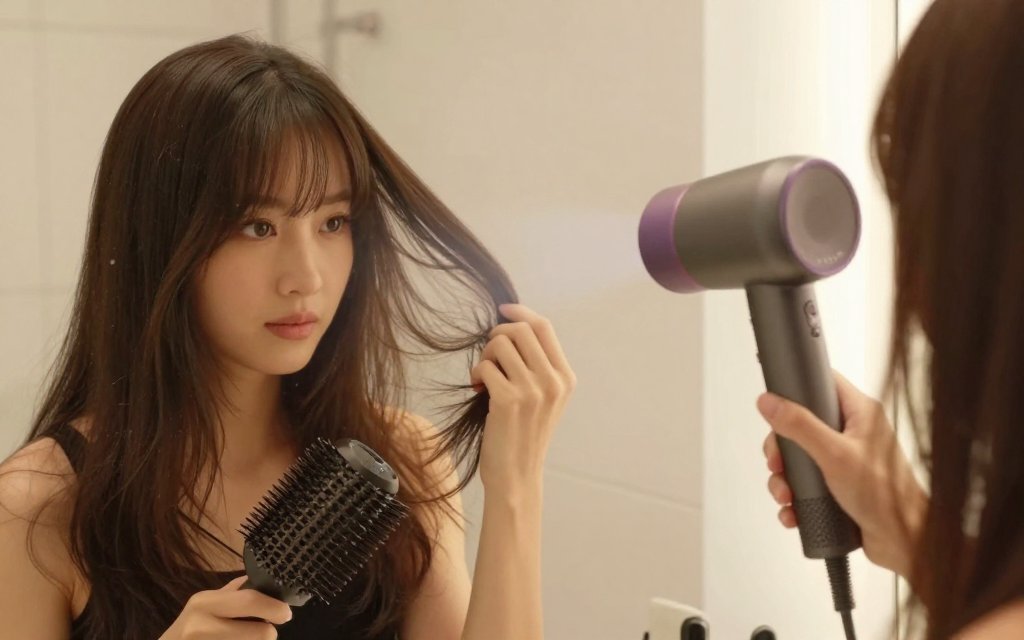
The daily routine for how to style curtain bangs at home takes two to five minutes once the technique is familiar. You need a hair dryer with a concentrator nozzle, a medium round brush with mixed bristles, and a light-hold finishing product. The goal is to sweep each side away from the center, creating the soft outward drape that defines the style.
How to Blow Dry Curtain Bangs
Start with slightly damp bangs and apply a small amount of volumizing spray at the roots. The cross-directional technique works well for symmetrical results: blow the entire bang section to the right until it is about 90 percent dry, then switch and blow to the left. This removes any natural part bias and gives you the even center-parted look. Once nearly dry, use your round brush to roll the ends outward, following the curve of your face.
No-Heat Option for Wavy and Air-Dry Styles
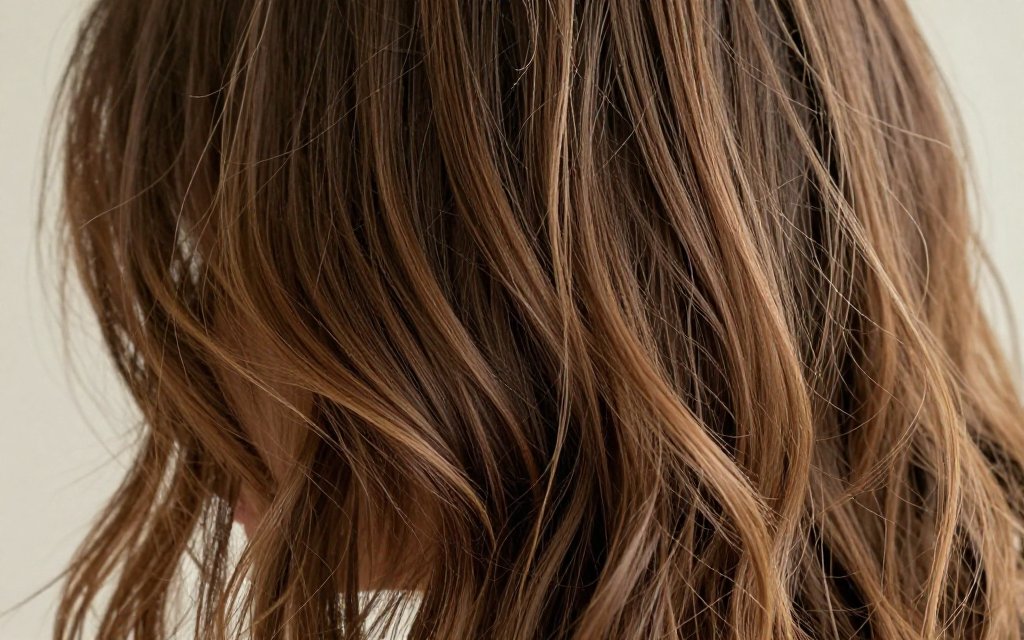
On wavy hair, the natural texture often does the work for you. Mist slightly damp bangs with a texturizing spray, part them at the center with your fingers, and let them air dry until the wave sets. For second-day bangs of any texture, a light mist of water followed by a one-minute blow dry resets the shape quickly. Avoid touching the bangs while they dry to prevent flattening or frizzing the pattern.
The cool shot step is the most skipped and the most important. Holding it for 10 seconds after shaping locks the round brush curl and adds visible shine. Without it, the style can drop within an hour.
Curtain Bangs Haircut: What to Tell Your Stylist
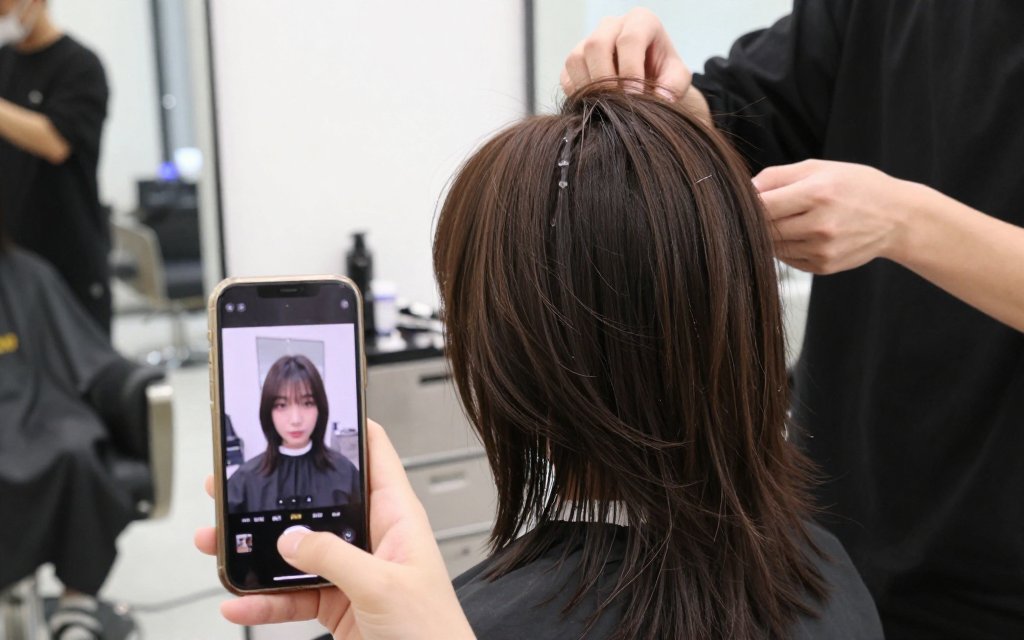
Walking in and asking for a curtain bangs haircut is a start, but a few extra details help your stylist deliver the right result. Bring a reference photo that shows the length you want. Mention your natural texture and whether you plan to blow dry the bangs or wear them air-dried, because those two facts alone change where the stylist places the cut.
Standalone curtain bang trims typically cost $10 to $25 at most salons, and some offer them free to regular clients between full cuts. Trim every 3 to 4 weeks if you wear the bangs at a precise length, or every 4 to 6 weeks for a longer, looser style. Curly and coily curtain bangs can stretch to 6 to 8 weeks between trims because the curl pattern makes minor length variation less visible.
Long Curtain Bangs vs. Wispy Curtain Bangs
Long curtain bangs fall at the cheekbone or below, creating a flowing frame that works especially well on round or oval face shapes. Wispy curtain bangs are lighter and shorter, sitting near the eyebrow with feathered ends that add texture without weight. The jellyfish cut and other layered styles pair naturally with long curtain bangs, while wispy curtain bangs tend to complement simpler, less layered haircuts.
| Style | Best For | Trim Interval |
|---|---|---|
| Long curtain bangs | Round or oval faces, thick hair | Every 4 to 6 weeks |
| Wispy curtain bangs | Fine hair, heart or square face | Every 3 to 4 weeks |
| Layered curtain bangs | Wavy or textured thick hair | Every 4 weeks |
Curtain Bangs FAQ
Do curtain bangs suit every face shape?
Yes, with the right length and density. Oval faces can wear anything from brow-skimming wisps to cheekbone-length pieces, round faces look best with longer bangs that extend past the cheekbones toward the jaw, and square or heart shapes suit wispy, feathered texture that softens strong angles. The cut adapts; the face shape just sets the starting point.
Should curly curtain bangs be cut wet or dry?
Always dry. Curly hair cut wet can spring back 1 to 2 inches shorter than intended once it dries. As a guide, 2B wavy textures are cut at the cheekbone and 3B curls at the bridge of the nose, so the finished bang lands where you actually want it.
How often do curtain bangs need a trim?
Every 3 to 4 weeks if you wear them at a precise length, or every 4 to 6 weeks for a longer, looser style. Standalone bang trims run $10 to $25 at most salons, and some offer them free to regular clients between full cuts.
How do you style curtain bangs without heat?
Mist slightly damp bangs with a texturizing spray, part them at the center with your fingers, and let them air dry until the shape sets. For second-day bangs, a light mist of water followed by a one-minute blow dry resets the curve without a full restyle.
Try Curtain Bangs on Your Photo Before the Salon
Curtain bangs are among the most grow-out-friendly fringes available, which makes them a relatively low-commitment option. Still, seeing the style on your own face before booking removes any last hesitation. Fravyn's AI hairstyle try-on app lets you upload a photo and preview over 50 styles, including curtain bangs, in seconds.
The app also runs a face shape analysis so you can see which curtain bang length suits your proportions before committing. If you are also weighing a bigger cut change, the Italian bob vs. box bob guide covers how to choose between a fringe restyle and a full cut change.
Ready to see how a new hairstyle looks on you? Try Fravyn and preview 50+ styles on your own photo in seconds. Test curtain bangs against your real face shape before you book the chair, so you walk into the salon certain about the length and density you want. Get the app here: iOS.
Try a New Hairstyle Today
Preview 50+ hairstyles and 29+ colors on your own photo with Fravyn.