How to Determine Your Face Shape With a Tape Measure
Grab a soft tape measure and four numbers, forehead, cheekbones, jawline, and length, and you can name your face shape in about five minutes. Here is how to take each measurement and match it to the cut that suits you.
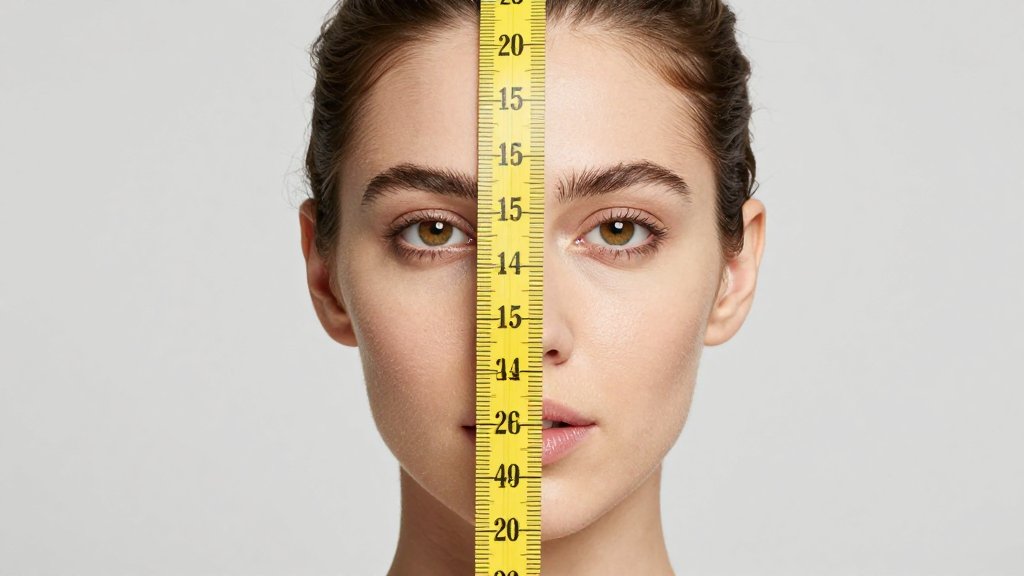
Pull your hair back, grab a soft tape measure, and you can name your shape in about five minutes. Four numbers do the work: your forehead, your cheekbones, your jawline, and the length from hairline to chin. Line them up and the answer stops being a guess.
Most people carry one of six outlines, oval, round, square, heart, diamond, or oblong. Which one is yours changes how you pick a cut, where you part your hair, and even which frames sit right. This guide covers how to determine face shape at home, then what each result means for your hair and your budget.
What Shape Is Your Face, Exactly
Your face is really just an outline once you set aside hair, ears, and expression. It comes down to two things: how long your face is next to how wide, and which line is broadest. A face about as long as it's wide reads round or square, while one clearly longer than wide reads oval, oblong, heart, or diamond.
The whole question reduces to two checks: is the face longer than it is wide, and is the forehead, the cheekbones, or the jaw the widest line?
So when you ask what is my face shape, you're really asking those two questions. Answer both and the label almost picks itself. The tape measure just keeps the comparison honest.
The Four Measurements You Need
You need one tool, a flexible cloth tape measure like a tailor uses, a method stylists have relied on for years. Stand in bright light, tie your hair back, and face a mirror straight on. Write down four numbers in inches or centimeters, whichever you like.
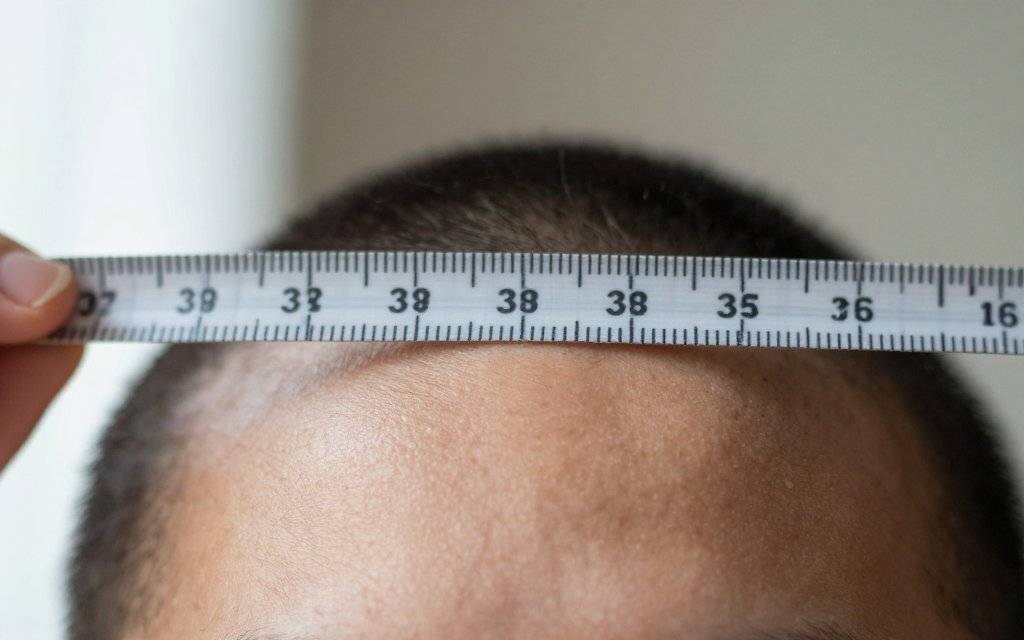
Take the jaw number from the tip of your chin to the corner where the jaw angles up, then double it for the full width. Keep the tape flat and loose, since a snug pull shaves off a quarter inch and can drop you into the wrong group.
How to Read Your Four Numbers
Line the four numbers up and find the largest. If cheekbones and length are close and both beat the forehead and jaw, you land round or oval, the same rule measurement calculators use. If forehead, cheekbones, and jaw sit within a hair of each other, you are square or oblong, and length breaks the tie.
Here's the quick read once your four numbers are down. A forehead that wins points to a heart with a narrow chin. Cheekbones that win, above a slim forehead and jaw, point to a diamond. A jaw that wins points to a triangle.
| Shape | Length to width | Widest part |
|---|---|---|
| Oval | About 1.5 | Cheekbones |
| Round | About 1.0 | Cheekbones |
| Square | About 1.0 | Even widths |
| Oblong | Over 1.6 | Even widths |
| Heart | Over 1.0 | Forehead |
| Diamond | Over 1.0 | Cheekbones |
The Six Face Profiles Most People Have
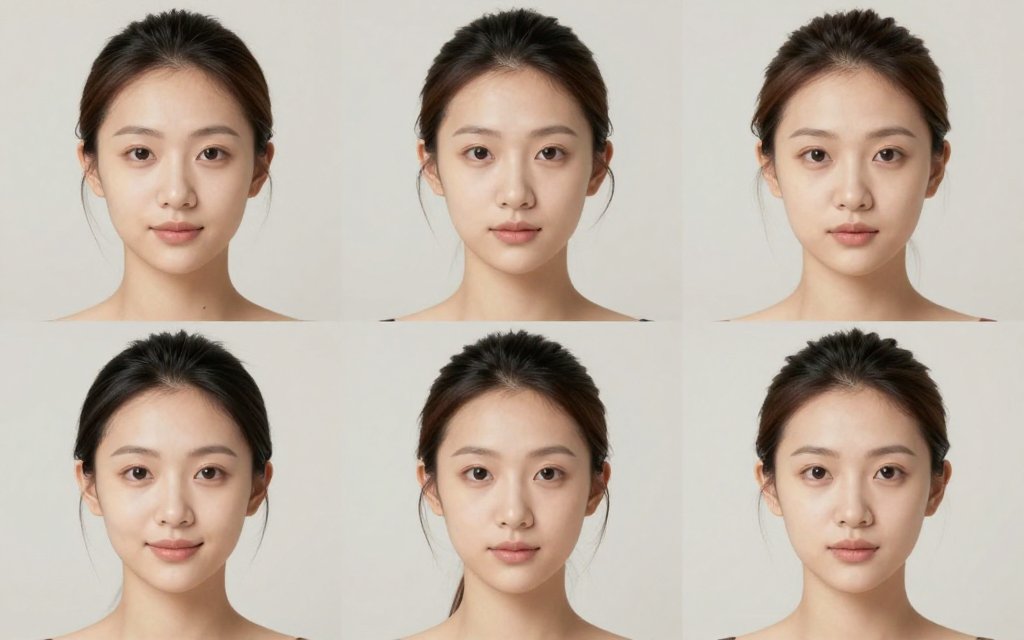
Once you have your numbers, match them to a profile. Each one has a signature, the line that stands out and the balance to play up or soften.
The oval face shape, explained
An oval face is longer than it's wide, roughly one and a half to one, with cheekbones as the widest line and a forehead a touch broader than the jaw. This balanced outline suits nearly every cut, which is why stylists treat it as the default.
The round face, explained
A round face sits close to equal in length and width, with full cheeks and soft, curved edges instead of sharp corners. Length and cheekbone width land near each other, and both beat the forehead and jaw.
The square face shape, explained
On a square face the forehead, cheekbones, and jaw measure nearly the same, and the jaw corner sits close to a right angle. It's a strong-jawed look that softens well, and our guide to haircuts for a square face shows how.
The heart face shape, explained
A heart-shaped face is widest at the forehead and narrows to a pointed chin, with prominent cheekbones in between. Face-framing layers and a deep side part balance the width up top.
The diamond face shape, explained
A diamond face is widest at the cheekbones, with a narrower forehead and a slim, tapered jaw. It's an angular look that softens with a fringe and volume near the jaw.
The oblong face shape, explained
An oblong face runs noticeably longer than wide, above a 1.6 ratio, with forehead, cheeks, and jaw all similar in width. Waves, layers, and blunt bangs add width and cut the length.
An oval face runs about 1.5 times longer than it is wide, while a round face sits near 1.0.
Where an App Beats the Tape

A tape measure is honest but fiddly, and it's easy to tilt your head or tug the tape and skew a number. A face shape detector reads a straight-on photo and compares the same four widths in seconds, which takes the shaky hand out of it.
That is the idea behind Fravyn, which reads your proportions from a selfie and previews more than fifty cuts and colors on your own photo. Check its call against your tape numbers, then try the styles it suggests before you book. Browse more breakdowns in our latest style guides.
What Your Shape Means for Your Next Cut and Your Wallet

Knowing your shape is really about not paying for a cut you will grow out in frustration. A men's cut runs about forty to eighty dollars, a women's cut sixty to one hundred fifty, and most people are back in the chair every four to eight weeks.
| Option | Cost | How often |
|---|---|---|
| Men's cut | $40 to $80 | Every 4 weeks |
| Women's cut | $60 to $150 | Every 8 weeks |
| Home preview | $0 | Anytime |
Stretch that across a year and a style that fights your shape gets pricey. A cut chosen for a round face adds the length it lacks, while one chosen for an oblong face adds width. For ideas by shape, see our wolf cut guide and pixie cut guides.
Common Questions About Finding Your Shape
How do I find my shape without a tape measure?
Trace it. Tie your hair back, look straight into a mirror, and outline your reflection on the glass with a bar of soap or a dry-erase marker. Step back, and the outline usually reads clearly as round, square, oval, or long.
What if my measurements are all close?
When forehead, cheekbones, and jaw land within a quarter inch of each other, length breaks the tie. Near-equal widths with length close to width mean square, while the same widths on a much longer face mean oblong.
Which shape shows up most often?
Oval turns up most often in style guides, which is why so many cuts treat it as the default. That doesn't make it better, only more neutral, since it gives a stylist the most room to work.
Do men and women measure the same way?
Yes, the four measurements are identical. The categories are the same for men and women, and only the flattering cuts differ. Shaved or bald heads just estimate where the hairline used to sit.
Ready to see which cut actually suits you? Try Fravyn, read your shape from a single selfie, and preview more than fifty styles on your own photo in seconds. Get the app here: iOS.
Try a New Hairstyle Today
Preview 50+ hairstyles and 29+ colors on your own photo with Fravyn.