Hair Gloss, Glaze or Toner: Pick One
Hair gloss, glaze, and toner sound interchangeable, but they solve different problems. This guide breaks down what each one actually does, how long it lasts, and how to pick the right option for shine, brassiness, color refresh, or gray blending before you book a salon visit or try it in-app.
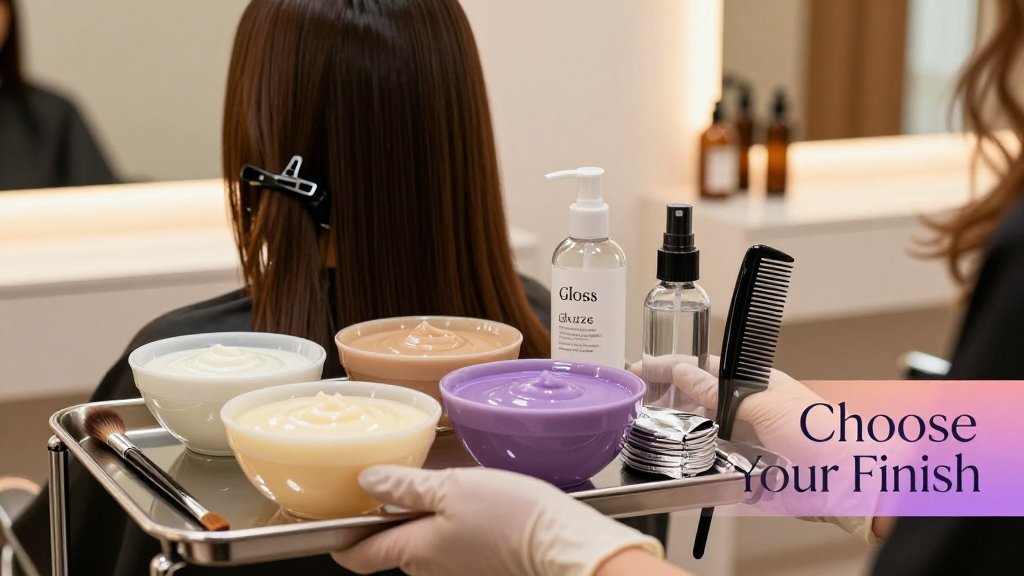
Gloss, glaze, toner. If those words have ever blurred together while you stared at your reflection in a salon mirror, you are in the right place. These services can look similar at first, but they solve different problems, from boosting shine to correcting brassiness and uneven tones. In this guide, you will learn what each option does, who it is best for, what results to expect, how long it typically lasts, and the simplest way to choose the right one for your color goals.
Hair gloss vs glaze vs toner, the quick difference
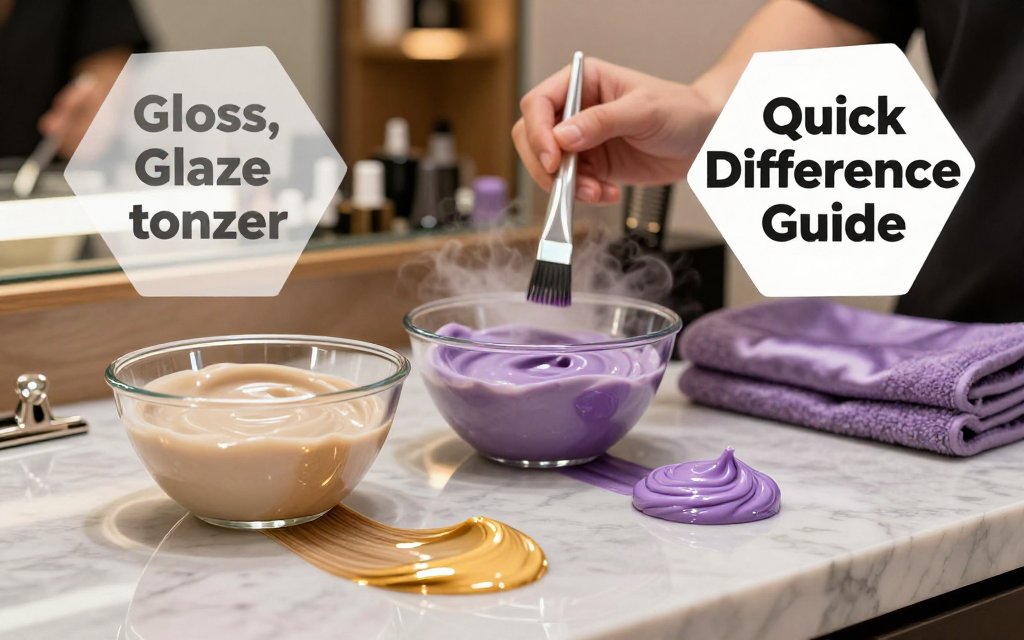
Picture what you actually want when you book a color refresh: do you want your current shade to look shinier, smoother, and a little more “just left the salon,” or are you trying to fix an obvious tone problem like brassy highlights or a yellow blonde? That is the cleanest way to separate these terms. Gloss and glaze are usually about shine plus a soft refresh (they deposit a little pigment, if any, and make hair look more polished). Toner is about tone correction, especially after lightening. None of the three is meant to dramatically lighten your hair, because they are typically deposit-only services, not lift (bleach and permanent color are the tools for lift).
Gloss and glaze are shine plus a soft refresh
In plain English, hair gloss and hair glaze are your “make it look expensive” add-ons. In many salons, both words refer to a semi-permanent or demi-permanent deposit that makes hair look glossier by smoothing the cuticle’s appearance and adding slip. You can go clear (pure shine) or lightly tinted (a gentle nudge warmer, cooler, darker, or more even). Real-life examples: a clear gloss on curly hair to make coils look bouncier and less fuzzy in photos, a beige gloss on a lived-in blonde to make highlights look creamy instead of flat, or a soft espresso gloss on brunettes to revive depth after sun and heat styling. The goal is subtle: your color, but healthier-looking.
The most common mistake is booking a gloss and expecting it to erase strong brassiness by itself. A gloss can slightly cool warmth, but it is not designed as a precision “cancel the orange” step. If your highlights are reading pumpkin-y, or your blonde is going very yellow, you usually need a toner first, then you can add a clear gloss for that reflective finish. Another expectation check: gloss and glaze do not “repair” split ends, and they will not reverse damage from bleach, heat, or hard water. What they can do is temporarily improve the look and feel, which is why so many brides schedule a gloss or glaze 3 to 7 days before the wedding for smoother shine that still looks natural.
If you love your depth but want camera-ready shine, ask for a clear or softly tinted gloss or glaze. If your hair reads yellow, orange, or too red, you need a toner formula matched to that undertone.
Toner is a targeted tone corrector for brassiness
Toner is the “fix the undertone” step, and it shows up most after bleaching, balayage, highlights, or any big move toward blonde. Your stylist chooses a toner using color theory, because the goal is neutralizing or shifting what you see. The quick cheat sheet is complementary tones: violet helps cancel yellow, blue helps cancel orange, and green helps cancel red. Matrix breaks this down clearly in their explanation of the laws of neutralization, which is the same principle colorists use when they decide between pearl, ash, beige, or neutral finishes. Toner can make a blonde look icy, a bronde look creamy, or a brunette look less brassy, but it is not automatically a mirror-shine treatment on its own.
Toners are not just for blondes. Warmth control matters for every level, including gray coverage and silver transitions. A smoky toner can soften that yellow cast that sometimes creeps into white hair, a blue-based toner can calm down orange brass in medium brown hair after summer, and a green-leaning toner can help neutralize overly red tones in very dark hair. If you have highlights, toner placement can be strategic too: your stylist might tone only the light pieces, or gloss the mid-lengths and ends to blend while leaving the roots more natural. If your end goal is a “cool mushroom brown,” “pearl blonde,” or “icy silver,” toner is usually the non-negotiable step that makes the shade look intentional.
About “damage” and the deposit vs lift question: gloss, glaze, and toner are generally used to deposit pigment (or just boost shine), not to lighten. That is why many people find them gentler than permanent color or bleach, especially when the formula is demi-permanent and paired with a low-volume developer. Still, anything that processes can leave hair feeling a bit dry if your hair is porous, recently lightened, or you overdo clarifying shampoo. The easiest way to keep results pretty is boring but effective: use cooler water, limit hot tools, and lean on a color-safe mask once a week. Think of these services as tone and finish polish, not as structural repair.
One more reason this gets confusing is that salons use the words differently. Some menus label the whole category as “gloss,” even when the appointment includes a toner step. Other salons say “toner” for any post-highlight step, even if they are also adding shine. A practical booking rule: if you like your level (how light or dark you are) and only want shine and a gentle tweak, request a gloss or glaze. If you dislike the warmth you see in the mirror, request a toner and tell them what you see (yellow, orange, red). If you are also choosing a new haircut to flatter your face shape or hide regrowth, pair your color refresh with postpartum regrowth hiding styles so the overall look feels intentional, not temporary.
How long gloss, glaze, and toner last
Longevity ranges, what most people actually see
If you are comparing hair gloss vs hair glaze longevity, the honest answer is that they typically live in the same window. Most salon glosses and glazes last about 2 to 6 weeks, with the mirror-like shine peaking in the first 1 to 2 weeks. After that, the shine softens and the tone looks less “freshly done,” even if the color still looks good. If you are asking “how long does hair gloss last,” Redken’s guidance is that it lasts 4 to 6 weeks, and then gradually washes out. In real life, the biggest swing factor is wash count, not the calendar. Someone who washes daily will burn through results much faster than someone who washes 2 to 3 times a week.
Toner is a little trickier to predict because it is usually correcting a specific undertone (think yellow, gold, orange, or even greenish tones from minerals). On lighter hair, toner can look freshest for about 2 to 4 weeks, sometimes longer, but it can also “shift” sooner than you expect. Here is the counterintuitive part: the lighter and more porous your hair is, the faster toner can fade or turn, even if you are using color-safe shampoo. Bleached, highlighted, and very light blondes often have a more raised cuticle, so water and surfactants move in and out quickly, taking the balancing pigments with them. Meanwhile, a darker brunette glaze that is mostly about shine can look decent longer because it is not fighting a strong warm undertone every wash.
Week 1, week 3, week 6: the reality check
Week 1 is the honeymoon phase. Your hair usually feels slicker, looks brighter in photos, and reflects light more evenly, especially around the hairline and crown where frizz can break up shine. If you got a beige toner on a level 9 blonde, this is when it looks the most “expensive.” If you did a clear gloss on curls or coils, this is when definition tends to pop because the cuticle is laying flatter. To keep results crisp, treat week 1 like a “seal it in” week: wash less (even one less shampoo makes a difference), use lukewarm water, and add a heat protectant before blow drying. Small changes now can buy you an extra week of looking freshly finished.
By week 3, most people start noticing tone creep. Blondes might see warmth returning around the mid-lengths. Brunettes might still look shiny, but the “glass hair” finish is less intense. If you style with hot tools, this is often when ends start looking dull first because they are the most porous part of the hair. Hard water can speed this up because mineral buildup can make hair feel rough and look hazy, even when color is still present. > If your tone looks great in indoor light but brassy in sunlight, it is usually fading plus buildup. Focus on gentle shampoo, cooler rinses, and fewer hot-tool days for one week before assuming you need a full redo. This is also the point where purple or blue shampoos can help, but use them like seasoning, not like the main course, since overuse can leave hair looking flat or slightly muddy.
Around week 6, gloss and glaze results are often in the “it’s still nice, but it’s not doing the most” phase. Some people still have a soft tint and smoother texture, others feel like everything is gone. Porosity decides this more than hair type. High-porosity hair (often highlighted, relaxed, frequently heat-styled, or sun exposed) lets pigment and shine agents escape faster, so week 6 can feel like a full reset. Low-porosity hair (often virgin hair or hair that is not chemically lightened) can hold onto shine longer, but it can also resist toner evenly at the start. If you are planning a wedding, aim to refresh toner or gloss 7 to 14 days before the event so it looks vibrant, but still natural in daylight and flash photos.
One list of habits that makes it fade faster
If your gloss, glaze, or toner disappears faster than your friends’, it is usually your routine, not “bad color.” Think friction, heat, and strong cleansers. The quickest win is adjusting how often you shampoo and how hot your water is. Also watch how your shampoo smells: if you can smell shampoo strongly on your hair while rinsing, you are probably stripping faster than you need to, especially on the lengths and ends. Keep dandruff formulas mostly on the scalp, and let conditioner do the heavy lifting on your mids and ends. Here are the biggest fade accelerators, plus quick fixes that actually help.
To stretch longevity without babying your hair, pick two “protective defaults” and stick to them. First, use a sulfate-free, color-safe shampoo most washes, then clarify or chelate only when you truly feel coated or your curls stop springing back. Second, treat heat like a special effect, not a daily requirement: lower your tool temperature, use a protectant, and choose one polished style that lasts, like a smooth blowout or soft waves, instead of re-curling every morning. If you have hard water, a filter can help shine look cleaner between appointments. And if you are torn between going honey blonde, espresso, or copper next, trying shades on your own photo in Fravyn can make the “fade plan” clearer, since you can choose a look that still flatters you even after the first few washes.
Pick one based on your hair color goal
If you feel stuck between gloss, glaze, and toner, decide based on the one thing you want your hair to do for you this month: look shinier, look less brassy, look richer, or look more even on camera. A good rule is to treat shine and tone as two separate knobs. Toner adjusts unwanted warmth (yellow, orange, sometimes red). Gloss or glaze boosts reflect, softens rough texture, and can gently refresh faded color. If you pick the product that matches your main complaint, you will get a more noticeable result fast, and you are less likely to overcorrect into flat or muddy color.
The shortcut decision guide, shine, brassiness, gray blending
Choose based on your biggest “ugh” moment in the mirror: - Dullness or rough-looking ends: pick a gloss or glaze. - Brassiness (yellow, orange, coppery where you do not want it): pick a toner. - You want both shine and cooler tone: do toner first, then gloss or glaze. Think of toner like a color corrector for hair. Think of gloss or glaze like a topcoat for hair color and light reflection. If you are shopping at home, look for language like “tone” or “neutralize” for toners, and “shine,” “glossing,” or “color refresh” for gloss or glaze. A helpful baseline is that a hair gloss is a semi-permanent treatment that adds shine, as described in this hair gloss treatment overview.
Real-life examples make this easy. If your blonde turns yellow after a beach trip, that is classic toner territory, especially if you were icy or neutral before the sun and saltwater. If your highlights look orange near the roots, toner is usually the fix because that warmth is a tone problem, not a shine problem. If you are a brunette who looks “flat” between appointments, a clear gloss or a warm, sheer brunette gloss can bring back that expensive-looking reflect without committing to a full permanent dye session. If your grays feel wiry and dull, a gloss can make them look smoother and more light-reflective, while silver hair that is yellowing may need a gentle violet toner first.
For bridal photos, aim for smooth shine plus controlled warmth rather than chasing ultra-ashy hair that can read matte or slightly green in certain lighting. Camera flashes, golden-hour sun, and indoor ballroom lighting all exaggerate what is already there, so brassy pieces pop and frizz catches highlights. If you are booking a salon visit, ask for “tone for balance, then gloss for shine,” and bring two reference photos: one in daylight and one indoors. If you are testing looks, try an AI try-on (like Fravyn) to preview a champagne blonde versus a soft beige blonde, or a rich espresso brunette versus a cooler mushroom brown, and compare how each shade frames your face shape in photos.
Does hair gloss damage hair, or is it safe to do often?
Most glosses are designed to be low-commitment and conditioning, so they are typically gentle enough to repeat regularly, especially clear glosses or deposit-only formulas. The bigger risk is not “damage” like bleach, it is buildup and over-depositing pigment, which can make hair look darker or duller over time. At home, space it out every 3 to 6 weeks, use a clarifying shampoo once in a while if your hair starts to feel coated, and always strand test if you are using a tinted gloss on porous ends. If your hair is very dry or curly, follow with a moisturizing mask.
Toner vs gloss for brassiness, which one works faster?
For true brassiness, toner usually works faster because it is built to neutralize specific undertones (violet cancels yellow, blue cancels orange). You can often see a shift as soon as you rinse and dry. A gloss can improve the look of brassiness a little by adding shine or a sheer tint, but it is not as targeted, so results may be subtler. At home, the key is starting level: toners cannot turn a dark orange level 7 into an icy level 10 without more lightening. If you are unsure, choose a softer, demi-permanent toner and shorten the processing time.
What is the best at-home hair gloss for brunettes doing a color refresh?
For brunettes, “best” usually means sheer, forgiving, and shine-forward. If you want a salon-like brunette refresh at home, look for a tinted gloss in a neutral brown, chocolate, or espresso that is labeled deposit-only and fades gradually. Popular options many brunettes like include dpHUE Gloss+, Kristin Ess Signature Hair Gloss, and John Frieda Brilliant Brunette glossing treatments. Pick a shade close to your current level, then do a strand test on the underside first. Apply to mid-lengths and ends before roots if your roots grab color fast, and set a timer so you do not over-deepen your ends.
Ready to see how a new hairstyle looks on you before you commit? Try Fravyn and preview 50+ styles on your own photo in seconds, so you can explore polished looks that pair perfectly with a gloss, glaze, or toner refresh. Download Fravyn now on iOS, upload a photo, and start trying styles that match your next salon plan.
Try a New Hairstyle Today
Preview 50+ hairstyles and 29+ colors on your own photo with Fravyn.