Gray blending is the easiest way to grow out gray hair
Growing out your grays does not have to mean a hard line or a buzz cut. Here is how gray blending softens the transition to gray hair, how long the grow out takes by length, and what a colorist really charges.

If you're tired of coloring your roots every three or four weeks, gray blending is the calmest way out. Instead of hiding your grays under a solid dye, a colorist weaves the silver into your existing color so new growth never turns into a hard stripe. The change happens quietly over a few months while you carry on with your life.
Most people spot their first grays in their 30s or 40s, and once they arrive, covering them forever gets tiring and pricey. Gray blending, sometimes written as gray hair blending, sits between full dye and a dramatic chop. Here's how the technique works, how long growing out gray hair takes, and what a colorist actually charges.
What gray blending actually does
The technique mixes fine highlights and lowlights through your hair so your natural gray reads as a soft, dimensional color instead of a mistake. Colorists at NewBeauty call the highlights micro-weaves, extremely fine pieces that copy the way gray scatters across your head. Lowlights, strands colored a shade or two deeper than your base, add back the depth that flat gray can lose.

A colorist usually finishes with a toner or gloss to cancel any yellow and keep the gray looking clean rather than brassy. Because there's no single block of color, your roots never announce themselves, and the whole look softens as it grows. That gentleness is the point, since you skip a harsh root touch up every three or four weeks.
A blend is usually gentler on your hair than a root touch up every three or four weeks, and it can stretch salon visits from weeks into months.
The pieces a colorist blends together
Why your hair goes gray in the first place
Your hair goes gray when the pigment cells in each follicle, called melanocytes, slow down and stop making melanin. The American Academy of Dermatology explains that after a follicle runs through 7 to 15 growth cycles, the melanin stops coming back and that strand grows in gray. Genetics set the timing, so if a parent went gray early, you probably will too.
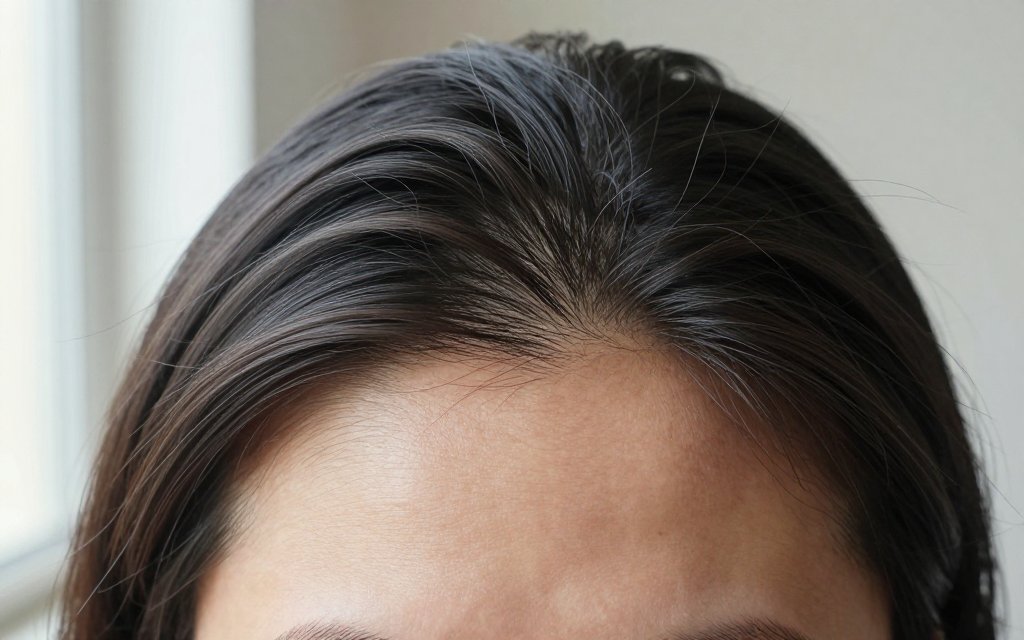
There's no proven way to reverse age related gray, dermatologists say, though heavy stress can speed it up. Hair grows about half an inch, or 1.25 centimeters, a month, which works out to roughly 6 inches a year. That rate is the real clock behind any transition to gray hair, because it decides how fast your natural color reaches the ends.
Hair grows about half an inch a month, so a chin length bob carries roughly a year of old color and long layers can hold two years of it.
How long growing out gray hair really takes
The honest answer depends on your length. A pixie can finish in 3 to 6 months because you cut off colored ends fast, while shoulder length hair averages around 20 months. Plenty of people with long hair report two years or more, and one longtime gray hair blogger documented her own grow out at about two and a half years.
| Hair length | Grow-out time | Method |
|---|---|---|
| Pixie cut | 3 to 6 months | Big chop |
| Shoulder length | About 20 months | Blend or grow |
| Long hair | 2 years or more | Blend or grow |

If waiting that long sounds rough, a shorter cut speeds things up, which is why some people pair the change with a fresh style. Our guide to a pixie cut for fine hair shows how a big chop can look full instead of flat. Growing out colored hair to gray without a cut is slower, but you never lose length you love.
Ways to soften the awkward stage
What growing out gray hair costs
Here's where the math turns friendly. Standard gray blending runs about $150 to $600 a session, according to NewBeauty, while high end transformations with a specialist can climb toward $7,000 for a full six to eight hour day. That top figure is rare, but it shows how much detail a big correction can involve.
The savings come from frequency. A root touch up on dyed hair pulls you back every 4 to 6 weeks, but a good blend can stretch that to every few months. Over a year, trading eight or nine touch ups for three or four blends is where growing out gray hair starts to pay off.
| Approach | Salon cost | Upkeep |
|---|---|---|
| Gray blending | $150 to $600 | Months apart |
| Root touch-ups | Varies by dye | Every 4 to 6 weeks |
| Cold turkey | $0 | Trims only |
Grey blending for dark hair and brown hair
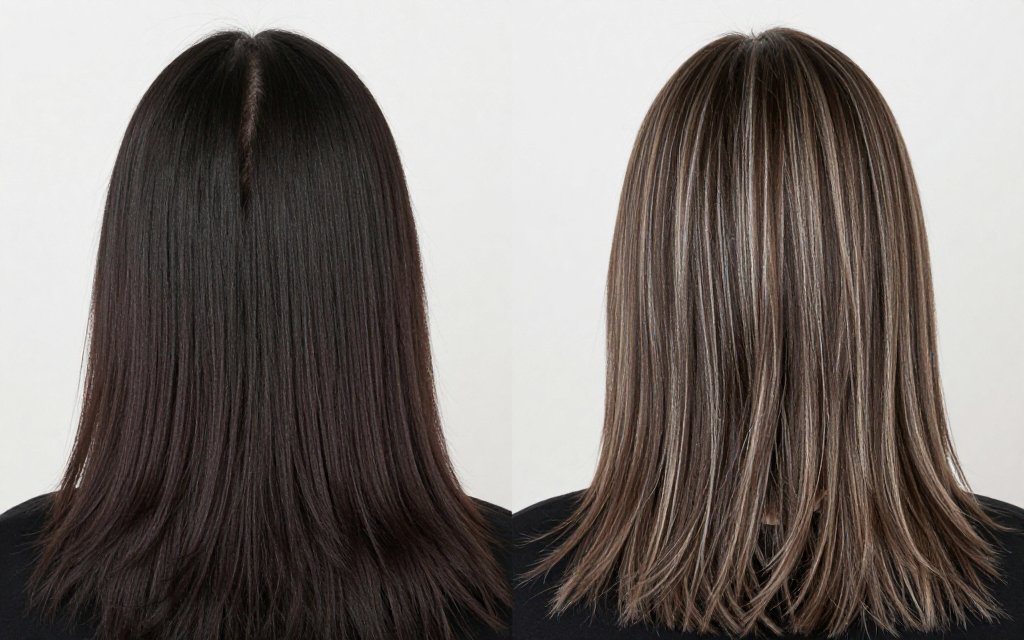
Dark hair shows the grow out line the most, so blending pays off the biggest there. A colorist adds soft, cool highlights near the face and through the top, then drops in lowlights so the gray reads like natural salt and pepper instead of banding. Warm brown bases can turn brassy as they lighten, so a toner keeps the new gray cool.
Colorists sometimes call this grey blending for dark hair or grey blending brown hair, but the method is the same. If you look up gray blending for dark hair before and after, you'll see one story on repeat, a hard stripe turning into a soft gradient across two or three visits. Our purple shampoo guide covers when to reach for it and when a toner does more.
Transition to gray hair with highlights
Highlights do the heavy lifting when your base is much darker than your gray. A transition to gray hair with highlights lightens the colored parts so they sit closer to your natural white, which shrinks the contrast at the root. It's the same idea behind a balayage, only aimed at meeting your grays instead of going blonde.
Common questions about going gray
How do I transition to gray hair without cutting it off?
Learning how to transition to gray hair without a chop comes down to blending. A colorist blends the line with highlights and lowlights every few months while you grow, so you keep your length and the border between old color and new gray stays soft. Add a trim every 6 to 8 weeks so colored ends leave faster.
Does gray blending work on dark hair?
Yes, and dark hair is where it shines, because the contrast between brown or black and gray is the most obvious. Fine highlights lighten the colored strands toward your natural white, so the two tones meet in the middle. Expect two or three sessions before the blend looks fully settled.
How much does going gray cost?
A salon blend usually costs between $150 and $600 per session, based on length, condition, and how much old color needs correcting. It costs more than a quick root touch up, but you book it far less often. Ask your colorist for a plan across three or four visits so you can budget the whole thing.
Can I go gray at home?
You can, though home results are less predictable than a salon blend. If you want to know how to go gray on a budget, stop the root dye, then use a color depositing or purple shampoo to hold back brass while you grow. A trim every couple of months does more than any product to move things along.
Ready to see how a new hairstyle looks on you before you grow it out? Preview silver, salt and pepper, and soft gray shades on your own photo in seconds, so the transition to gray hair feels like a choice instead of a gamble. Get the app here: iOS.
Try a New Hairstyle Today
Preview 50+ hairstyles and 29+ colors on your own photo with Fravyn.