Frizzy hair is dry hair, here's how to fix the frizz
Frizzy hair is usually dry hair reaching for moisture in the air. Here is what actually causes frizz, the wash and blow-dry routine that seals the cuticle, and what smoothing it costs at home versus the salon.

Frizzy hair almost always starts as dry hair. When a strand runs short on water, it pulls moisture from the air instead, the outer layer swells, and the smooth surface roughs up into frizz.
That one fact changes the fix. Go after real moisture and a sealed cuticle rather than piling serum on top, and most of it settles down. The real answer to how to get rid of frizz is a bit boring, and it works.
What is hair frizz, really?
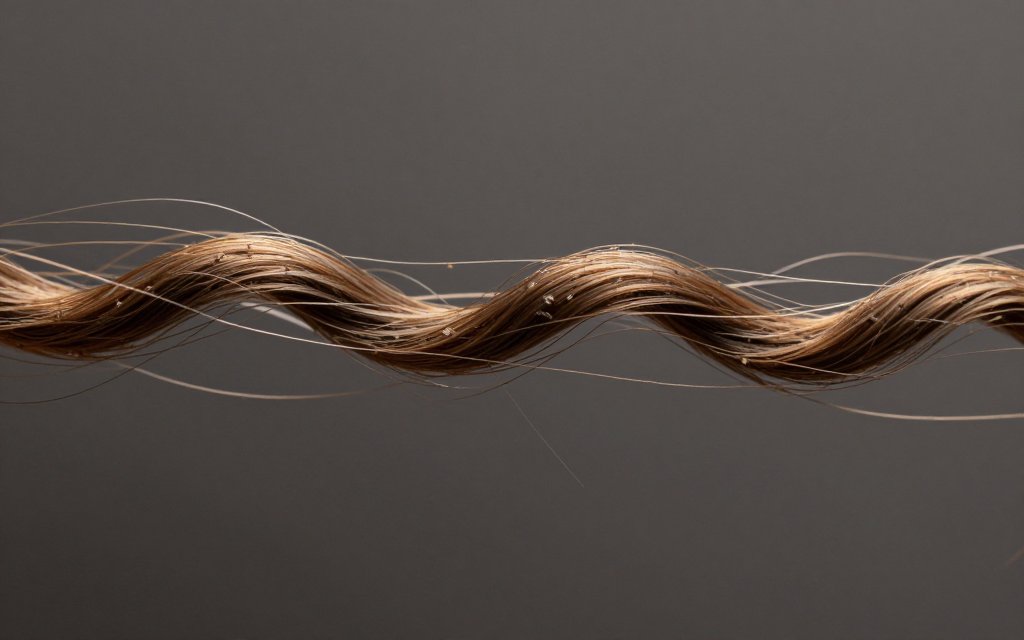
Your hair has an outer layer called the cuticle, and it looks like a shingled roof. When those shingles lie flat, hair reflects light and feels smooth. When they lift, the surface catches the light unevenly and soaks up whatever moisture is around, which is the short answer to what makes hair puff up.
Humidity is the trigger. As water molecules move into the fiber, the hydrogen bonds that hold your hair's shape shift, the strand swells, and the cuticle lifts further. Pantene puts the tipping point around 70 percent humidity, which is why a calm blow-dry falls apart the second you step outside.
The puffing starts when there is more humidity in the air than water inside your hair, so the strand swells and the cuticle lifts to let it in.
Why is my hair so frizzy? The usual causes

If you keep asking why is my hair so frizzy, the answer is usually some mix of dryness, porosity, and damage. Each one leaves the cuticle open, and an open cuticle is a sponge for humid air.
Porosity is the real culprit
Porous hair drinks in moisture fast and loses it just as fast, so it never stays balanced. This is common in fine, color-treated, or naturally curly textures, and it is exactly why low porosity hair and high porosity hair need very different products. Frizzy curly hair swells the most, and tight frizzy curls show it first, because every bend in the strand exposes more of that raised cuticle.
Heat damage stacks up over time
Damage and porosity are almost the same problem. Hairstory points to research showing chemically treated hair can have up to 30 percent lower tensile strength than untreated hair, and weak, damaged hair swells at the smallest hint of moisture. Fine hair tends to go limp, while thick hair turns into poofy hair.
How to get rid of frizzy hair in the shower
Most of the smoothing happens before you ever pick up a dryer. Start with a gentle, sulfate-free cleanser and massage your scalp instead of scrubbing the lengths, which keeps the natural oils that shield each strand. If you wash daily out of habit, read up on how often you really need to wash first.
Then feed the hair what it is missing. A weekly deep conditioning for frizzy hair puts moisture back before the week strips it out, and a wide-tooth comb spreads it from the ends up without snapping wet strands. Conditioner works by filling the gaps in a lifted cuticle with smoothing lipids, so humidity has nowhere to sneak in.
Wet hair can stretch by roughly a third before it breaks, so detangle gently from the ends with a wide-tooth comb, never yank from the roots.
Drying and styling for frizzy hair without heat damage
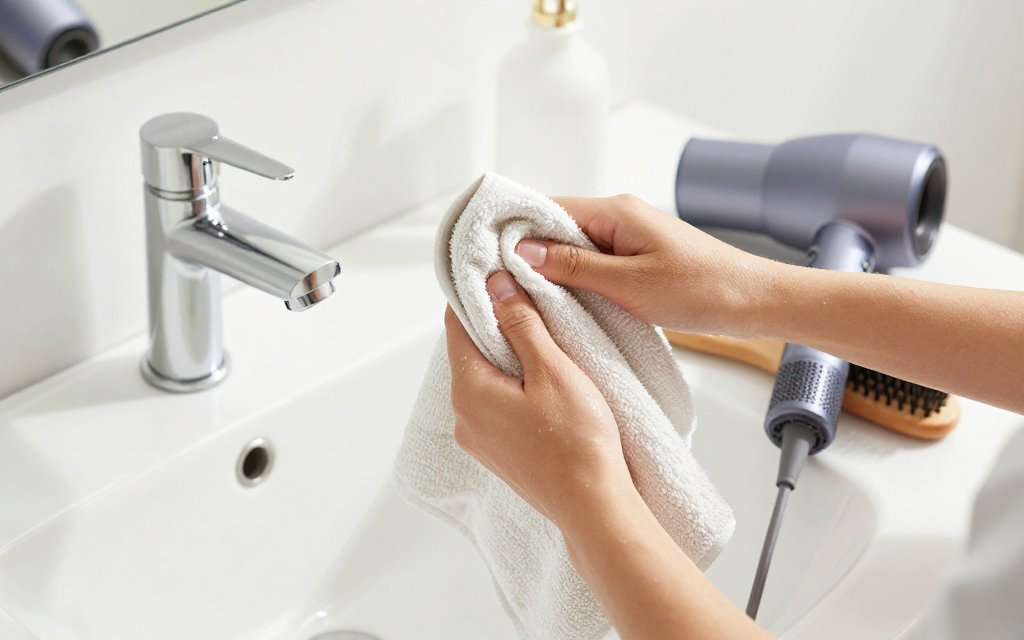
Good hair styling for frizzy hair is mostly about sealing, not fighting. Blot with a microfiber towel rather than rubbing with a rough cotton one, then apply a heat protectant while the hair is still damp so the cuticle has a shield before any warm air hits it.
Wella stylists point the dryer nozzle down the strand, use a round brush to press the cuticle flat, and finish with a cool shot to lock it closed. Skip the daily flat iron when you can, and never brush dry curls, because a dry brush pries the cuticle right back open.
Heat itself has a ceiling. Keratin starts to break down between about 311 and 320F, and many flat irons run past 390F, so keeping tools under that line protects the smoothness you just built. The table below shows where the danger starts.
| Heat level | Temperature | What happens |
|---|---|---|
| Safe | Below 320F | Keratin stays intact |
| Caution | 320 to 370F | Bonds start to loosen |
| Damage | Above 390F | Cuticle breaks down |
Protect your hair overnight
Smoothing is not only a daytime job. Cotton pillowcases drag on the cuticle for hours, so a few small night habits protect all the work you did during the day.
Anti frizz products that actually seal the cuticle
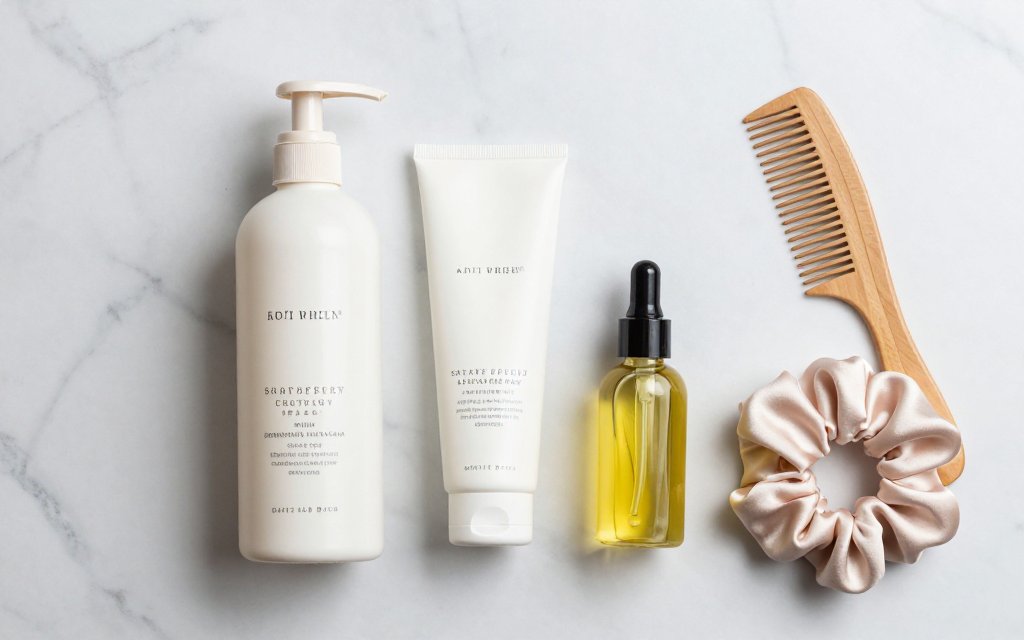
The best of these products build a water-repelling layer over the strand so humid air stays outside. Natural oils absorb into the hair, while heavier silicones sit on top and can look greasy, so start with a drop or two and add more only if you need it.
Layering beats any single miracle bottle. Choose alcohol-free formulas, since alcohol dries the hair back out, and lean on hairsprays with humidity-resisting polymers on days the air is heavy. Here is a simple order that covers most hair types.
Oils build a water-repelling shield around the strand, but they cannot rebuild a lifted cuticle, so the puffiness returns once that layer wears off.
Smoothing costs and your wallet
A steady routine is cheaper than chasing smoothness in the salon chair. Trims every 8 to 12 weeks remove split ends before they fray further up the strand, and a smoothing blowout buys you a few polished days when it matters. Here is what those services run in 2026.
| Service | Price | How often |
|---|---|---|
| Cut or trim | $35 to $90 | Every 8 to 12 weeks |
| Blowout | $20 to $65 | As needed |
| Long or thick | 15 to 30% more | Each visit |
The math favors home care. A bottle of good leave-in outlasts several blowouts, and it keeps working between appointments. Before you commit to a big smoothing service or a fresh cut, you can preview a smoother look on your own photo so you spend on the style you actually want.
A steady home routine will not repair damage, yet it can stretch the weeks between salon visits and keep dry frizzy hair in check.
Questions people still ask
Why is my hair so frizzy even after conditioning?
Usually the cuticle is too raised for conditioner alone to help. If your hair is porous or damaged, the smoothing lipids wash out quickly, so pair a weekly mask with a leave-in and a heat protectant. Give it two to three weeks of steady care before you judge the results.
How do I stop frizz in humidity fast?
Seal first, then leave it alone. Smooth a light oil over the ends to block moisture, mist a humidity-resisting hairspray, and avoid touching or brushing your hair once it is set. On the worst days, a low bun or braid hides the puffiness until the air dries out.
Is frizz the same as hair damage?
Not always. It can be simple dryness on perfectly healthy hair, and that responds fast to moisture. Damage is a separate problem that raises porosity, and porous hair puffs up more, so heavy heat and bleach make everything worse.
Can men fix this the same way?
Yes, the routine for frizzy hair men is just shorter. A sulfate-free wash, a pea-sized leave-in on damp hair, and a quick cool blow-dry handle most of it. Coarser textures can add a light oil to the ends for extra hold.
Ready to see how a smoother, calmer style would look on you? Try Fravyn to preview more than 50 hairstyles and 29 hair colors on your own photo in seconds, then book your appointment sure of the look. Get the app here: iOS.
Try a New Hairstyle Today
Preview 50+ hairstyles and 29+ colors on your own photo with Fravyn.