Damaged hair can't be repaired, but you can stop the breakage
No serum truly repairs a broken strand, because hair is dead protein. Here is what actually stops the breakage: the right iron temperature, honest bond treatments, and a trim schedule that keeps frayed ends from climbing.

You can pour every serum in the aisle onto damaged hair and the strand stays exactly as broken as before, because hair is not alive. Once it grows past your scalp it is finished protein, with no blood supply to close a wound. So the honest goal was never repair. It is stopping the next round of breakage before it starts.
You still have real control over split ends, heat, colour and the friction of daily styling, and a few changes hold onto the length you already grew. Most strands that snap at the towel or the brush were quietly weakened weeks earlier.
Why damaged hair can't be repaired
A hair strand is made almost entirely of keratin, a hard protein your follicle pushes out already dead. Nothing inside it can knit a crack back together, which is why careful labels say condition or strengthen, not cure. When stylists call it dead hair, they mean that literally. You can smooth the surface and shore up what is left, but you cannot grow a strand back from its own middle.
Hair is not skin. Once a strand leaves the scalp it is dead protein with no blood supply, so nothing in a bottle heals it the way a cut on your finger heals.
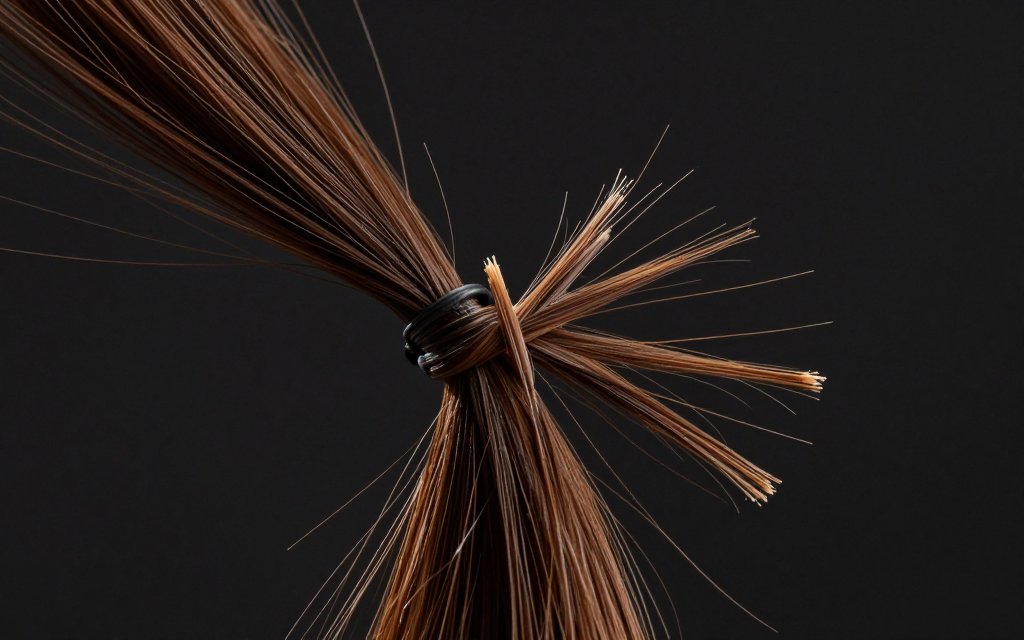
Damage shows up the same way whether the cause was bleach, a flat iron or a rough brush. The strand loses its smooth outer layer, dries out and starts to fray. A few tells are easy to spot at home.
How heat damaged hair actually breaks down
Heat is the fastest way to wreck a strand without seeing it happen. At styling temperatures the water inside the shaft flashes to steam, and the hydrogen and disulfide bonds that give hair its stretch begin to fracture. Past roughly 450 degrees Fahrenheit the keratin itself breaks down for good. Most irons run hotter than your hair ever needs.
| Hair type | Safe range | Never exceed |
|---|---|---|
| Fine or thin | 260 to 325F | 325F |
| Medium | 350 to 370F | 370F |
| Thick or coarse | 390 to 410F | 410F |
Match the dial to your hair, not to the clock you are fighting. A heat protectant is not optional either. In lab testing, regular use cut cuticle cracking by up to 77 percent, which is the gap between managing damage and adding to it every morning.
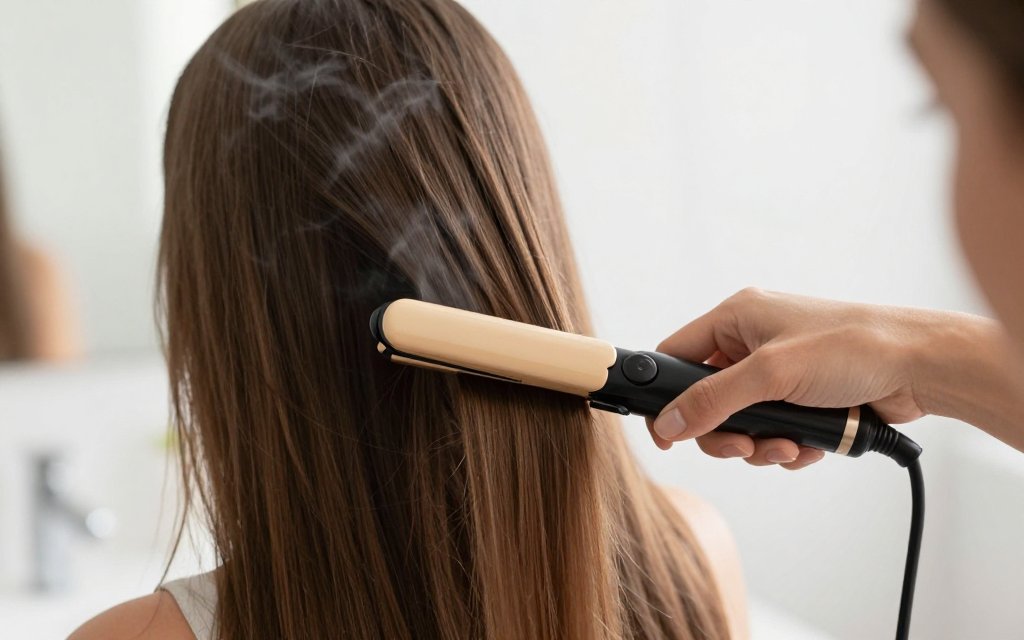
Regular heat protectant use cut cuticle cracking by up to 77 percent in lab testing. That is the difference between holding your length and feeding the frizz.
Split ends only leave with scissors
Here is the part nobody selling a repair serum wants to say out loud. A split cannot be glued shut, and left alone it climbs higher up the shaft and takes more length with it. So split ends are the one kind of damage a bottle genuinely cannot fix. The only cure that lasts is a trim, and dermatology-backed guidance is blunt about it: once the ends fray, cutting them off is the only way to remove them.
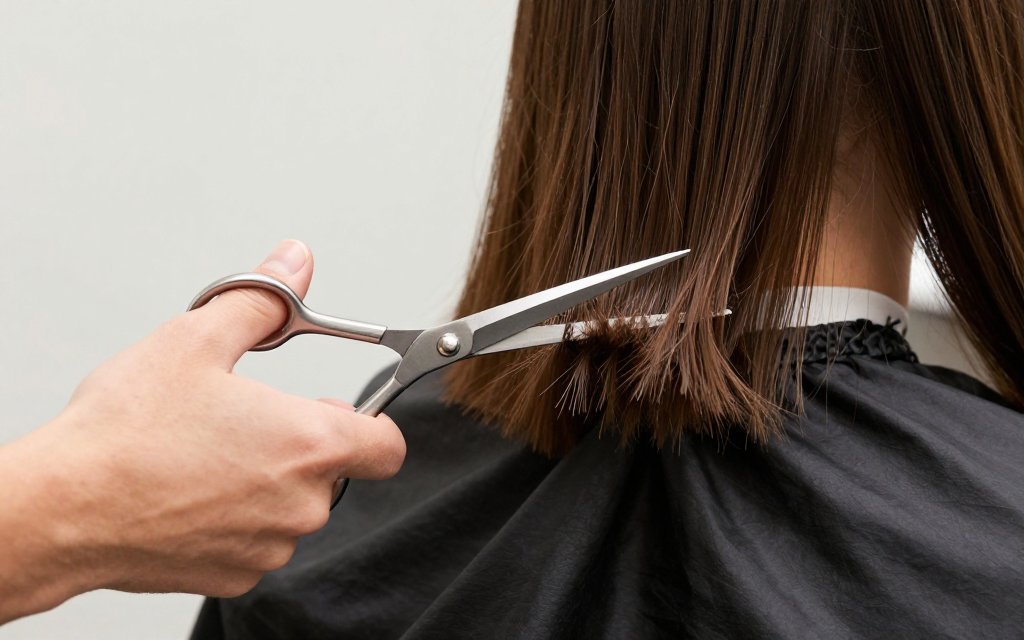
If your ends are badly gone, a shape change can be the kindest fix there is. Taking the length up to a pixie cut or a blunt bob removes the frayed history in one visit, and you can preview the new shape on your own photo before you commit. Lower-maintenance colour helps too. Swapping a root-to-tip dye for balayage means far fewer passes with bleach near your ends.
What a bond treatment can and can't do
Bond builders are the closest thing to real repair, and they still are not magic. They use ingredients like citric acid, peptides and amino acids to relink some of the broken inner bonds, while ceramides patch the cuticle so moisture stops leaking out. A solid damaged hair treatment buys you strength and slip, not a brand new strand. One lab-tested bond system reported up to 98 percent strengthening after five uses, which is real, and also not the same as undoing a cut end.
| Product | What it does | How often |
|---|---|---|
| Bond builder | Relinks broken inner bonds | Once a week |
| Deep conditioner | Refills moisture and slip | Weekly |
| Protein mask | Stiffens weak, stretchy strands | Every 2 weeks |
| Hair oil | Seals ends and cuts friction | Before heat |
| Salon trim | Removes split ends for good | Every 8 weeks |
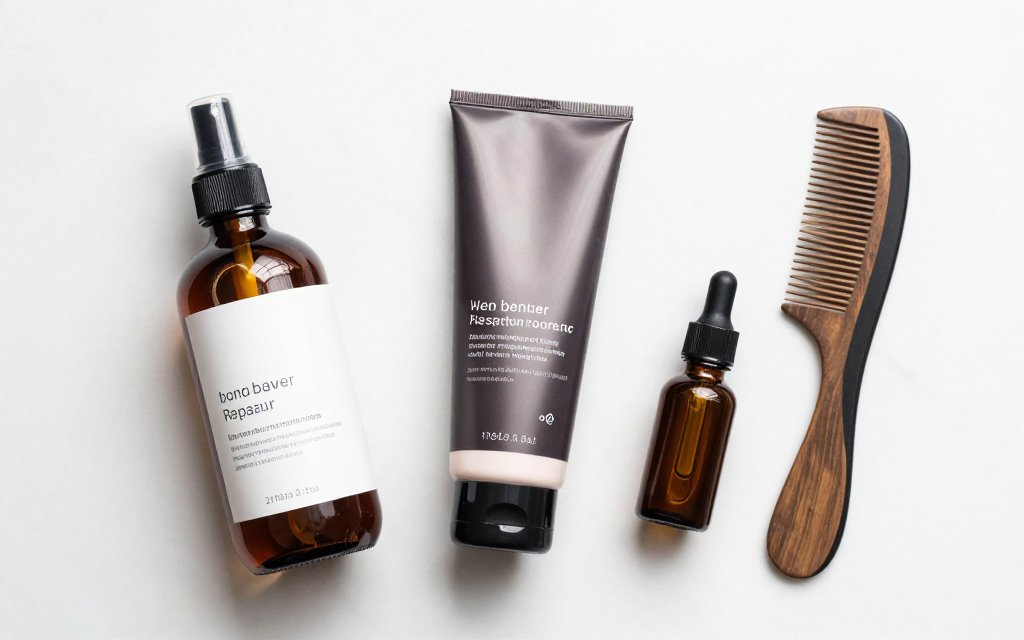
You do not need a shelf of bottles. Good hair care products for damaged hair share the same short ingredient list above, and a deep conditioner for damaged hair does more than any pricey oil once the cuticle is raw. Leave a mask on for the time it needs, which runs anywhere from 20 minutes to overnight depending on how thirsty your hair is. If you straighten, keep a printed temperature guide taped inside your cabinet so the dial never creeps up on a rushed morning.
Build a routine that prevents breakage
Prevention is where the money and the length actually live. Most hair breakage comes from a handful of daily habits, not one dramatic mistake, so fixing the habits pays off faster than any single treatment. A calmer week looks like this.
A simple weekly routine
The only tool that removes a split for good is a pair of scissors. Everything else, however good it feels, is only buying you time.
Put a number on it. A salon trim every couple of months costs far less than the length you keep losing to snapping, and a few dollars of heat protectant is nothing against a colour correction that can run into the hundreds. Blue shampoo to stop bleach going brassy, which we cover in our guide to blue shampoo for brunettes, is far cheaper than stripping and redoing the whole colour. Prevention is the only kind of repair that compounds.
Common questions about repairing hair damage
How do you repair damaged hair at home?
Not in the biological sense. You can make the damage look and feel far better and stop it spreading, but a frayed end is gone protein. Think manage and prevent, then trim what is past saving.
Do split ends travel up the hair shaft?
Yes, and that is the whole reason to deal with them early. A split follows the path of least resistance straight up the strand, so a tiny fork today can cost you an inch in a month. Trimming stops the climb. Waiting just means the eventual cut is bigger.
How often should you trim to fight breakage?
For most people every eight weeks keeps splits from spreading, though tightly coiled or bleached hair often does better on a slightly shorter cycle. If you colour, space chemical touch-ups 8 to 10 weeks apart so you are not stacking damage. Your ends will tell you when it is time.
Are pricey damage-repair products worth it?
Some are, most are oversold. A good bond builder and a heat protectant earn their place because they change how your hair behaves day to day. Anything promising to fuse a frayed end back together is selling you a coating that washes out. Read the ingredient list, not the front of the bottle.
If your ends are fried and you are eyeing a fresh cut to lose the damage for good, look before you leap. Fravyn previews more than 50 hairstyles and 29 hair colours on your own photo in seconds, so you can find a shape you love and see how short is short enough before the scissors come out. Get the app here: iOS.
Try a New Hairstyle Today
Preview 50+ hairstyles and 29+ colors on your own photo with Fravyn.