Curly Hair Types and the Curl Pattern Chart From 2C to 4C
Curly hair types run on a simple code: a number for the family and a letter for the width. Here is how to read the 2C, 3B, and 4C labels, find your own curl pattern at home, and match a routine to it.
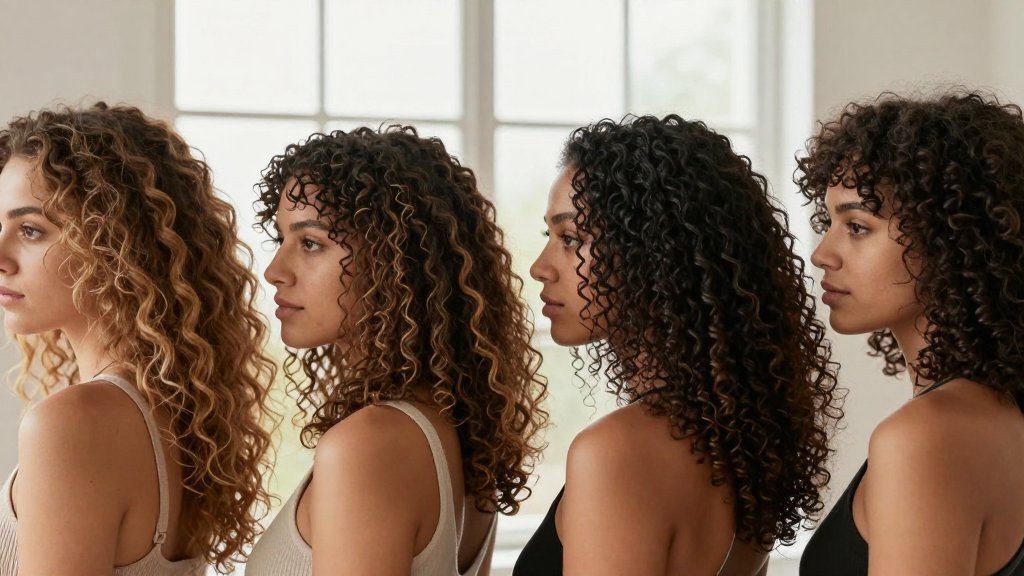
Every curl on your head follows a code, and once you can read it, buying the right products stops being a guessing game. The curly hair types system sorts hair into four families and three widths, so a loose beachy wave and a tight zigzag coil each get their own short label. Oprah Winfrey's longtime stylist Andre Walker built the chart in the 1990s to market his own product line, and it has been the shorthand ever since.
Here is the shorthand. The number names the family, where 1 is straight, 2 is wavy, 3 is curly, and 4 is coily. The letter after it, A, B, or C, marks how tight the curl is, with A the widest and C the smallest. Put the two together and your curl pattern earns a two-character name like 2C or 4A.
How to Read the Curly Hair Types Chart
A curl pattern chart lines up all twelve types in one grid so you can see where you land. Read it left to right and the curls get tighter, top to bottom and the family changes. Some stylists call the same grid a hair type chart or a hair texture chart, but the logic never changes: number first, letter second.
One honest caveat before you pin yourself to a single box. Most heads mix two or three patterns at once, and the Andre Walker system has been criticized for ignoring density, porosity, and the way texture shifts across your scalp. Treat the label as a starting point, not a life sentence.
The letters are about width, not quality. A is the widest curl and C the tightest, so 4C is not better or worse than 2A, only smaller in diameter.
Type 2 Waves, From 2A to 2C
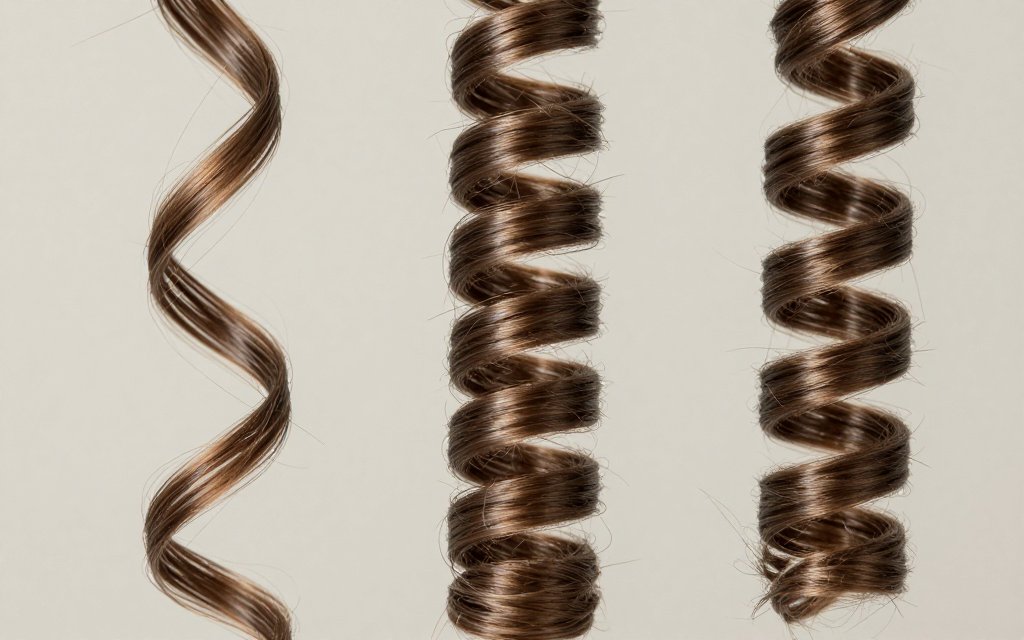
Type 2 is wavy hair that bends into a soft S shape without coiling into a full ringlet. 2A is barely there, a loose wave with a slight bend near the ends. 2B holds a more defined S that shrinks a little as it dries, and 2C hair packs the tightest waves of the family, the ones that nearly turn into curls and frizz the fastest.
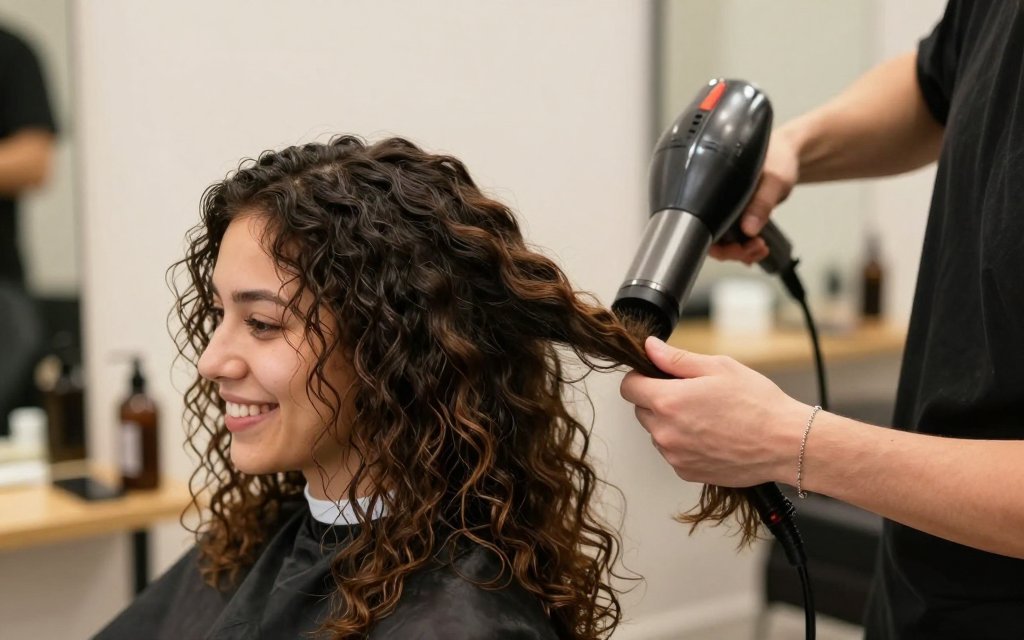
Waves stay happy on light products. A lightweight gel or mousse and a diffuser bring out the shape, while heavy oils and creams flatten it into a greasy droop. Wavy hair also handles heat styling more often than the curlier families without obvious damage.
Where 2C blurs into Type 3
The line between 2C and 3A is the one people argue about most. If your waves form a clear spiral you can wrap around a finger, you have crossed into curly Type 3. If they stay a flat S even when fully dry, you are still in wave country.
Type 3 Ringlets and the Curl Width Test
Type 3 is where waves become true curls, looping into ringlets you can spot from across a room. 3A hair forms loose spirals, 3B hair springs into tighter ringlets, and 3C hair coils into pencil-thin corkscrews. The fastest way to place yourself is the width test, which the stylists quoted by NBC News describe using everyday objects.
Curls this size drink up moisture and dry out if you wash them daily. Once a week is enough for most Type 3 heads, paired with a co-wash between shampoos and a satin pillowcase so the ringlets do not rough up overnight. Your hair porosity decides how much of that moisture actually stays in.
Type 4 Coils and the 4C Shrinkage Problem
Type 4 is coily hair, the tightest and most fragile family on the chart. 4A keeps a springy, visible S coil about the width of a crochet needle. 4B hair bends into sharp Z angles instead of round loops, and 4C hair packs the tightest zigzag of all, so dense that a single coil can be hard to see without stretching a strand.
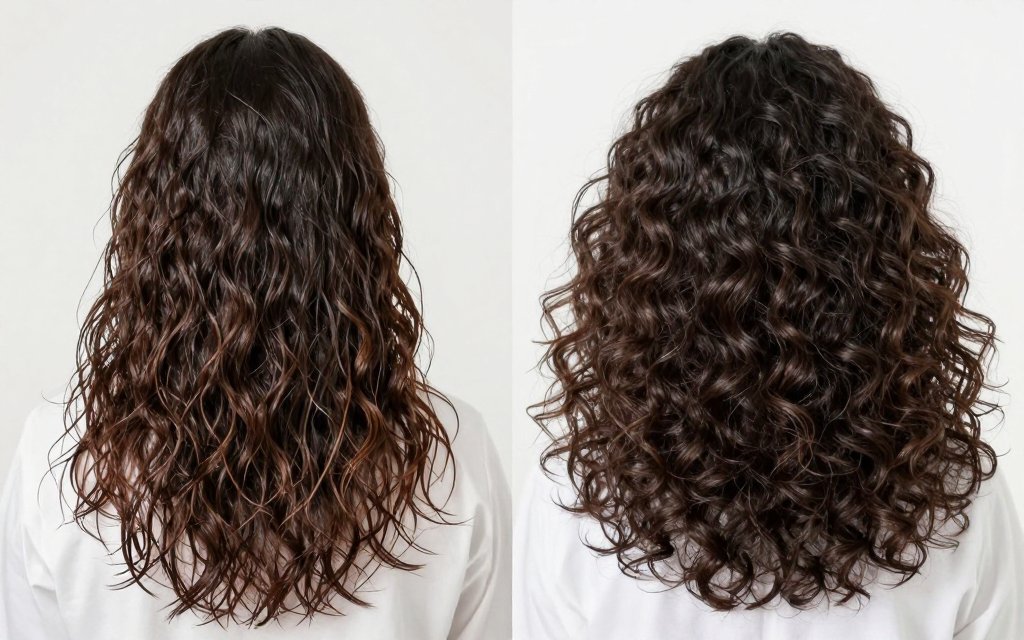
Coily hair also shrinks more than any other type. According to Hair Types, 4C strands can shrink up to 75 percent, so hair that hangs to your shoulders wet can sit at your ears once it dries. That shrinkage is a sign of healthy elasticity, not damage.
Type 4C hair can shrink up to 75 percent, so a coil that reaches your shoulders while wet can sit near your ears the moment it dries.
| Coil Type | Coil Shape | Shrinkage |
|---|---|---|
| 4A | Springy S coil | Up to 50% |
| 4B | Sharp Z bend | 30 to 75% |
| 4C | Tight zigzag | Up to 75% |
Why 4C looks shorter than it is
Shrinkage fools people into thinking coily hair does not grow. It grows at the same average rate as every other family, but the coil springs back on itself the moment water leaves. Banding, twisting, or a cool blow-dry stretches the length back out. If breakage is the real worry, our hair growth guide covers what helps and what is hype.
How to Find Your Own Curl Type at Home
You cannot read your real pattern off styled hair, because gel and cream borrow a shape your strands do not hold on their own. Start clean and let the hair tell the truth.
Look at the shape a single dry strand makes, not the whole head. Pick a piece from the crown and one from the nape, since the back often coils tighter than the front. Whatever pattern shows up with zero product is your baseline pattern.
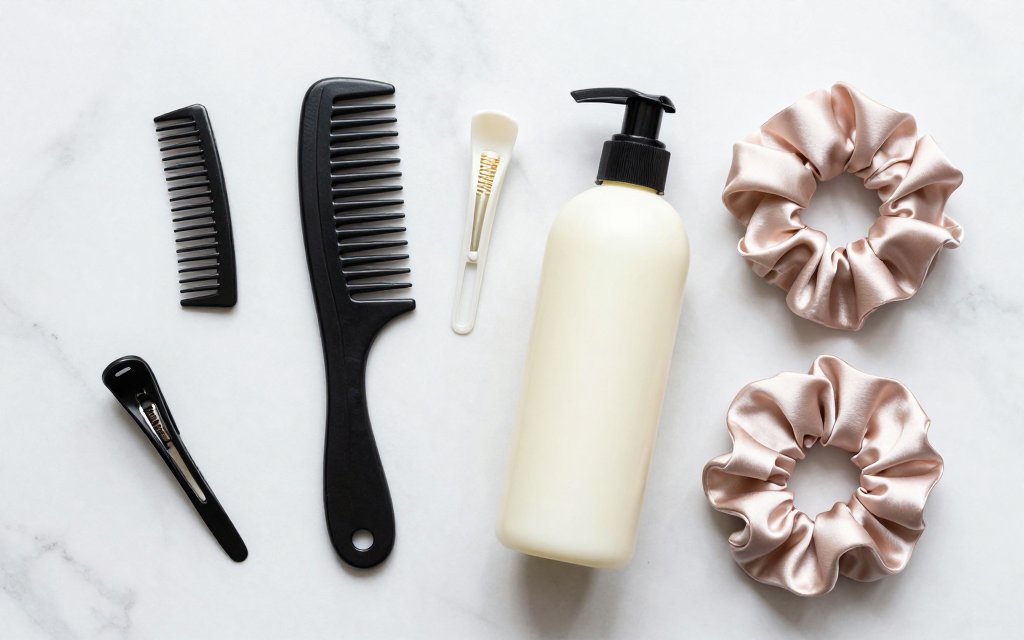
Read your curl pattern on freshly washed, product-free hair. Any gel or cream borrows a shape your strands do not hold on their own.
What Your Curl Type Means for Time and Money
Your curl pattern quietly sets your beauty budget. Wavy 2A hair might need one wash-day product and a rinse every couple of days, while 4C coils ask for a deep conditioner every wash, daily moisture, and protective styling that adds up over a month. Knowing the label keeps you from buying a shelf of creams built for a texture you do not have.
Before you commit to a cut or a costly treatment, it helps to see the shape on your own face. You can preview curl-friendly styles on your own photo and skip the regret, and if you just want a looser pattern for one night, heatless curls get you there without a hot tool.
Common Questions About Curl Types
How do I know my curl type?
Wash your hair with a clarifying shampoo, add no styling product, comb it through wet, and let it air dry. The shape a bare strand forms once it is fully dry is your true curl type. Check a piece from the crown and the nape, because the pattern often differs across your head.
Can you have more than one curl type?
Yes, and most people do. It is common to have 3A curls at the front and 3C or even 4A coils at the nape. Style to your tightest section so the looser pieces are not left dry, and do not stress about forcing one uniform label.
What is the difference between 3C and 4A hair?
3C hair forms full corkscrew ringlets about the width of a pencil, with a clear round loop. 4A tightens that loop into a smaller, springier coil closer to the width of a crochet needle. The jump also brings more shrinkage and more need for daily moisture.
Does your curl type change over time?
It can. Hormones, pregnancy, medication, heat damage, and age all shift curl pattern, sometimes loosening it and sometimes tightening it. Chemical relaxers and repeated heat can also flatten curls for good, so a texture that changed suddenly is worth a chat with a stylist or dermatologist.
Ready to see how a fresh cut or color reads on your own texture before you commit? Fravyn lets you preview 50 plus hairstyles and 29 plus colors on your own photo in seconds, so you can match a look to your real texture instead of guessing. Get the app here: iOS.
Try a New Hairstyle Today
Preview 50+ hairstyles and 29+ colors on your own photo with Fravyn.