Cowlick-Proof Haircuts: Styles That Sit Right All Day
Cowlicks do not have to decide your part, your bangs, or your crown volume. This guide breaks down the most common cowlick patterns, the haircuts that cooperate with them, and the simple blow-dry tricks that keep everything sitting right from morning coffee to late-night plans.
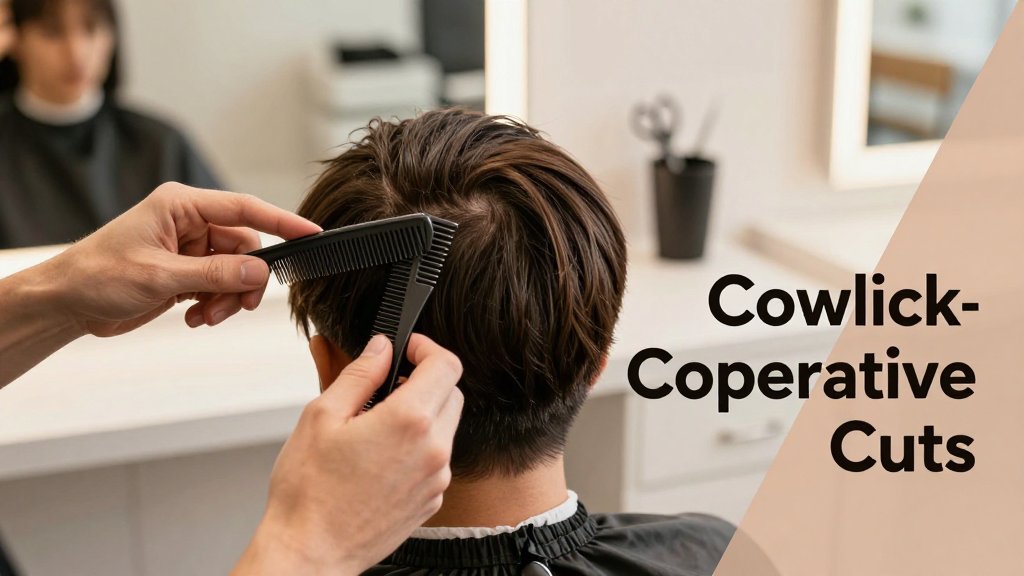
Cowlicks can turn a good hair day into a constant battle, popping up at the crown, flipping a fringe, or splitting a part when you least expect it. The fix is rarely more product or more force. It is a haircut that works with your natural growth pattern. In this guide, you will learn cowlick-proof styles that sit right, what to ask your barber or stylist for, and simple at-home steps to train the hair so it holds its shape from morning to night.
What your cowlick pattern is really telling you
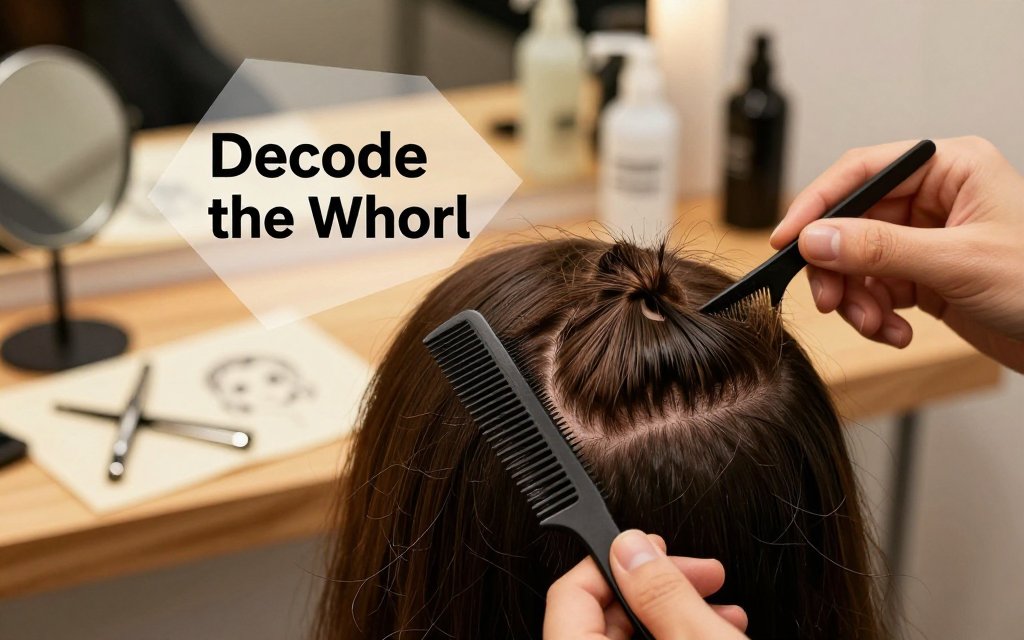
A cowlick is not “bad hair” or a styling fail, it is your hair giving you a map. In most cases, the strands are simply growing from the scalp at a different angle or in a circular pattern, so they naturally push away from the direction you are trying to force. That is why the exact same haircut can look polished on your friend, but keep popping up on you at the crown, or flipping your fringe at the hairline. Once you identify your pattern, you can stop chasing random fixes and start choosing shapes that cooperate, like a textured crop that breaks up lift, or a longer layered cut that adds weight and flow.
Cowlicks usually come from a natural hair whorl, which is basically a spiral where hairs radiate around a center point. That is why you can get a “hole” at the crown even with thick hair, the strands are pointing in different directions, so the scalp peeks through in the middle. This is also why you cannot truly erase a whorl with product, you can only cut and style for its direction. If you want the nerdy proof that most people have at least one whorl and that direction is not caused by the Coriolis effect, this hair whorl science breakdown is a fun, readable explainer.
Deciding whether to work with your cowlick or disguise it comes down to two questions: where it sits, and what vibe you want. Working with it usually means leaning into the natural split or swirl, for example, choosing a side part that follows a side cowlick, or adding airy texture at the crown so lift looks intentional. Disguising it means designing around it, like moving a bride’s veil comb slightly off the whorl so the crown stays smooth, or shifting bangs from blunt-straight across to a side-swept fringe that has somewhere to go. Either approach is valid, you are aiming for “predictable,” not “perfect.”
Crown whorl vs front cowlick, spot it in 60 seconds
Here is the one-time mirror check that tells the truth. Towel-dry your hair until it is damp, not dripping. Comb it loosely into place, then do nothing for 2 minutes. No clips, no heat, no “training.” After it settles, look closely at where it naturally splits and which side lifts first. A crown spiral usually shows up as a circular split that creates a little opening, especially under bright bathroom lighting. A front hairline cowlick often makes your fringe flip up or sweep sideways, even when you try to brush it straight down. A side cowlick tends to shove you into one part, and fighting it can make the hairline look sparse because it keeps separating.
Once you spot the pattern, the practical takeaway is simple: you cannot “erase” a whorl, you can only design around the direction. If your crown spins clockwise and lifts on the right, ask your barber or stylist to cut the crown so it collapses into that spin, instead of against it. If your bangs flip left at the hairline, it is often smarter to choose a curtain fringe with a slightly shorter center and longer sides, rather than a heavy blunt fringe that will split the moment you step outside. If you like experimenting, a try-on app like Fravyn can help you preview whether a side part, textured fringe, or slicked-back look will highlight that lift or camouflage it.
Do the damp-hair check once, then stop fighting your cowlick daily. Cut and style in the direction it grows, and choose either very short or long enough for weight. Mid lengths are the trouble zone.
The length rule that makes cowlicks behave
The counterintuitive mistake is cutting the cowlick area a little too short, but not short enough. That “in-between” length removes weight, so the hair springs up harder and shows the growth direction more. Very short can actually reduce obvious flipping because there is not enough length to bend and create a big ridge (think clipper-short fades like a #1 to #3, or a pixie with a tight nape). Mid lengths often show the most lift, especially around 1 to 3 inches at the crown or hairline, which is right where many classic cuts sit. Going longer adds weight, so the hair lies flatter, like a bob that hits below the jaw or long layers that keep the crown heavier.
Texture changes how dramatic the rule feels. Straight hair tends to reveal a cowlick more clearly because every strand lines up, so a flipped section reads like a signpost. If you are straight-haired, you will often do best with either crisp short cuts that are deliberately directional (a French crop, a textured quiff, a sharp side part that follows the push) or longer cuts with strategic layering and a root blow-dry. Wavy and curly hair can hide a cowlick better because the pattern looks like part of the movement, but the crown can puff if layers get too short there. If you are planning a wedding style, tell your stylist where your crown whorl is before they place pins, and keep hair healthy before any pool weekends with chlorine defense hair tips so frizz does not amplify lift.
Best cowlick haircuts for bangs, crown, and parts
Before you sit in the chair, decide which cowlick zone is doing the most damage: bangs and front hairline, crown swirl, or the spot where you want your part to live. Take two quick photos for your stylist, one straight-on and one from above, in natural light with your hair air-dried. That shows the true growth pattern, not a blowout illusion. Then pick your goal: hide the split, control lift, or make it look intentional (a little texture can look chic, not messy). The most helpful thing you can do at the appointment is describe what happens on day two and day three, like “it separates by lunch” or “it spikes after a hat.”
Cowlick bangs and front hairline styles that do not split
For cowlick bangs, your best results usually come from choosing one of three clear strategies, instead of fighting your hair into a shape it cannot hold. Strategy 1 is “go longer and side-swept,” because weight is your friend. Ask for a side-swept fringe that starts a little deeper back on the head, then skims the brow and drapes diagonally toward the cheekbone. This works beautifully with a layered bob, a lob, or longer layers, and it flatters most face shapes because it creates a soft angle. If you like trendy names, think bottleneck bangs (shorter center, longer sides) or long curtain pieces worn mostly to one side.
Strategy 2 is “go micro-short” when the cowlick flips forward and refuses to lie flat. A micro fringe (above the brows) can actually behave better than a mid-length fringe, because there is less hair to kink and separate. Ask your stylist to keep it intentionally uneven with point-cutting or soft texturizing, so any tiny lift looks editorial instead of accidental. Strategy 3 is curtain bangs with a slightly off-center part, which disguises a center split and gives you two easy styling directions. Avoid a blunt, straight-across fringe if your cowlick sits in the middle of your hairline, it often forces a hard gap. Wedding tip: do a trial blowout with your intended part at least 2 to 3 weeks before the big day, then take flash photos to see if the cowlick opens up.
Bring a 10-second mirror video of your bangs air-dried. Ask your stylist to show you the exact brush angle and where to aim heat. If you cannot repeat it at home, the cut will feel harder than it needs to be.
Best haircut for cowlick crown, for women and men
A crown cowlick (or double crown) needs a cut that breaks up the “zipper effect,” where hair splits right down the swirl. For many women, a layered bob or lob with internal layers is a crown-friendly choice because it removes bulk without exposing the whorl. Say “internal layers” or “invisible layers,” and ask your stylist to leave a touch more length right at the swirl, then blend around it so the crown can lay over itself. A textured shag is another great option, especially if you like volume and movement, because the crown is meant to look airy, not polished. If you wear curls, coils, or waves, layers that respect your natural shrinkage can keep the crown from popping up like a little triangle.
For men cowlick haircut requests, think “longer top, tapered sides,” so you can direct the whorl instead of exposing it. A quiff, textured Ivy League, or messy crop can all work, as long as the crown is not cut too short. In barber language, ask them to “leave a bit more length on the crown,” then “graduate and blend into the upper back.” The biggest avoid is over-thinning the crown with thinning shears, which can create a visible “hole” that looks like thinning even when it is just a growth pattern. Also be cautious with super-tight fades that climb high into the crown area, they can spotlight the swirl and make it harder to style down.
Training a part so it stays put
Training a part is mostly about timing and direction: you have to set it while the hair is wet, then lock it in as it cools. After washing, create your part with the tail of a comb, mist a light heat protectant, then blow-dry the roots first. If your cowlick pushes the part open, dry the root area briefly in the opposite direction, then bring it back to where you want it and dry it again with the nozzle aimed downward. Two small metal clips placed flat at the roots (one on each side of the part) while your hair cools can help the part “remember.” If you need a step-by-step visual, the pro technique in blow-dry cowlick bangs translates really well to stubborn parts, too.
A few smart “avoid” calls can save you from daily frustration. If your cowlick is at the front hairline, skip heavy, blunt bangs that demand perfect symmetry, and choose side-swept, micro-short, or off-center curtains with soft texturizing. If your cowlick is at the crown, be wary of one-length cuts with no internal layering, or very slick, flat-ironed finishes that force separation. For parts, a razor-straight middle part can look amazing, but if your hair naturally wants to split elsewhere, ask for a slightly off-center part and face-framing layers so it still feels intentional. Color can help too: subtle dimension like a soft balayage, a root shadow, or scattered highlights can camouflage a part line and make small separations less obvious. If you are torn between two cuts or colors, previewing them on your own photo in Fravyn can make the appointment conversation faster and much more confident.
How to fix a cowlick, blow-dry and test styles
Cowlicks feel random, but styling them is surprisingly repeatable. The big win is that you can usually get about 70 to 90 percent control from the blow-dry alone, as long as you start early (while the hair is still damp) and you set the direction with tension. After that, a small amount of the right product keeps the shape in place without the stiff, crunchy vibe that makes hair look wig-like in photos. The final step is testing: try your part, fringe, and crown shape in a few different directions so you know which haircut details actually behave with your growth pattern, not just on a stylist’s perfect blowout day.
Blow-dry cowlick direction, the 5 minute method
Here’s the fast routine that makes a cowlick stop “deciding for you.” Start with hair that’s damp, not soaking wet. Work in a heat protectant (a mist is easiest at the roots, a cream is nice for mid-lengths). Rough-dry to about 80 percent so the hair is warm and pliable, then switch to a nozzle attachment for control. With a brush or comb, push the cowlick slightly past where you want it to sit (overdirect), then hit it with the cool-shot button to set. If bangs are the issue, the cross-direction trick is gold, and the step-by-step in blow-dry bangs with a cowlick is a helpful visual. The most common mistake: drying without tension, which lets the cowlick set itself first.
To train a part over time, think “reset the roots, then reward the direction.” After every wash (and even on day two with a quick mist of water), comb the roots toward the new part while they are damp, blow-dry in that direction with tension, and clip the front 1 to 2 inches to cool in place for a minute while you do skincare. Do this consistently for 10 to 14 days and many people see a noticeable shift. Product-wise, avoid heavy waxes at the root. Try a lightweight mousse for bendable hold (Kenra Volume Mousse 12 is a classic), a root-lift spray for the crown (Color Wow Raise the Root), then finish with a pea-sized amount of flexible paste or cream (like Baxter of California Cream Pomade or Verb Forming Fiber) warmed between palms. If you need extra insurance, a light mist of L’Oréal Elnett keeps things touchable.
Can you train your hair part to stop a cowlick?
Often, yes, you can improve it, but “stop” depends on how strong the swirl is and where it sits. A good rule is: train the part at the root, not at the ends. Switch the part while hair is damp, blow-dry with tension in the new direction, then use a clip at the front hairline for 60 to 120 seconds while it cools. Repeat after every wash for 2 weeks. If the cowlick is at the crown, training helps most when the haircut also supports it, like a bit more length and a soft layered shape that can lie over the spiral.
What is the fastest way to fix a cowlick in bangs?
Fastest fix, no full wash needed: re-wet just the bangs down to the roots (a spray bottle is enough), then blow-dry them side-to-side first, not straight down. That side-to-side motion breaks the “split” memory that makes fringe pop up or separate. Overdirect the bangs slightly past where you want them to land, then cool-shot to set. A quotable rule: heat shapes, cool holds. Finish with the tiniest dot of paste emulsified in your fingertips, then pinch only the flip point. If it still fights you, place a small duckbill clip at the root while it cools.
Should you cut a cowlick shorter or leave it longer?
Most of the time, longer is easier because length adds weight, and weight helps a cowlick lie flatter. The exception is a tiny cowlick in a dense area where a strategic shorter cut removes the “lever” that makes it stick up. A simple rule: if it flips out, try longer; if it spikes up, ask about slightly shorter with texture. For front cowlicks, longer curtain bangs or a side-swept fringe are usually more forgiving than blunt micro-bangs. For crown cowlicks, too-short layers can explode into a permanent swirl, so keep the crown a touch longer and blend layers around it.
Before you commit to a big chop or a bold color plan, validate the idea on your own face and your own cowlick zones. With Fravyn, you can try on 50+ hairstyles and 29+ hair colors on a real photo, so you can check whether a side-swept fringe actually covers that front flip, or whether a middle part puts too much attention on a crown swirl. Face shape analysis helps narrow the best options fast (for example, a long face often loves curtain bangs, while round faces may prefer a deeper side part with cheekbone-length pieces). You can even preview cowlick-friendly color placement, like lighter face-framing pieces that pull focus toward your eyes and away from a stubborn hairline cowlick.
Ready to see how a cowlick-friendly cut could look on you before you commit? Try Fravyn to preview 50+ hairstyles on your own photo in seconds, so you can choose a shape that works with your hairline, crown, and bangs. Download the app and start experimenting today on iOS, then bring your favorite results to your next appointment.
Try a New Hairstyle Today
Preview 50+ hairstyles and 29+ colors on your own photo with Fravyn.